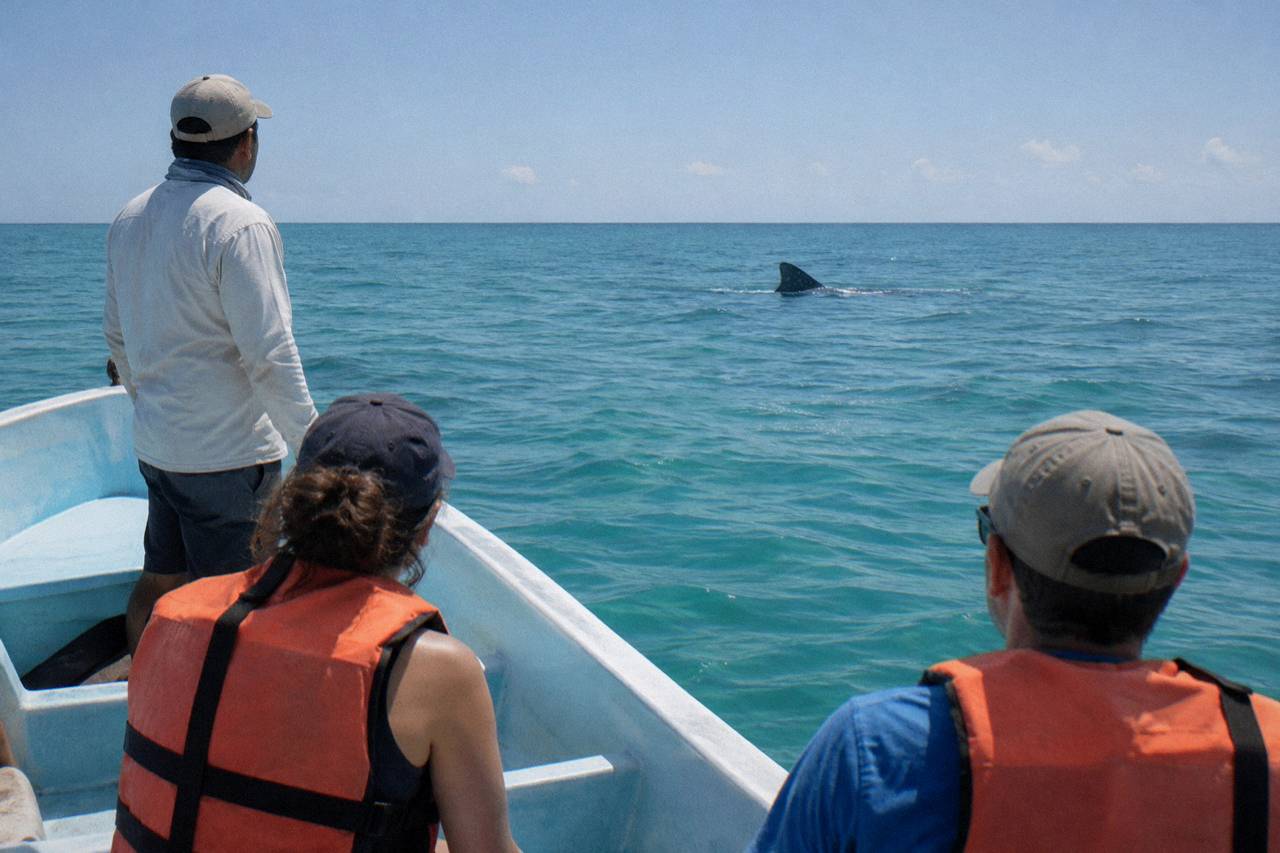
Do You Need To Be A Strong Swimmer To Swim With Whale Sharks In Holbox?
It varies by listing: some Holbox whale shark tours ask for strong fitness and swimming ability: Mexican rules require a life vest or wetsuit, guides stay beside you, and floating is the main skill. Here is what ability actually matters.
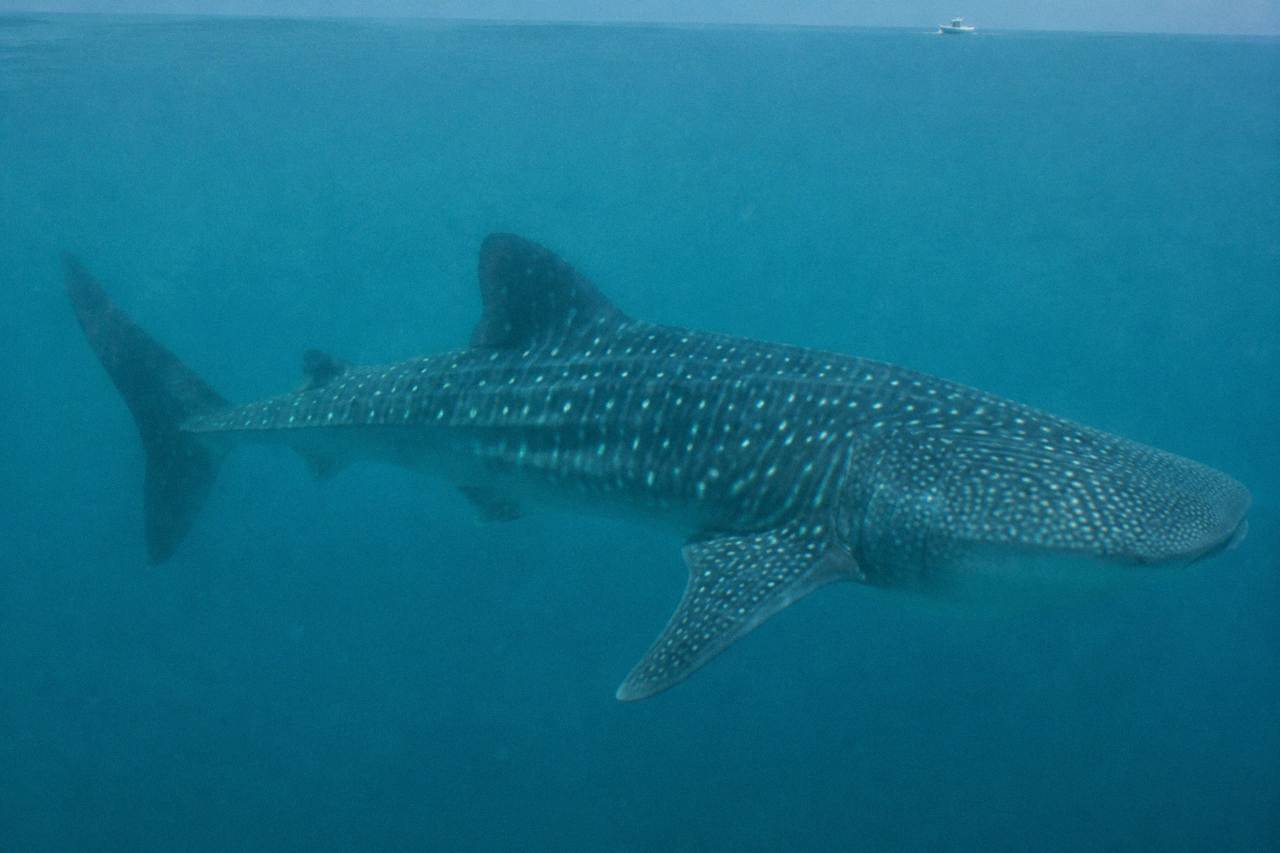
It is one of the most common pre-booking questions on this island: can a middling swimmer, a nervous swimmer or a person who has never snorkelled before actually do this? The short version is yes, with caveats. Mexican federal standard NOM-171 requires every swimmer to wear a life vest or wetsuit with mask, fins and snorkel, and requires a specialised guide to control the group in the water. The skills that decide your day are floating calmly, breathing through a snorkel and managing your nerves a kilometre or more from land, not speed or stamina.
No, you do not need to be a strong swimmer to swim with whale sharks in Holbox. NOM-171-SEMARNAT-2018 rules require a life vest or wetsuit plus mask, fins and snorkel on every authorised departure, and a specialised guide stays in the water with swimmers. You should be comfortable floating in deep open water where you cannot stand, since confidence matters more than stroke and panic is the one thing a vest cannot fix. If you're bringing the whole family, this parent's guide to kids swimming with whale sharks in Holbox covers minimum ages, life vest rules, and which Holbox tours welcome children.
That distinction, strength versus comfort, is the heart of the matter. A life vest keeps you at the surface even if you do nothing at all, so a weak swimmer in a vest floats exactly as high as a strong swimmer in a vest. What the vest does not do is keep you calm when a fish the length of a bus slides past four metres away, or when the boat is a long kick away and the water is deeper than any pool you have swum in. Guests who enjoy these tours describe a slow, mostly stationary experience: you float, you look, the shark passes, you climb the ladder and the next swimmers rotate in.
The season context matters too. The 2026 season closed on 17 September 2026 under the SEMARNAT notice, so every swim described here is a next-season plan, typically from mid-May when the official window has opened in past years. That is good news for a nervous first-timer: booking ahead for next summer gives you months to practise the two or three skills that genuinely matter, which the sections below break down one at a time.
Wherever you land on the swim question, the tour you book should match how comfortable you are in open water, from a supervised small-group eco tour to a private boat where only your group is in the water.
Each of those departs from Holbox itself, which saves the mainland transfer that the big-boat departures from Cancun require, a point that matters when you are already managing nerves.
What Does The Life Vest Rule Actually Say?
The federal rule says swimmers must wear a life vest or wetsuit together with mask, fins and snorkel, and that a specialised guide controls the group in the water, keeping swimmers 2 metres from the sides of the head and 3 metres from the tail of the shark. The same standard caps a boat's time around one shark at 30 minutes and prints no swimmer-per-guide number, deferring that limit to the protected-area management programme.
You can read the rule text itself on the official Diario Oficial de la Federación page. Two clauses matter most for a weak swimmer. First, the equipment clause: a vest or wetsuit is not an optional extra the operator offers to nervous guests, it is part of the regulated kit. Second, the guide clause: the guide's job is not just to find the shark but to control the users in the water, keep the group together and hold the required distances. You are never swimming free-form in an empty ocean; you are inside a managed, timed, supervised rotation.
The season dates come from the same regulatory family. The SEMARNAT notice for 2026 set the window at 15 May to 17 September 2026, and the 2027 notice has not been published, so treat mid-May as the typical opening rather than a promise.
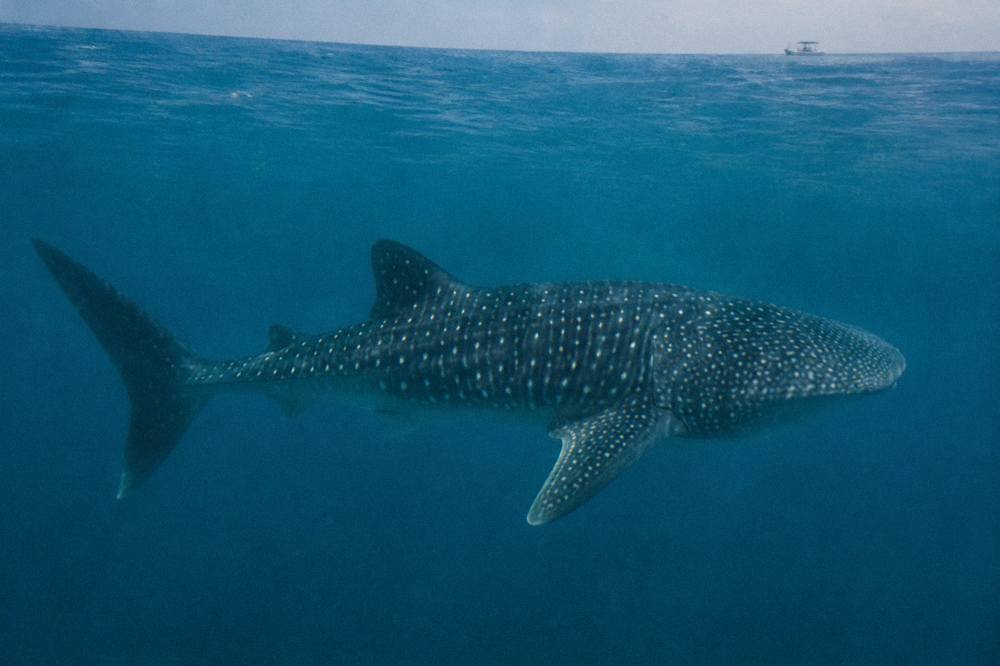
One Holbox listing states the jacket outright. The eco tour operated by Xtreme Holbox lists a life jacket among its inclusions along with snorkelling equipment, hotel pickup in Holbox and guide-supervised water entries, from $190 per person for a seven-hour day. If swimming ability is your main worry, a listing that names the jacket and the supervision in writing is a reasonable place to start, and you can read more in the detailed what to expect on a Holbox swim guide.
Wondering whether the vest makes the whole question moot?
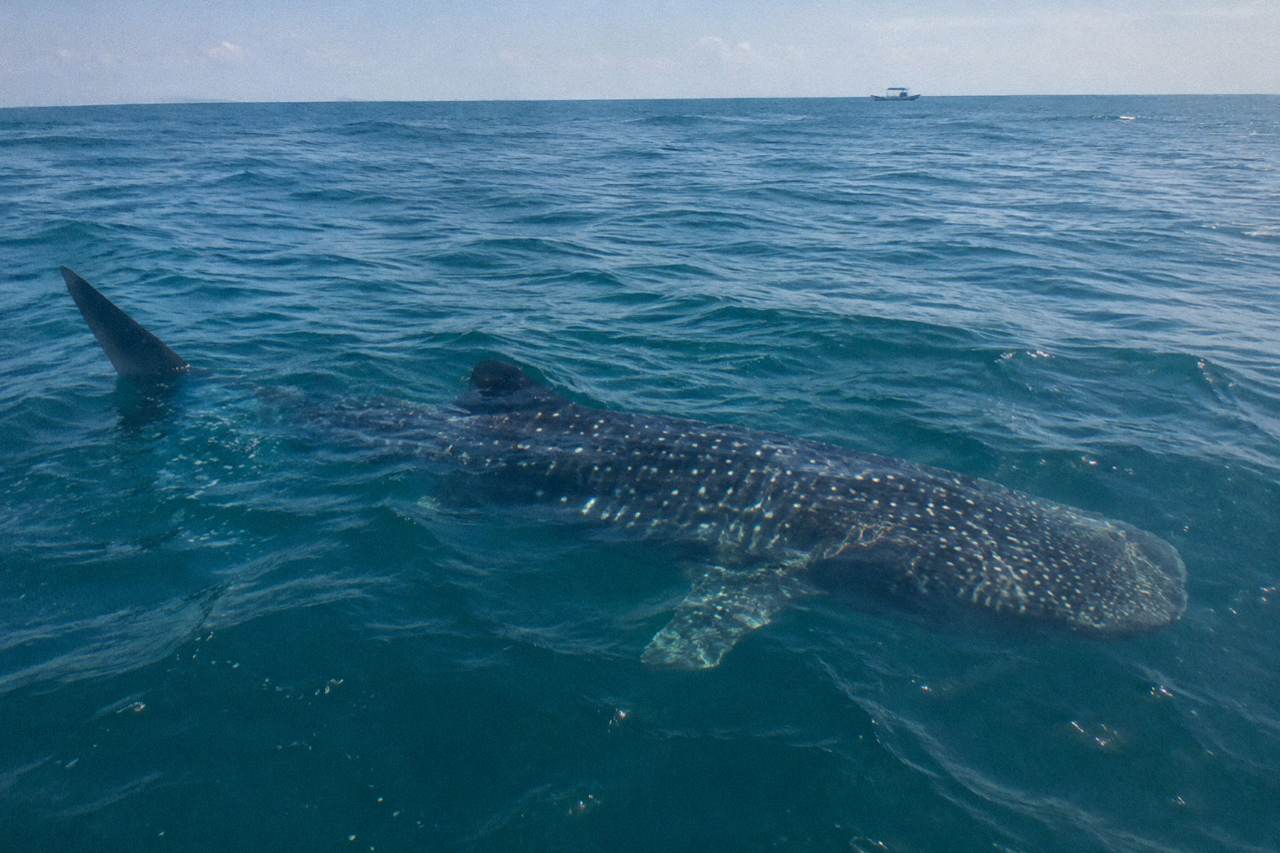
7 hours
★ 4.6 · 57 reviews · From $190
Whale shark swims ended for 2026 on 17 September. The 2027 season dates have not been announced, so open calendars may stay blank for now.
Check availability →How Hard Is The Snorkelling Really?
The snorkelling itself is beginner level: you float face down, breathe through a mouthpiece and kick gently, with no diving, no duck-diving and no breath-holding involved. The rules even dictate how you enter the water, quietly from the boat with no jumping. The genuinely unfamiliar part for most first-timers is breathing through a snorkel while your face is submerged, a skill you can learn in a hotel pool in twenty minutes.
Break the day into its parts and only one of them is a swim. There is a boat ride, which asks nothing of you. There is the entry, which is a quiet slide or steps off the platform, because NOM-171 forbids jumping and back-flips. There is the float, which the vest does for you. And there is the snorkel breathing, which is the only learned skill. Fins help enormously: they turn a gentle flutter into forward motion, which means your arms never need to do anything except hold nothing at all.
The rotation format also limits how long you are actually in the water. A boat gets a maximum of 30 minutes around a shark, and swimmers rotate through that window, so an individual's time in the water with the animal is measured in minutes, not hours. The swim itself is surface snorkeling, with a guide. The one caution: all of this happens in open sea, not a cenote or a bay, so if your entire swimming history is pool lanes with a wall always within reach, spend some time before the trip floating in water too deep to stand in. If the shark itself worries you more than your swimming does, our article on whale shark swim safety explains why problems on these tours almost never come from the animal.
| Skill the day asks for | How hard it is | How to practise before the season |
|---|---|---|
| Floating at the surface | Easy with a vest; the vest does the work | Wear a vest in any pool and relax, arms and legs still |
| Snorkel breathing | Unfamiliar at first, then automatic | Twenty minutes with a mask and snorkel in shallow water |
| Gentle finning | Easy; fins multiply a small kick | Any swim with fins, even a short one |
| Climbing a boat ladder | Moderate after a long float | Upper-body comfort helps; crew assist on most boats |
| Staying calm in deep water | The real test, and unrelated to stroke quality | Float in deep water with a vest, near a boat or platform |
Note what is absent from that table: speed, distance and stamina. Nobody races a whale shark. The animal moves at cruising speed and the encounter is about being present in its path for a few unhurried minutes, then letting the next swimmers take their turn.
Current, Swell And The Boat Ride Out?
Holbox boats head to the Afuera aggregation zone roughly 10 kilometres offshore, and operators describe the boat ride as lengthy in each direction depending on where the sharks are and the day's conditions. Current and swell vary day to day and are never promised; what is true is that the same rules requiring calm, quiet entries exist partly because the water is open sea, with wind and chop possible even on good days.
This is the part of the day that catches people out, and it is not the swimming. A small lancha running out over open water for an hour or more in a warm swell is a classic seasickness setup, and several Holbox listings run six to seven hours in total, from $178 per person for the six-hour VIP Holbox trip up to $210 per person for the Holtours departure with hotel pickup, plus the private VIP Holbox boat from $1,246 per group. If you are asking the swimming-ability question, ask the motion question at the same time, because a queasy passenger who never leaves the seat has not swum with anything. The companion piece on seasickness on the Holbox whale shark crossing covers remedies and timing.
At the swim site, conditions matter more than your stroke. On a flat-calm day the float is effortless. On a day with wind and chop you will work harder to keep your head above the swell line, your snorkel may take a wash of water, and the ladder climb back aboard will test your arms more than your legs. Crew on authorised boats watch their swimmers closely and a guide is in the water with the group; if you signal, you get helped out. Operators describe the water as deeper than it looks, and there is no standing, ever, at the aggregation zone.
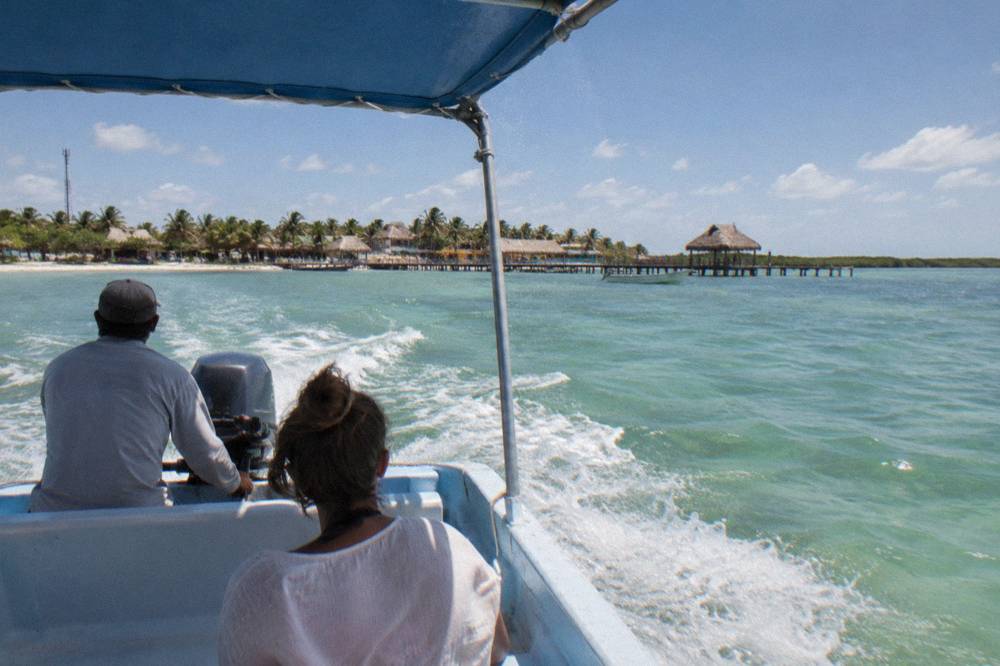
A comfort note that is easy to miss: the entry itself is choreographed. The boat positions ahead of the shark at an angle, and you slip in without a splash. Practising a quiet slide-in at a pool edge, rather than a jump, matches exactly what the guide will ask of you on the day.
Who Should Stay On The Boat?
The shortlist is anyone who panics in deep water, anyone who cannot breathe calmly through a snorkel after practising, anyone with a heart or breathing condition their doctor has not cleared for open-water exertion, and anyone whose seasickness is severe. Watching from the boat is allowed, sightings are never guaranteed for swimmers either, and paying for a boat seat you use is a better day than a swim you endure.
This deserves plain language, because tour marketing rarely offers it. The water at the aggregation zone is deep open sea. There is no bottom to touch, no edge to hold, and the boat does not anchor next to you; it holds position and rotates swimmers. If your reaction to water over your head is fear rather than excitement, a vest will hold you up but it will not make the experience pleasant, for you or for the guide responsible for the group. Staying aboard for the whole trip, or swimming just one short rotation, can still make the day worthwhile.: you see the animal surface beside the boat, which from deck level is genuinely spectacular.
Age and ability edges matter here too. Most Holbox listings state no minimum age, though some VIP Holbox and Holbox Whale Shark Tours trips bar children under 6, and Cancun departures set ages 3 and 8, so families judge their own children's water confidence. The kids and whale shark swims piece covers that decision in full. For adults, the useful self-test is simple: can you float in water over your head, wearing a vest, for ten minutes, breathing slowly, without urgency to reach anything? If yes, you can do this. If the thought alone tightens your chest, the boat seat or the beach is the right call, and the island has plenty else, from the three-island boat tour round-up to the bioluminescence kayaks in the shallows.
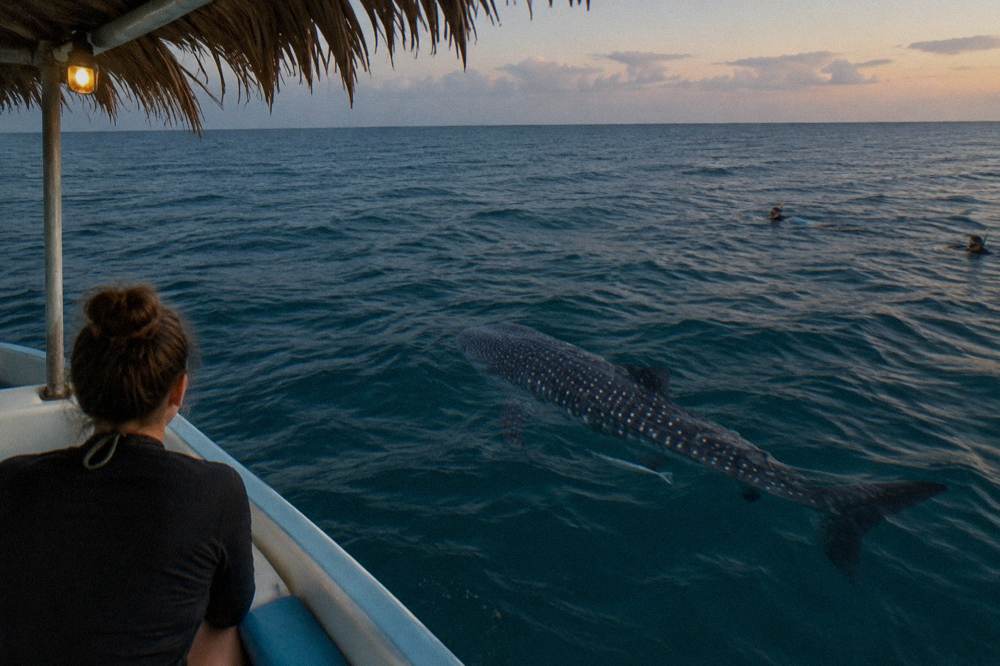
There is also a middle path worth naming: the private boat. The private swim operated by VIP Holbox Experience runs from $1,246 per group for seven hours, rated 4.5 from 27 reviews, and the value for a nervous swimmer is pacing. Only your group is aboard, the guide's attention is not split among strangers, and you can take one rotation, rest, and decide later whether to go again. That flexibility is exactly what a mixed-confidence family or couple pays for.
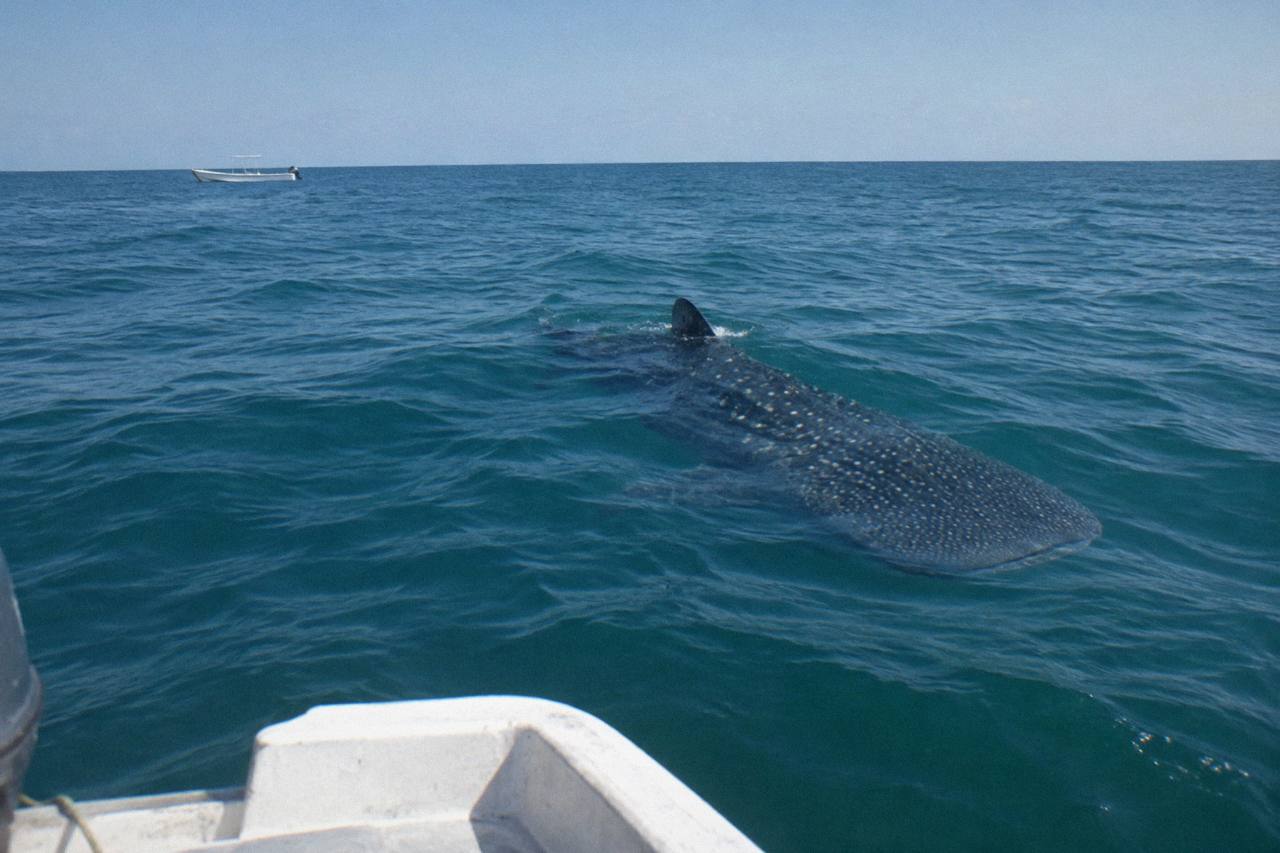
Whale Shark Swims From Holbox Island
★ 4.5 · 27 reviews · From $1,246 per group
Whale shark swims ended for 2026 on 17 September. The 2027 season dates have not been announced, so open calendars may stay blank for now.
Check availability →For strong swimmers the private option is a luxury. For uncertain swimmers it is closer to an accommodation, and it is worth weighing against the shared trips, where the rotation keeps the day moving at the group's pace rather than yours.
Building Confidence Before Next Season?
With the 2026 season closed since 17 September and the 2027 notice not yet published, you likely have months before your swim, and that is enough time to prepare properly. Three practises cover nearly everything: floating in a vest in deep water, snorkel breathing in a pool, and swimming with fins a few times. None requires coaching or a gym; all three convert open water from a shock into a familiar setting.
Start with the mask and snorkel, because equipment unfamiliarity is the cheapest problem to solve. Any mask, any pool, any afternoon: put it on, put your face in, and breathe until it is boring. Then add the vest, ideally an actual life jacket rather than a pool noodle, and float in the deep end with your arms still. The first time most people do this they are surprised how little happens, which is precisely the lesson. Finally, swim a few lengths with fins, short and gentle, to learn how little kick a fin needs.
If you want a supervised step between the pool and the open sea, the guided options on Holbox Island Whale Shark Tours include an all-inclusive listing that outfits you with snorkel gear and a guide from the dock onward, from $209 per person, rated 4.9 from 267 reviews, with the operator listing pickup and transfer from hotels. Booking a small-group departure with the gear and supervision stated up front removes the equipment question from your morning, leaving only the float, which you will have practised.
A word on sunscreen and kit, since preparation days often end in a shop. The federal standard allows only biodegradable sunscreen before entering the water, and forbids flash and selfie sticks in the swim zone; a rash guard solves the sunscreen question entirely. The full packing breakdown lives in the what to bring on a Holbox whale shark tour guide.
Choosing A Listing That Matches Your Ability?
Read three lines on any listing before booking: whether a life jacket is named in the inclusions, whether the boat group is small, and what the water-entry description says. On this island, shared Holbox departures run from $178 to $210 per person, boats cap at 8 or 10 travellers on most lines, and every departure in the category lists free cancellation, so a wrong guess on ability costs you nothing if you reconsider before the season opens.
The price spread reflects format, not swimming difficulty. The six-hour VIP Holbox shared trip at from $178 per person, 4.6 from 243 reviews, and the seven-hour group adventure at from $184 per person, 4.3 from 86 reviews, both state a maximum of 10 travellers and list snorkel gear and a meal; the pricier Holtours line at from $210 per person adds hotel pickup within Holbox, but its exclusions note a departure tax paid at check-in, with the amount on the listing. None of these demand more swimming than the others. What differs is boat size, pickup and food, so choose on logistics and let the vest and the guide handle the swimming, as the how to choose a Holbox whale shark tour walkthrough explains in more depth.
One caution when comparing: do not read review scores as ability ratings. A 4.9 measures the whole day, the boat, the food, the guide's spotting, and says nothing about how strong the reviewers were as swimmers. Similarly, ignore any marketing language that implies a sighting is guaranteed; the rules exist partly because encounters depend on the animals and the day, and the what if there are no whale sharks piece covers how refunds work on that morning. Book the format that fits your confidence, practise the float, and let the season open at its own mid-May pace.
Whatever your ability level, these departures cover the sensible range for a first Holbox swim.
Common Questions About Swimming Ability On Whale Shark Tours
Do You Need To Be A Strong Swimmer To Swim With Whale Sharks?
No. NOM-171 requires a life vest or wetsuit with mask, fins and snorkel, and a specialised guide stays with the swimmers in the water. Floating calmly and breathing through a snorkel matter far more than stroke quality or stamina.
Do you have to jump off the boat to enter the water?
No, jumping is not allowed. The federal standard requires quiet entry into the water, with the boat positioned ahead of the shark at an angle, so you slide in from the platform or ladder without a splash.
Can you wear a life jacket instead of swimming at all?
Yes, a life vest or wetsuit is part of the required kit, and in a vest you float without doing anything. The one thing a vest cannot do is keep you calm in deep open water, so practise floating before your trip if deep water is new to you.
How long are you actually in the water?
Each boat gets a maximum of 30 minutes around one shark, and swimmers rotate through that window, so an individual's time beside the animal is measured in minutes. Most Holbox tours run six to seven hours in total, with the boat ride taking up much of the day.
Can a non-swimmer ride along on the boat?
Staying on the boat is allowed, and sightings are never guaranteed for swimmers either, so watching from deck is a real option. If open water causes you panic rather than nerves, choosing the boat seat makes for a better day than an endured swim.
When can you next swim with whale sharks from Holbox?
The 2026 season closed on 17 September 2026 under the SEMARNAT notice. The 2027 notice has not been published; past notices have appeared around May, and next season typically opens from mid-May, with most operators running roughly June to mid-September.