Is Holbox A Party Island?
Holbox is quiet by day and musical in the village by night. Here is what that means for early whale shark pickups and a calm island trip.
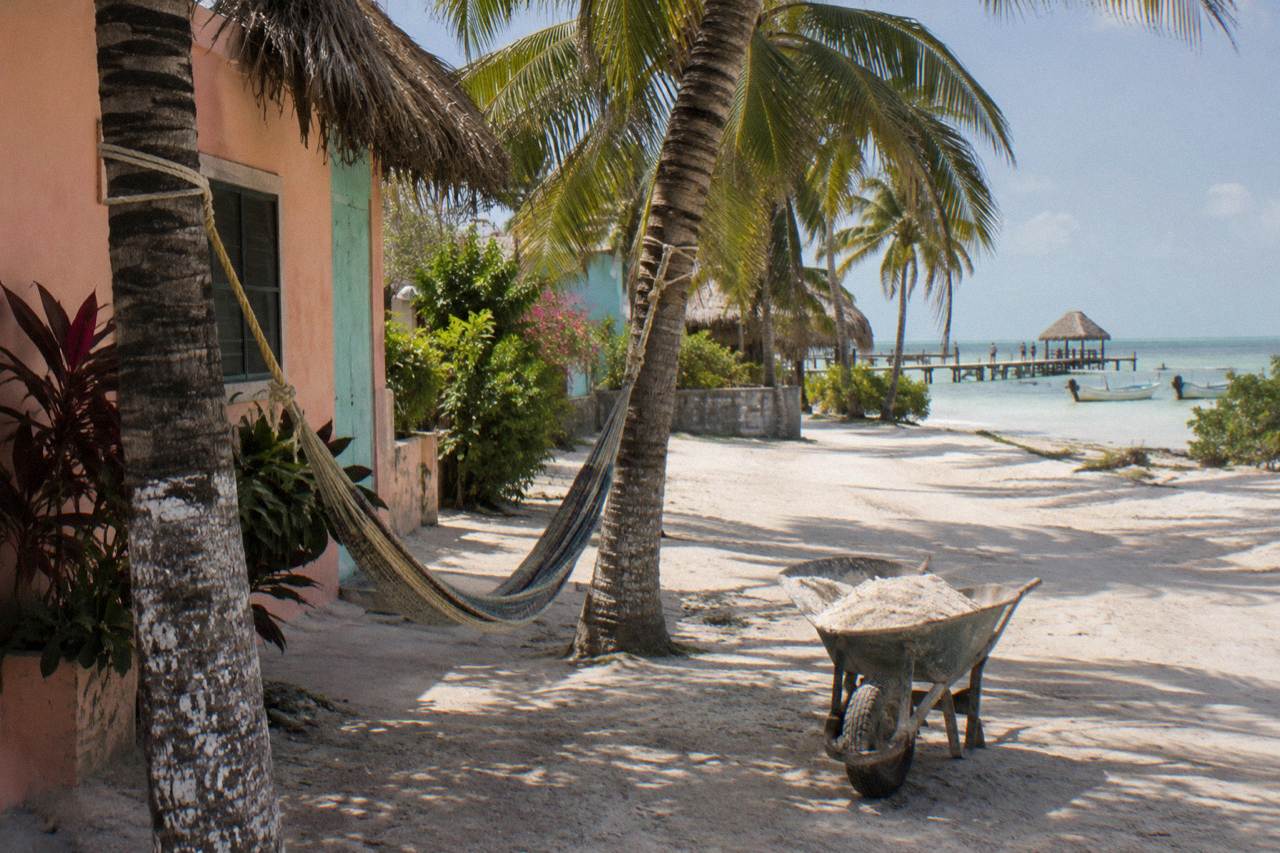
No, Holbox is not a party island in the way Cancun or Playa del Carmen are. It is a quiet, car-free fishing island with sandy streets, where music plays in village restaurants and beach bars at night and fades by late evening. Local reports describe a calm, family-friendly destination whose busiest hours happen around dinner, not around a dance floor. The island has no large clubs, no hotel-zone strip and no scheduled party circuit. What it does have is a handful of beach bars and restaurants where live music or a DJ set can run in the evenings, mostly in and around the village center. Visitors who come expecting wall-to-wall nightlife leave surprised in both directions: some find it livelier than they imagined for such a small place, others find the whole island asleep by midnight.
That rhythm is not an accident. Holbox sits inside the Yum Balam protected area, tourism is built around nature rather than nightlife, and the biggest draw on the calendar, the whale shark season, pulls people out of bed at dawn rather than keeping them out until dawn. The 2026 season ran 15 May to 17 September per the official SEMARNAT notice, and next season is expected to open around mid-May again, which keeps the island's core audience oriented toward early mornings on the water. A destination whose headline activity hands you a mask and a life vest at sunrise is structurally incapable of becoming a party island, whatever the bars try to do after dark.
There is also a physical ceiling on revelry here. The village is small enough to cross on foot in minutes, the permanent population is modest, and there is no road access at all: almost every visitor arrives by the Chiquila ferry, which stops running before midnight in each direction. A party island needs a steady inflow of late arrivals and a critical mass of venues. Holbox has neither, and the islanders who built their businesses around birds, flamingos, bioluminescent plankton and whale sharks have shown little interest in changing that.
The practical takeaway for a trip planner is simple. If your definition of a party island is drinks on the sand with music after sunset, Holbox can deliver that in a small, contained way. If it means clubs, bottle service and a 3 a.m. walk home, Holbox is the wrong island, and most people who love it would say that is exactly the point. The site behind this article, Holbox Island Whale Shark Tours, exists because the island's real magnet is the water, and everything else, including the nightlife, orbits that fact.
For travelers who want the island's calm with something memorable booked in advance, these are the departures that fit that mood best.
What Does Holbox Feel Like After Dark?
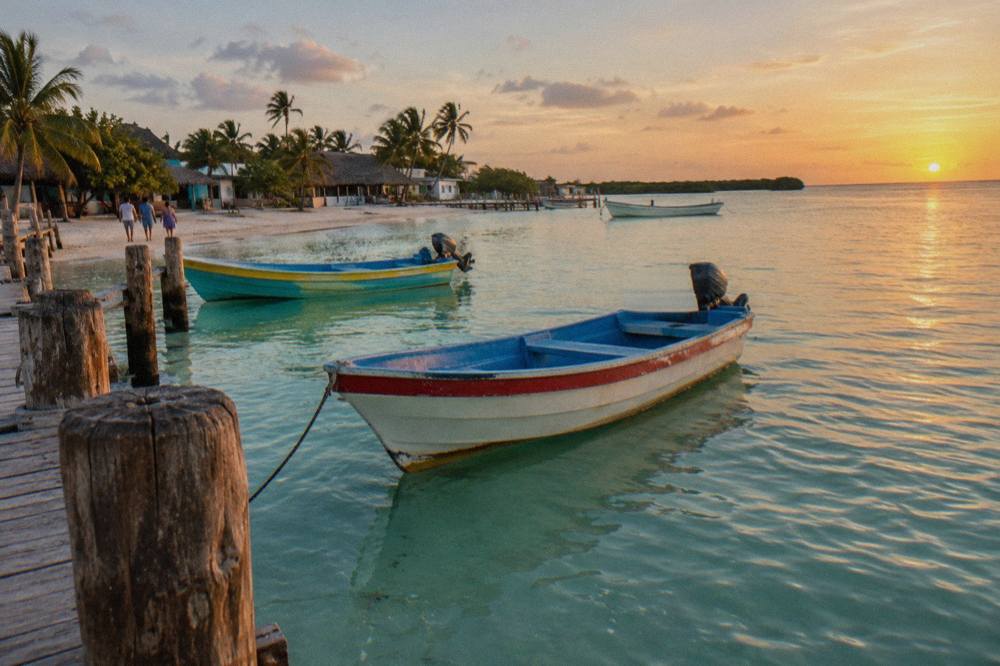
After dark Holbox becomes a village of restaurant terraces, beach fires and small bars with their own playlists, concentrated in a walkable stretch of the town center. Live music happens on certain nights rather than every night, and by late evening most venues wind down. There are no mega-clubs and no loud zones beyond the main streets. Local reports describe the evenings as social but gentle. Dinner runs late by Mexican custom, tables stay full well past 9 p.m., and a few beach spots keep music going afterward, but the soundscape is acoustic guitars and Latin playlists, not festival sound systems. Because the island has no cars, the loudest thing you will hear on most streets at 11 p.m. is a golf cart or the sea.
It helps that everything is close. The village is compact enough that a night out is a walk, and a night in is never far from a night out. Travelers describe strolling between dinner, a drink on the sand and bed without ever needing a taxi, which is part of why the island reads as relaxed rather than rowdy. The same stretch that feels busy at 9 p.m. feels empty by midnight, and that pattern holds through both high and low season. Compare that with a place like Cancun, where the night often starts at 11 p.m. and runs to sunrise, and the difference in tempo becomes obvious within one evening on the sand.
The character of the evening also shifts with the crowd. In peak weeks the village fills with swimmers, kayakers and families, and the restaurant terraces take on a busy, cheerful hum that can feel festive without ever tipping into wild. In the quiet months, many of those same terraces host more locals than visitors, the music is lower, and a night out can feel like being a guest in someone's neighborhood bar rather than a tourist in a nightlife district. Neither version resembles a party island; both are pleasant in different ways.
One nuance worth knowing: noise carries on a small, flat island. A bar with live music can be heard several sandy blocks away, and rooms near the center will pick up some of it. If silence at night is a priority, lodging a few blocks back from the beach makes a real difference, a point covered in more detail in the where to stay on Holbox guide.
For early risers, the ideal evening on Holbox ends early on purpose. A quiet dinner, a walk on the pier, and sleep before a dawn start is a common pattern among whale shark swimmers and kayak guests alike.
How Does The Night Vibe Affect A Sunrise Whale Shark Pickup?
It barely affects it, because Holbox nightlife ends well before the whale shark day begins. Swims depart in the early morning, often between roughly 6:30 and 7:30 a.m. per operator descriptions, so a moderately late night still leaves time for the light breakfast most listings include. The village is quiet at that hour, and pickups and dock walks take minutes, not hours. This is the real answer to the party question for most readers. A destination can have evening music and still be an excellent dawn-departure base, and Holbox is exactly that. The island's whale shark listings, from the shared Holbox boats to the private charters, are built around early departures because the sharks feed in the morning and regulations concentrate activity in daylight hours. Guests staying in the village center are typically at the dock or meeting point within a short walk or a brief golf cart ride.
The main swim listings from the island illustrate the shape of the day. The All-Inclusive Search and Swim from VIP Holbox Experience runs 7 hours from $209 per person, is rated 4.9 from 267 reviews, includes breakfast, ceviche, snorkel gear and a real-time satellite tracker, and lists free cancellation. The Group Adventure from Holbox Whale Shark Tours runs 7 hours from $184 per person with a maximum of 10 travelers and government fees included in its listed inclusions. Neither is a late-night product; both assume you slept. The rules reinforce the schedule too: federal standard NOM-171 regulates whale shark observation and swimming nationwide, requires quiet entry into the water and caps each boat at 30 minutes around a single shark, so there is no such thing as an evening swim even if you wanted one.
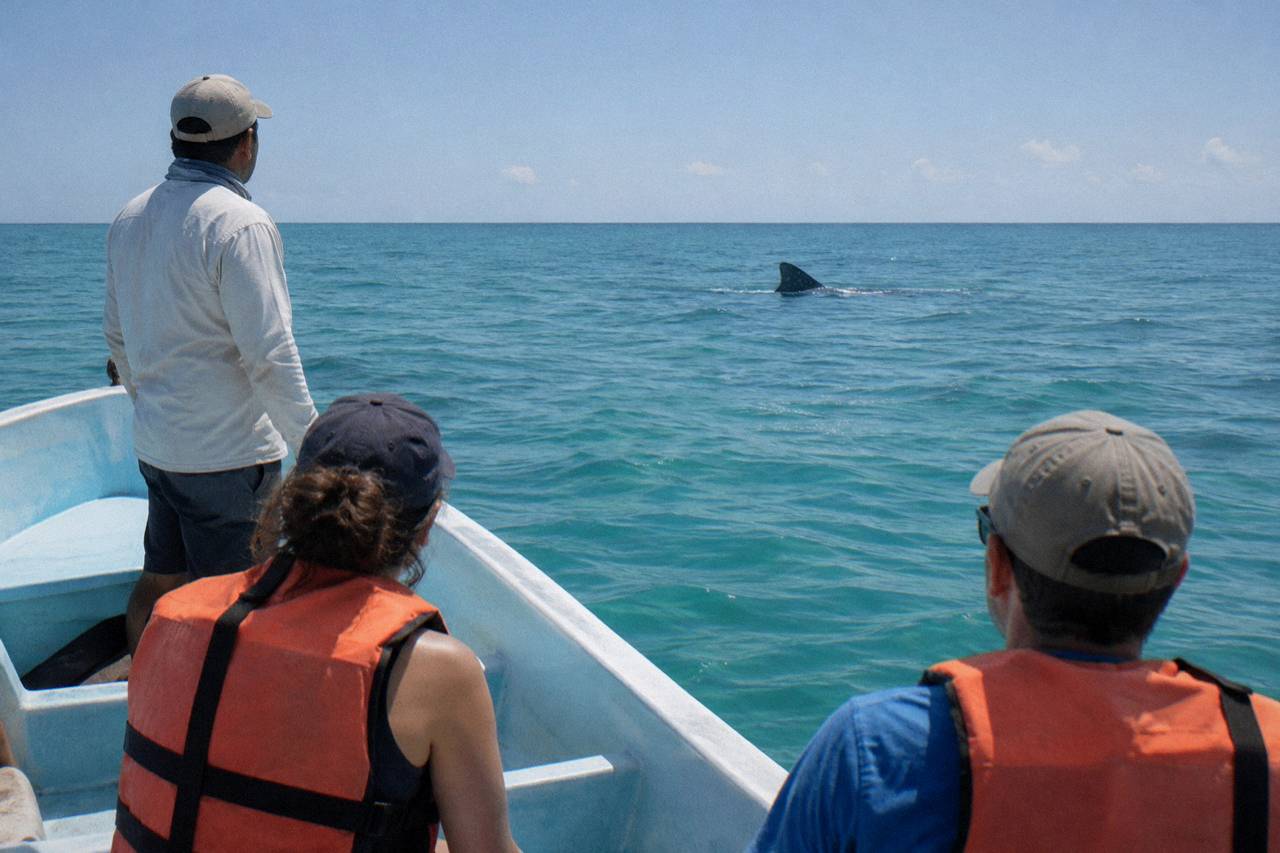
All-Inclusive, Three Languages
Whale Shark Swims From Holbox Island · 7 hours
★ 4.9 · 267 reviews · From $209
Whale shark swims ended for 2026 on 17 September. The 2027 season dates have not been announced, so open calendars may stay blank for now.
Check availability →A word on the season, since it shapes the whole calendar: the official 2026 window ran 15 May to 17 September under the SEMARNAT notice (the published aviso), and that season is now closed. Next season is expected to follow the same mid-May pattern, with the 2027 notice not yet published. Most operators run roughly 1 June to mid-September even when the official window opens earlier, so a trip planned for early June should confirm timing with the listing before booking. July and August are the peak months, which is also when the village is at its most social in the evenings, so the two rhythms reinforce each other rather than clash.
Practical advice from the swimmers' side: eat dinner early by island standards, skip the last round, and set two alarms. The boat does not wait, and the light breakfast at the dock is coffee, fruit and sweet buns, not a hangover cure. One more detail worth planning around: the meeting points for the main Holbox operators sit in the village itself, at the marina end near the Caleta, which means even the farthest hotel in town is a short golf cart ride from check-in. Nothing about the morning logistics punishes you for having enjoyed the evening, as long as the evening ended at a reasonable hour.
Is Holbox Quiet Compared To Other Island Destinations?
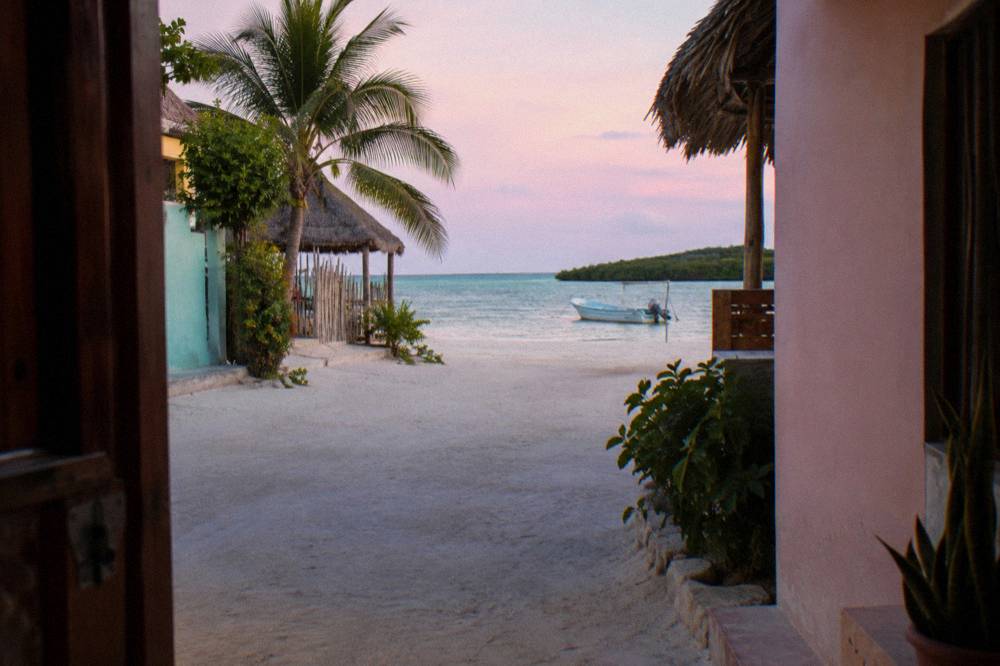
Yes, Holbox is markedly quieter than Cancun, Playa del Carmen or Isla Mujeres' north beach scene. It has no scheduled flights, no private cars, no club district and a much smaller visitor base. Its nightlife is village-scale, and its reputation rests on nature, food and pace of life rather than on parties. The comparison is easiest to see in structure. Cancun's hotel zone is built around nightlife as a product. Isla Mujeres has a lively beach bar strip at Playa Norte. Holbox has a fishing village of sandy streets where the main modes of transport are feet, bicycles and golf carts, roughly 45 to 75 USD per 24 hours by one guide estimate, and where the loudest regular event is often the wind.
Getting there sets the tone before you even arrive. The drive from Cancun airport to the Chiquila ferry dock takes about 1.75 to 2.5 hours by road, the ferry crosses in about 25 minutes, and the last boat leaves Chiquila at around 9:30 p.m. That final leg filters the visitor mix every single night of the year: nobody stumbles onto Holbox by accident at 1 a.m., because there is no 1 a.m. crossing. Islands with late-night transport grow nightlife around the arrivals; islands without it grow restaurants around the ferry schedule. Holbox is firmly the second kind.
The differences that matter for a trip planner are practical ones, and they stack up quickly.
| Factor | Holbox | Typical Party Destination |
|---|---|---|
| Vehicle traffic | None, cars are not allowed; walking, bikes, golf carts | Cars, taxis, buses |
| Club scene | None; small bars and restaurant music | Dedicated club districts |
| Night noise | Localized in the village center, fades by late evening | Sustained into early morning |
| Evening focus | Dinner, beach fires, live music on some nights | Bars, clubs, shows |
| Typical morning | Dawn kayak or boat departure, often before 7 a.m. | Late starts, recovery mornings |
| Access | Ferry from Chiquila, about every 30 minutes from 6:00 a.m. to 9:30 p.m. | Highway or airport links |
That is not to say Holbox is silent. July and August bring the whale shark peak, the village fills, and mid-season reporting described 15 to 20 boats a day going out at about half of authorized capacity (Riviera Maya News, quoting the Holbox tourism cooperatives). A busy August evening in the village has energy, music and full tables. It just does not have a 2 a.m. equivalent. Readers weighing the two island styles may find the Holbox or Isla Mujeres comparison useful for the overnight question specifically.
When Is Holbox At Its Liveliest?
Holbox is liveliest in July and August, the whale shark peak months, when the village fills with swimmers and tables book out in the evenings. Crowds peak with the whale sharks, especially July and August. Outside those windows, the island slows sharply and many evenings feel like a local town rather than a resort. The seasonal logic is worth understanding because it determines both the evening energy and the morning availability. Whale shark season, officially 15 May to 17 September in 2026, pulls the largest concentration of visitors, and the peak of that peak is July and August per local reporting. That is when restaurants are fullest, when live music nights multiply, and when a walk down the main sandy street at 9 p.m. feels genuinely social.
The shoulder logic cuts the other way. By early September, one news report described demand down nearly 80 percent with tours repriced in pesos as operators fought for the remaining guests, and after the season closes in mid-September the island settles into a quieter rhythm through the autumn. Hurricane season, which runs 1 June to 30 November with the highest risk in September, also thins the late-season crowds. For readers who want the island's most social face, aim for July or August. For readers who want it nearly to themselves, the closed-season months do that, at the cost of no whale shark swimming. One 2026 wrinkle worth noting: sargassum, the floating seaweed that stained much of the Caribbean coast in a heavy Atlantic year, left Holbox mostly blue or green on the state color map through the season, which helped the island's relative quiet feel like a choice rather than an emptiness.
| Period | Season Status | Evening Energy | Sea Temperature Average |
|---|---|---|---|
| January to April | Whale sharks absent | Quiet to moderate, busy at Easter | 24.6 to 26.5 C |
| May | Season opens mid-May | Building with the season | 27.6 C |
| June | Most operators running | Moderate and social | 28.2 C |
| July and August | Peak months | Liveliest, full tables and music nights | 28.9 to 29.4 C |
| September | Season ends 17 Sep, demand reported down sharply | Falling fast after early September | 29.3 C |
| October to December | Closed for swims | Quiet, local pace | 25.4 to 28.5 C |
Sea temperatures are satellite monthly averages from a secondary weather source; the energy descriptions reflect local reporting and typical visitor patterns rather than any guarantee of conditions on a given night.
What Do You Do On Holbox Instead Of Partying?
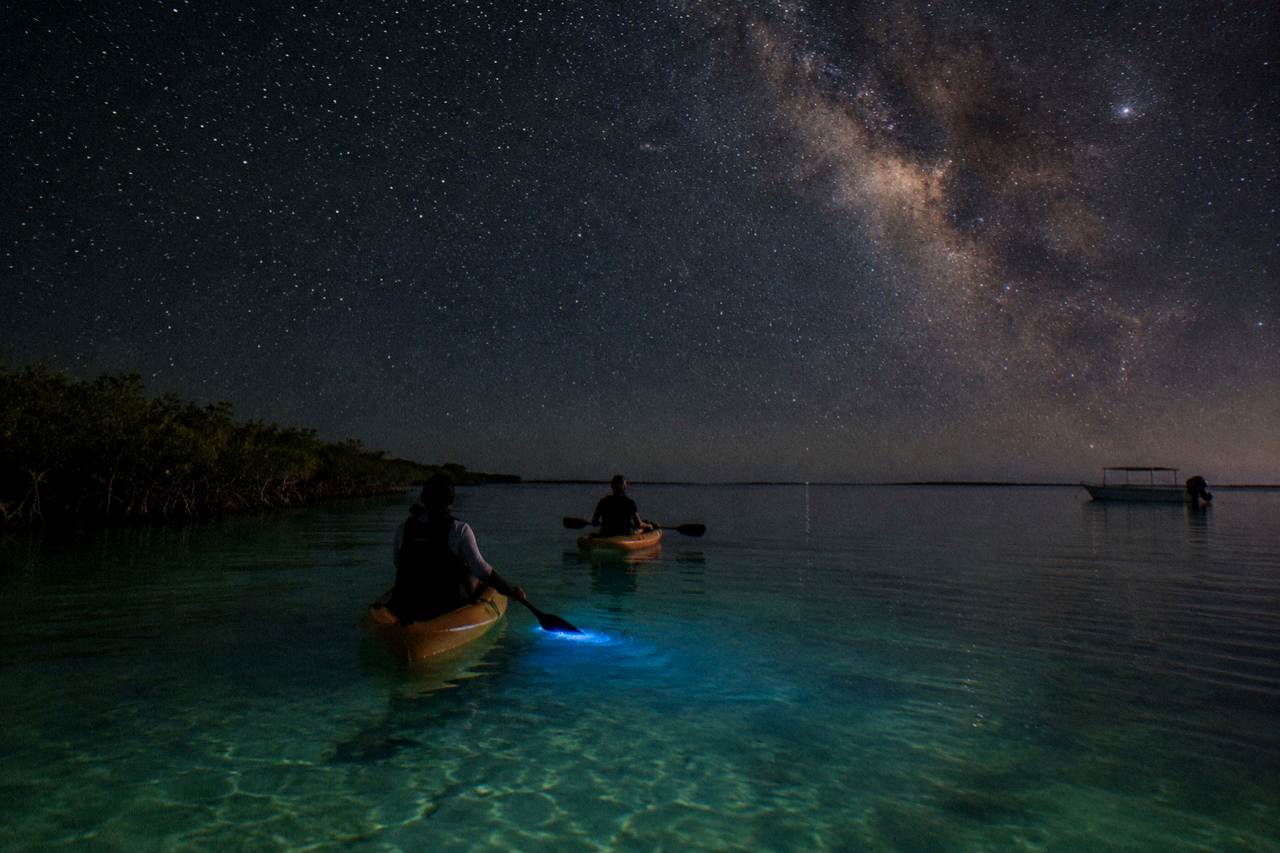
Most of Holbox's best evenings are nature-first: sunset at Punta Cocos, a bioluminescence kayak on dark nights, beach dinners with your feet in the sand, and stargazing from sandbars away from the village lights. The island's tour offering is built around water and wildlife rather than nightlife, and the evening products reflect that. The clearest example is the bioluminescence paddle. On moonless nights from roughly May to October, glowing plankton is commonly described in the shallow bays, strongest around the new moon and never guaranteed, since wind, rain and runoff all dull it. Several listings take advantage of that window, and one of the best-reviewed combines the kayak with stargazing: the Bioluminescence Kayaking and Stargazing tour from Eco Adventure Holbox, 2 hours from $49 per person, rated 4.6 from 360 reviews, with hotel pickup, insurance, gear and drop-off in the center included.
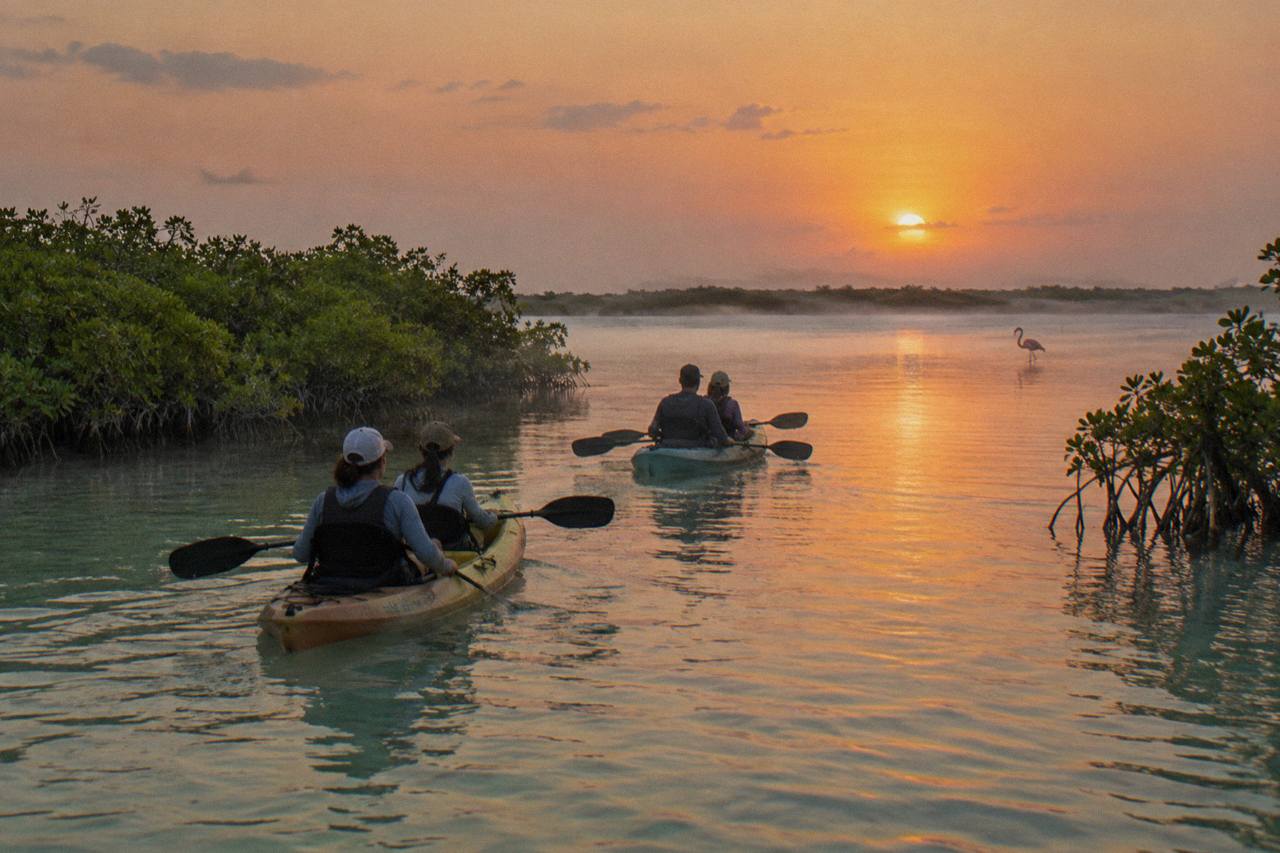
Daytime alternatives fill the rest of the calendar, and none of them involves a dance floor. The three-island boat runs visit Bird Island, Passion Island and the Yalahau cenote spring, usually in three to four hours with hotel pickup included on one listing. Kayak tours paddle the mangroves of the Yum Balam reserve at sunrise, when the water is glassy and birds are most active; the sunrise paddle from Eco Adventure Holbox runs 3 to 3.5 hours from $46 per person with hotel pickup, rated 4.9 from 174 reviews, and returns you to town before the heat builds. Fishing charters work the flats north of the island, and the Cabo Catoche boat runs pair handline fishing with fresh ceviche made from the catch. The full spread of options, with what each actually includes, is laid out in the things to do on Holbox guide, and the calm-versus-crowd tradeoffs by month are covered in the best time to visit Holbox breakdown.
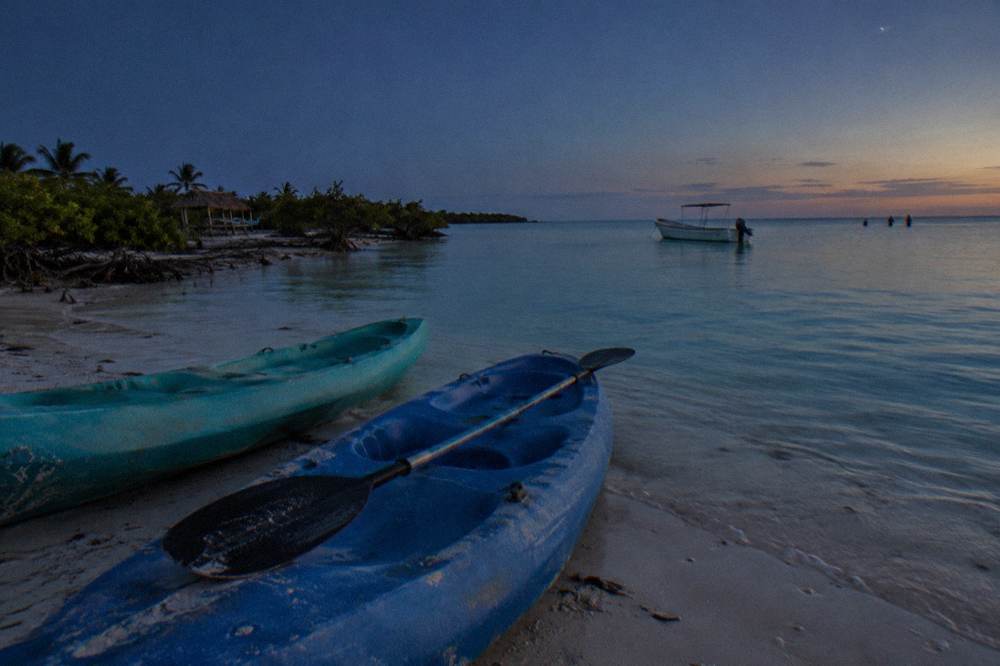
One warning that doubles as advice: plan the bioluminescence night around the lunar calendar, not the weekend calendar. A full moon washes out the glow, and tours are scheduled accordingly. Book the dark nights, and let the bright ones belong to dinner and music in the village. That alternating rhythm, wild night, social night, is the closest thing Holbox has to a party schedule, and for most visitors it is a better one. It also spreads the island's magic across the whole stay instead of concentrating it into one blurry evening, which is the quiet argument this island has been making all along.
Should You Still Book Morning Tours If You Enjoy Nightlife?
Yes, because Holbox's nightlife is short enough that morning tours and evening music coexist comfortably. A typical night out ends by midnight, most swim and kayak departures leave between roughly 6:00 and 7:30 a.m., and everything in the village is minutes from everywhere. Guests who enjoy the bars in the evening still make dawn boats routinely. The one real caveat is stamina, not logistics. A whale shark day is a real day on the water: the shared Holbox listings run 6 to 7 hours, with boat rides of an hour or more each way to the feeding grounds depending on where the sharks are, and seasickness is a genuine consideration on open water. Combining a late bar night with a long boat day is possible, but it is not pleasant, and readers prone to seasickness may want the seasickness guide before deciding how hard to lean into the evening.
A good pattern is to alternate. One evening for music and mezcal, one evening for the bioluminescence paddle, one early night before the swim. On an island this small, that rotation requires no planning beyond checking the moon phase and the weather, and it delivers the full range of what Holbox offers: quiet, wildlife, food and just enough music to feel like a holiday. It is worth saying plainly, too, that the island's cost level rewards this approach. Holbox is not a cheap destination by mainland Mexican standards; drinks bought at tourist prices every night add up quickly, and swapping some bar evenings for a kayak or a beach fire costs far less while giving you better stories. Travelers building that kind of week can mix and match from the departures below, which between them cover everything from dawn to dark.
Common Questions About Holbox Nightlife
Does Holbox have nightclubs?
No. The island has small beach bars and restaurants, some with live music on certain nights, but no club scene. The village center is walkable and quietens by around midnight in most seasons.
Is Holbox good for families in the evening?
Yes. Local reports describe a calm, family-friendly island where evenings center on dinner, beach walks and occasional live music, with petty theft of unattended items and overcharging the main concerns rather than nightlife noise.
Will a late night ruin a whale shark tour?
It can make it uncomfortable. Swims depart early, often between roughly 6:30 and 7:30 a.m., and the day runs 6 to 7 hours on open water. A moderate evening is fine; a heavy one is not recommended.
When is Holbox most lively?
July and August, the whale shark peak months, plus Easter week and the late December holidays. Outside those windows the island is considerably quieter.