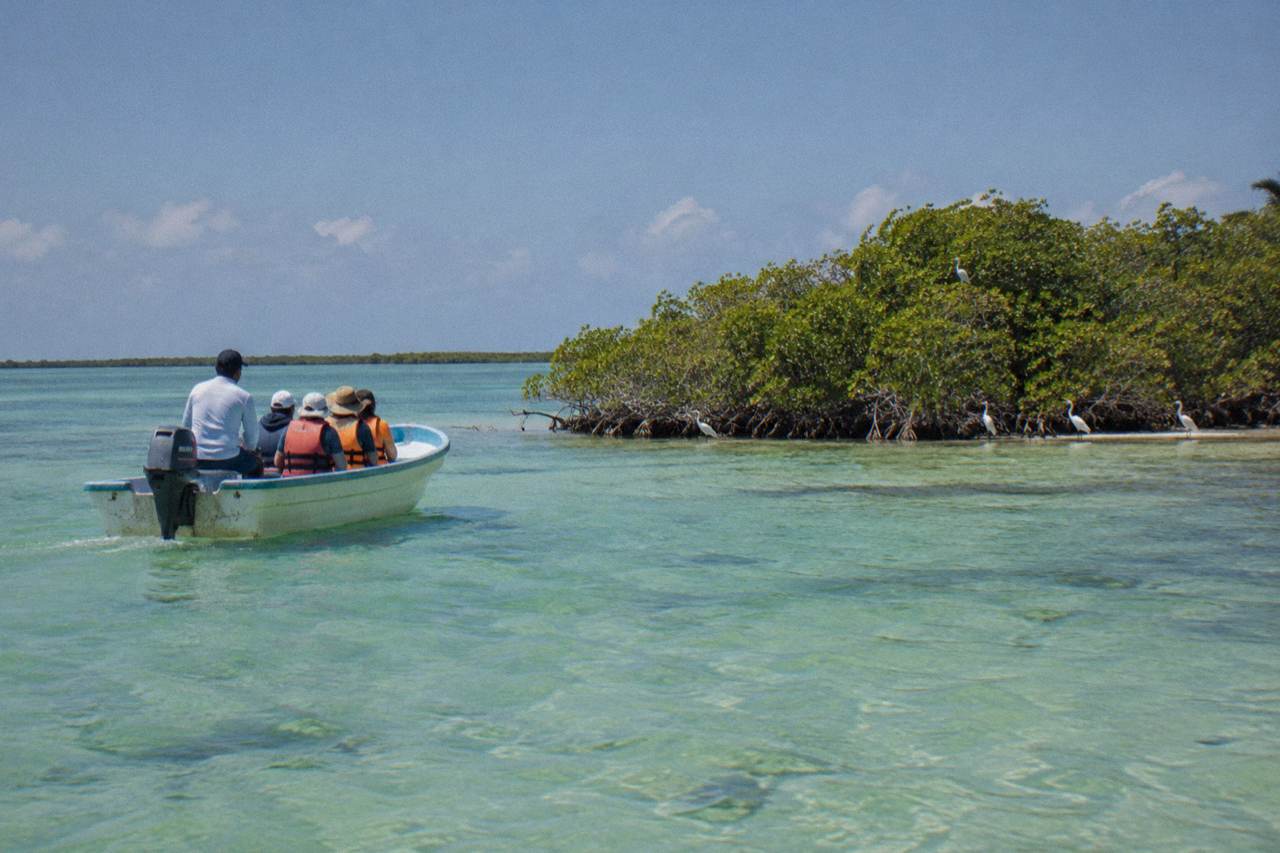
Why Is Holbox Called A Black Hole?
Why travellers say Holbox swallows itineraries: the car-free streets, the slow pace, the sand roads, and how to plan a longer stay around the nickname.
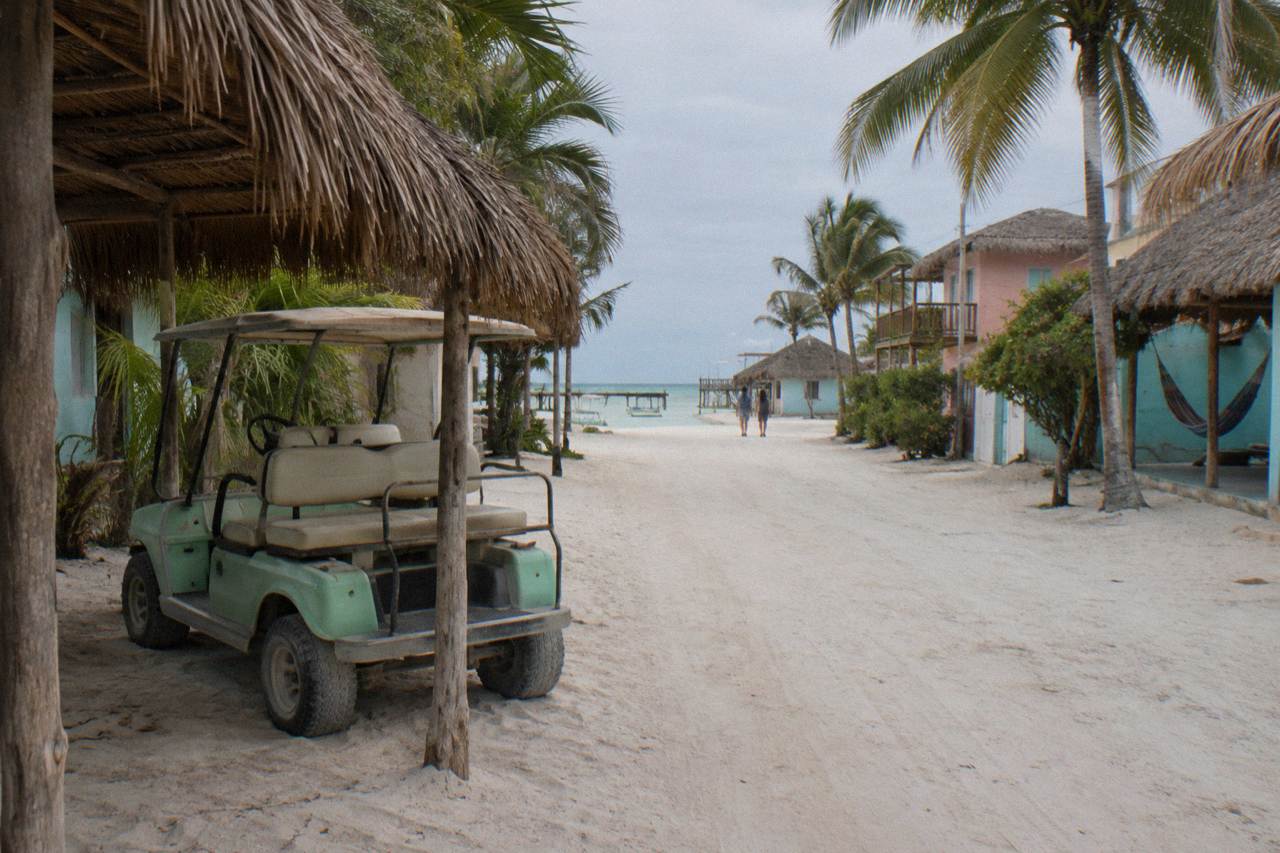
Holbox earns the nickname "black hole" from travellers who arrive for two nights and leave a week later: the island has no cars, sandy streets, golf carts instead of taxis, and a rhythm that quietly absorbs schedules. The name is a traveller's description of pace, not an official place name, and no authority or founding story lies behind it. It spread through word of mouth and travel forums because it keeps proving true.
The phrase shows up again and again in the way visitors describe the island. Someone plans a quick stop between Cancun and Isla Mujeres, and the stop swallows the rest of the trip. The comparison to a black hole is a joke with real physics behind it: the island's gravity pulls you in, and escaping on the planned date gets harder the longer you stay. It is affectionate, not critical. Almost nobody uses the nickname to complain.
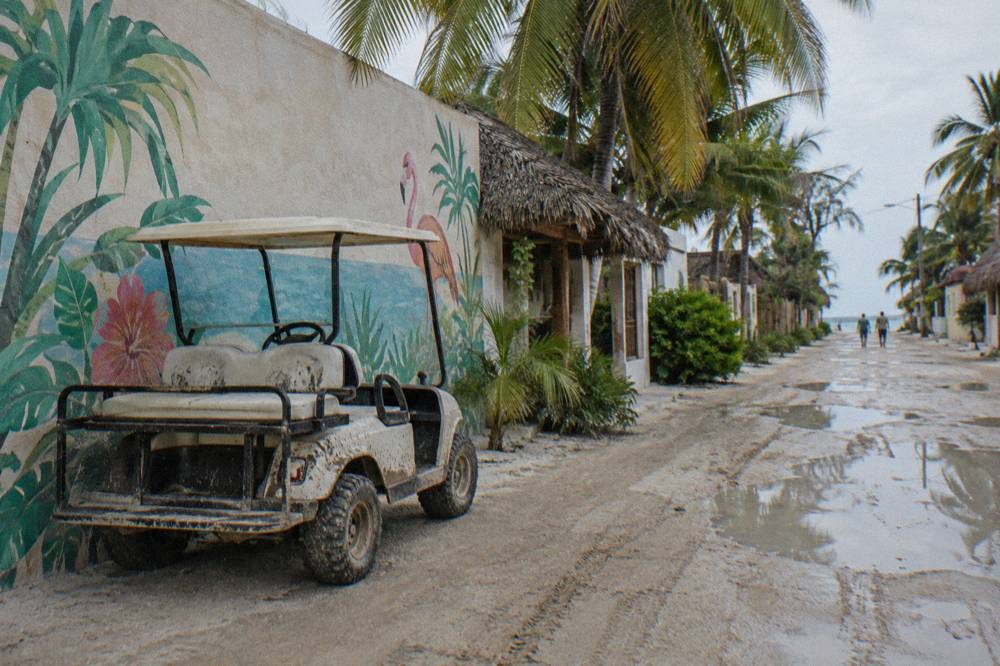
What makes the metaphor stick is that the causes are physical and visible. Holbox has no private cars at all. The streets are sand. Distances are short enough that walking covers most needs, and the alternative to walking is a golf cart rather than a car, which resets the whole tempo of a day. A place where the fastest common vehicle tops out near walking speed on soft sand cannot rush you, and the schedule you arrived with slowly stops mattering.
The nickname also works because Holbox sits at the end of a road. You reach it by driving to Chiquila and taking a ferry across the Yalahau Lagoon, roughly a 25 minute crossing with boats about every 30 minutes from 6:00 a.m. to 9:30 p.m.; a 2026 ferry guide lists the adult one-way fare at 330 pesos. That threshold matters psychologically. Once you have crossed, the effort of leaving and coming back nudges you to simply stay, and the island cooperates by giving you reasons to.
If a first Holbox trip is on your list, the island hands you three natural ways to fill days that were supposed to be empty: the whale shark swim Holbox is famous for, a three-island boat loop, and a sunrise kayak through the mangroves.
What Makes The Island Slow People Down?
Holbox slows people down by design: with no private cars, unpaved sand streets, and ferry-only access across the lagoon, hurrying becomes structurally difficult. The island is a long, narrow strip of sand and mangrove, so everything a visitor needs sits within a short walk or cart ride, and the car ban plus the protected reserve around the island keep development slow.
The car-free rule is the foundation. Visitors park in Chiquila (a 2026 guide lists guarded lots at about 100 pesos a day) and arrive on foot with the ferry crowd. On the island, movement happens by walking, bicycle, or golf cart; one 2026 transfer guide estimates cart rentals at roughly 45 to 75 USD per 24 hours for a standard four-seater. A golf cart on sand does not reward impatience. It rewards the meandering pace that the nickname is really describing.
The sandy streets do quiet work too. Sand muffles the day. There is no traffic hum, no engines idling, no horn. What replaces those sounds is the sea on the northern beach, birds from the Yum Balam reserve, and the occasional cart motor in the distance. Travellers commonly say the island "decompresses" them within a day, and the mechanism is simply an environment built at one speed.
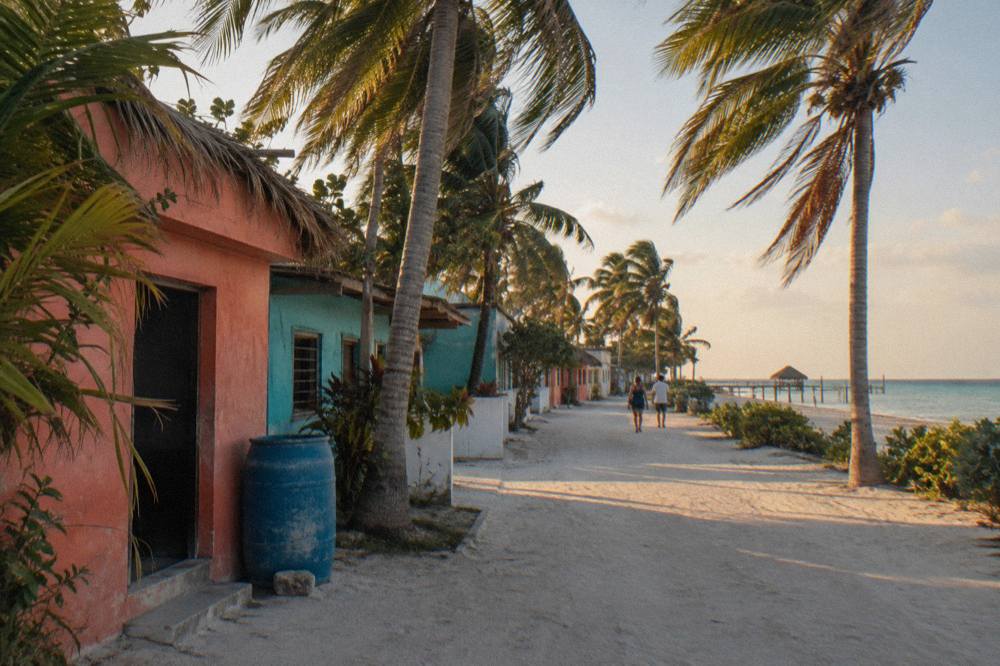
The island's shape concentrates everything further. The town hugs the north beach, restaurants and shops sit a few blocks apart, and the famous spots, Punta Mosquito to the east and Punta Cocos to the west, are reachable on foot at low tide or by cart. When nothing requires a commute, the blocks of time a normal trip loses to logistics simply appear as free hours, and travellers fill them with one more swim, one more long lunch, one more sunset.
The reserve around the island, Yum Balam, protects lagoon, mangrove and sea; the Whale Shark Biosphere Reserve spans about 146,000 hectares, and federal protections keep the built area small and low-rise. Visitors notice the effect before they know the cause: the town ends quickly and the wild begins, which makes the island feel bigger and slower than its size suggests.
Wondering how to fill the extra days?
The pace tends to open up time you had not budgeted. Every tour carries free cancellation, so booking a day trip before you know your rhythm costs you nothing if plans change.
All-Inclusive, Three Languages
7 hours
★ 4.9 · 267 reviews · From $209
Whale shark swims ended for 2026 on 17 September. The 2027 season dates have not been announced, so open calendars may stay blank for now.
Check availability →Why Do Visitors Stay Longer Than Planned?
Visitors extend their stays because Holbox removes the friction that normally pushes people onward: no driving, no check-out logistics beyond a ferry timetable, low nightly effort, and a stack of half-day activities that slot into loose days. The nickname stuck because the island has a way of stretching short visits into long ones. The extension is rarely planned; it is surrendered to.
The pattern has a shape. Day one is arrival and the beach. Day two was supposed to be the departure day, but a morning kayak or a boat trip fills it, and by afternoon the ferry feels like a deadline rather than a plan. Day three appears. The economics cooperate: because the island is walkable, extra nights do not require a car rental or new transport logistics, only a room and the same ferry ticket you already understood.
Half-day activities are the quiet engine of the extension. A three-island boat tour, a kayak through the mangroves at sunrise, a bioluminescence paddle after dark: each one costs a few hours and no travel time to reach, so adding one does not feel like committing a day. The Boat Tour of Three Islands with Transportation runs 3 hours 30 minutes from $39 per person, rated 4.5 from 217 reviews, with hotel transfer within Holbox and a guide included; the listing notes drop-off is not included and the Cenote Yalahau entrance is paid separately. That is a half-day that leaves the rest of the day open, which is exactly the kind of activity that stretches stays.
Weather adds its own drag, in both directions. The Atlantic hurricane season runs 1 June to 30 November with the highest risk in September, and rain days do occur outside it; local reports described heavy rain flooding Holbox streets in early October 2026. A grey day erases the beach plan, the ferry still runs, and the simplest response is to stay one more day for the sun. Nobody experiences that as a hardship, which is the point of the nickname.
Is There An Official Origin To The Nickname?
No. There is no official body, tourism board campaign, or documented first use behind "black hole" as a Holbox nickname. It is traveller slang that describes a repeated experience, the sort of nickname that sticks when a place keeps people longer than planned. Anyone selling a precise origin story for the term is inventing one. What can be documented is only the pattern the name points at.
This matters because origin stories multiply online. A claim that a specific hostel coined the phrase in a specific year, or that a famous traveller wrote it first, circulates without evidence. The shorter version: the phrase appears in travel forums, blog comments and guesthouse conversations because it keeps happening to people, and repetition is the only credential it has.
The nickname also has a cousin meaning worth separating. Some residents and long-term visitors use black-hole language to describe how the island retains people as workers and neighbours, seasonal staff who return every year, travellers who open a small business, visitors who never board the return ferry. That sense is about lives rather than itineraries, and it shares the same cause: the pace is habit-forming, and the barrier to leaving is a ferry you have to choose to catch.
How Does The Whale Shark Season Pull Visitors In?
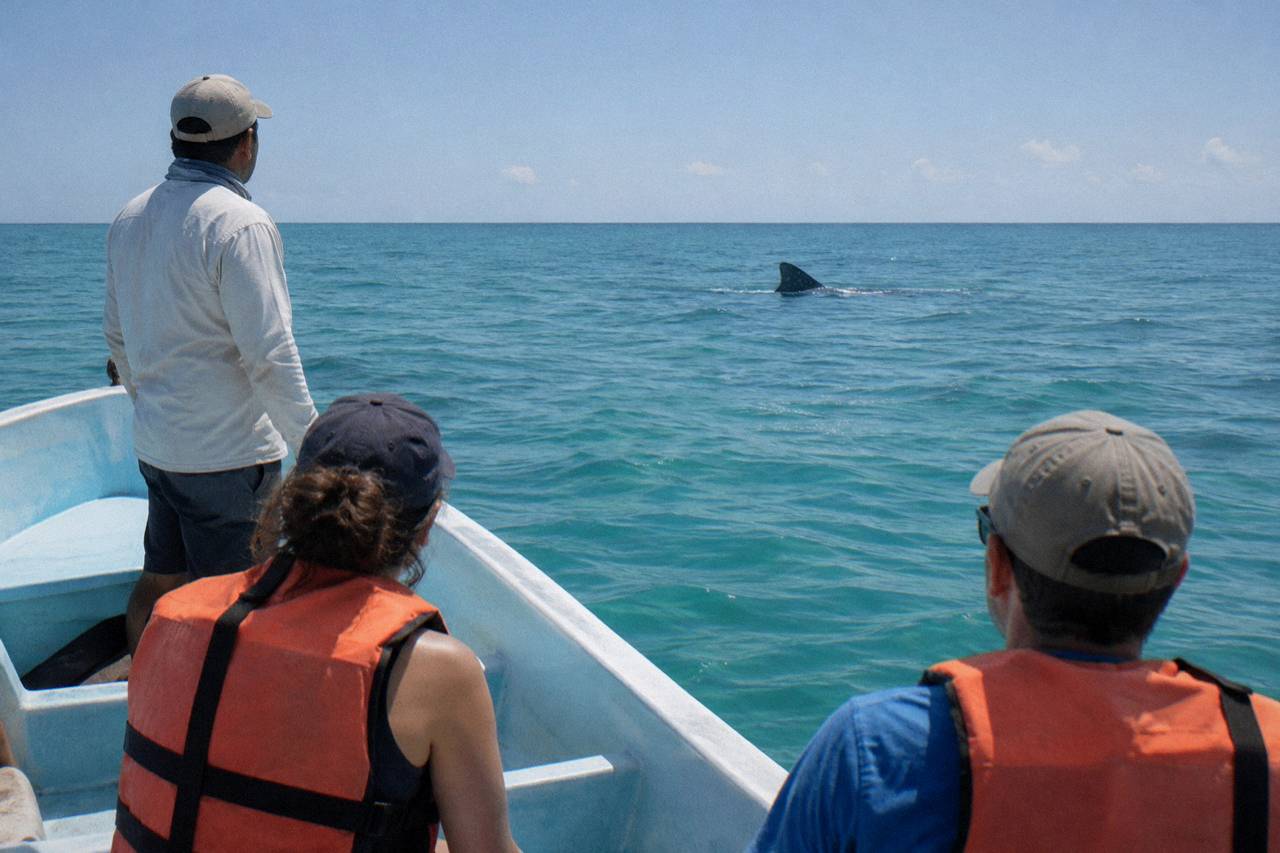
The whale shark season gives Holbox its strongest scheduled reason to stay longer: the official 2026 season ran 15 May to 17 September under the SEMARNAT notice, with July and August the peak months, so swimmers base themselves on the island for several days to catch the best weather window. A tour runs roughly 6 to 7 hours, anchoring one day and leaving the others free.
The season's structure rewards patience. The whale sharks gather to feed in the warm summer water, and the sea off Holbox reads 28.2 C on average in June, 28.9 C in July and 29.4 C in August by satellite monthly averages. Operators describe numbers building through June, peaking in July and August and fading in September. A visitor who arrives for three nights in peak season has three chances at a calm-weather morning; a visitor staying a week has more. That arithmetic is why serious swimmers stay.
One popular listing from Holbox is the Search and Swim with Whale Sharks All Inclusive by VIP Holbox Experience, from $209 per person for 7 hours, rated 4.9 from 267 reviews, with breakfast, ceviche, guacamole, snorkel gear, an activity bracelet and a real-time satellite tracker included. Free cancellation is listed, and guides work in English, Spanish and French. The meeting point is the VIP Holbox marina at the corner of Avenida Caleta and Calle Palomino. The listing excludes hotel pickup, and the same operator lists the taxi to the marina as excluded on its other Holbox trips, so plan your own way to the dock.
Every swim in Mexican waters runs under NOM-171, the federal standard that sets 30 minutes maximum per boat around one shark, keeps boats 5 metres back and swimmers 2 metres from the head and 3 metres from the tail, and bans touching, flash and selfie sticks. A specialised guide stays with a small group of swimmers; the exact limit is set by the protected-area management programme and operators differ. The full text sits on the official gazette page, and the 2026 season notice is published as a PDF on the federal environment ministry's site. None of it is optional for licensed operators, and swimmers are briefed before entering the water.
Because the 2026 season closed on 17 September and the 2027 notice has not been published, anyone planning around it should treat mid-May as the typical opening and book lodging early for July and August. Those are the months when the island is busiest and when the black-hole effect is strongest, since a swim cancelled for weather means another night while you wait for the retry.
What Practical Habits Help You Plan Around It?
Treat Holbox as a minimum three-night destination, book the first two nights refundable where possible, arrive with cash in pesos, and schedule your whale shark swim or boat trip for the first calm morning rather than your last. The island has few ATMs and they run empty in high season, cards can carry surcharges, and the ferry is the only way out, so the practical defences against the black hole are all about flexibility.
Cash is the first habit. Local guides describe a couple of ATMs that frequently run out, card surcharges at some businesses, and cash preference at beach spots, ferries and for tips. The ferry ticket windows take cards with a surcharge of about 50 pesos and sometimes lose signal. Withdrawing pesos in Cancun or on the mainland removes a whole category of stress that would otherwise argue for cutting a stay short, or lengthening it unwillingly.
Timing the booking is the second habit. A swim scheduled for your final morning fails to a squall and your options collapse to staying or losing it. A swim scheduled early in the stay gives you retry days, and those retry days are exactly the loose, low-effort days the island is good at. The same logic applies to the sunrise kayak: the Sunrise and Mangrove Kayak Tour from Eco Adventure Holbox runs 3 to 3.5 hours from $46 per person, rated 4.9 from 174 reviews, with hotel pickup, water, fruit, a dry bag per couple and drop-off downtown.
| Practical factor | What to expect | Planning habit |
|---|---|---|
| Getting there | Ferry from Chiquila about every 30 minutes, 6:00 a.m. to 9:30 p.m., about 25 minutes across; a 2026 ferry guide lists 330 pesos adult one way | Book the return ferry late in the day, or leave it open |
| Money | Few ATMs that often run empty; card surcharges possible; cash preferred at small spots | Withdraw pesos before Chiquila |
| Getting around | No cars; walking plus golf carts at roughly 45 to 75 USD per 24 hours per one transfer guide | Stay central and walk; rent a cart for a single day |
| Weather | Hurricane season 1 June to 30 November, highest risk September; rain days occur outside it | Build one buffer day into any stay |
| Season anchor | Whale shark swims typically mid-May to mid-September, peak July and August | Book refundable and swim early in the stay |
Lodging strategy is the third habit. Because the island rewards extension, travellers who lock a rigid multi-stop itinerary around Holbox fight the place the whole time. A refundable first booking plus a shortlist of second options, checked once you feel the pace, converts the black hole from a schedule-breaking surprise into a planned possibility. The where to stay on Holbox guide walks through the neighbourhoods, and the things to do on the island guide maps the half-day activities that fill bonus days.
Does The Black Hole Effect Ever Work Against You?
Yes, in three specific ways: the pace can frustrate travellers with fixed onward flights, September carries the highest hurricane-season risk at exactly the season's tail, and peak July and August crowds mean the best rooms and boat seats book out, so a spontaneous extension can land you in second-choice lodging. The nickname is mostly fond, but the same forces that stretch stays also punish over-rigid plans. The defence is the buffer day and the refundable booking.
Fixed flights are the classic casualty. The two-hour-plus transfer back to Cancun airport, ferry crossing included, means a midday flight dictates a dawn ferry, and a dawn ferry dictates a final night within cart distance of the dock. One 2026 transfer guide puts the road leg from Cancun airport to Chiquila at about 1.75 to 2.5 hours, with shared shuttles roughly 20 to 60 USD and private transfers roughly 220 to 240 USD. Travellers who forget the math end up choosing between a stressful exit and a missed flight.
The island's quiet season has its own texture. Sargassum, the seaweed that plagues the Caribbean coast, has left Holbox relatively spared: local reports describe the island reading mostly blue or green on the state colour map in mid-October 2026, in a year that was heavy across the Atlantic. Off-season months trade crowds for storm chances and for a swim season that is closed, and visitors who come in October through April find a slower, cheaper island that still swallows itineraries, just more gently.
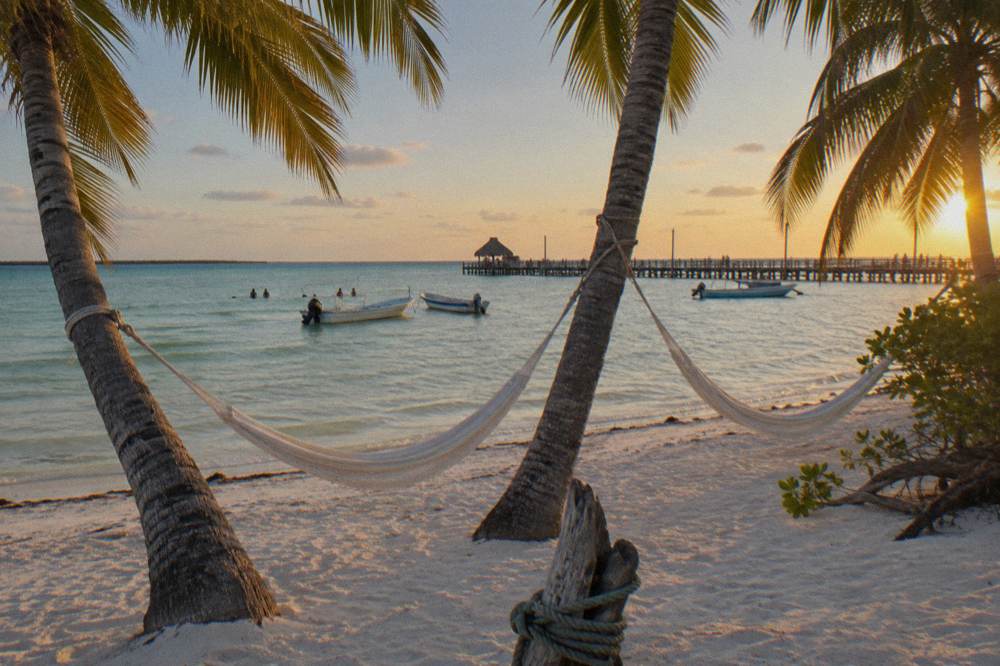
Holbox is not a theme park of activities; it is a small town inside a protected area with a handful of tours, a wide shallow beach and an evening habit of watching the sun set at Punta Cocos. Visitors who need constant stimulation can find the island dull by day three. The ones who stay a week are the ones the island suits, and the nickname is really a self-selection report: the people who call Holbox a black hole are the people it captured.
For travellers planning the full arc of a Yucatan trip, the Holbox Island Whale Shark Tours homepage comparison and trip picker can help you decide how many nights to give the island before you fall into it, and which departure base, Holbox, Cancun or Isla Mujeres, fits your route. More on that choice sits in the Holbox versus Cancun versus Isla Mujeres comparison guide.
Common Questions About The Holbox Black Hole
Is Holbox really car-free?
Yes. There are no private or rental cars on the island. Visitors park in Chiquila on the mainland, take the ferry across the lagoon, and get around Holbox on foot, by bicycle or by golf cart, which one 2026 transfer guide estimates at roughly 45 to 75 USD per 24 hours.
How many nights should I plan for Holbox?
Three is a sensible minimum, with refundable bookings so you can extend. The island's half-day activities, a boat loop, a kayak, a bioluminescence paddle, slot easily into loose days, and buffer days also protect a whale shark swim against weather. Travellers commonly add one to three nights to their original plan.
Does the black hole effect apply in whale shark season?
It applies most strongly then. The season typically runs mid-May to mid-September with July and August the peak, and swimmers base themselves on the island for several days to catch the best weather window. A weather-cancelled swim means another night while you wait to retry, which is exactly how planned departures slip.
What is the best way to leave Holbox on time?
Book a late-day ferry or a buffer night near the dock, schedule any tour early in your stay rather than on your final morning, and remember the road leg to Cancun airport takes about 1.75 to 2.5 hours from Chiquila before your flight check-in. Arriving with pesos already withdrawn removes one more reason a tight exit goes wrong.