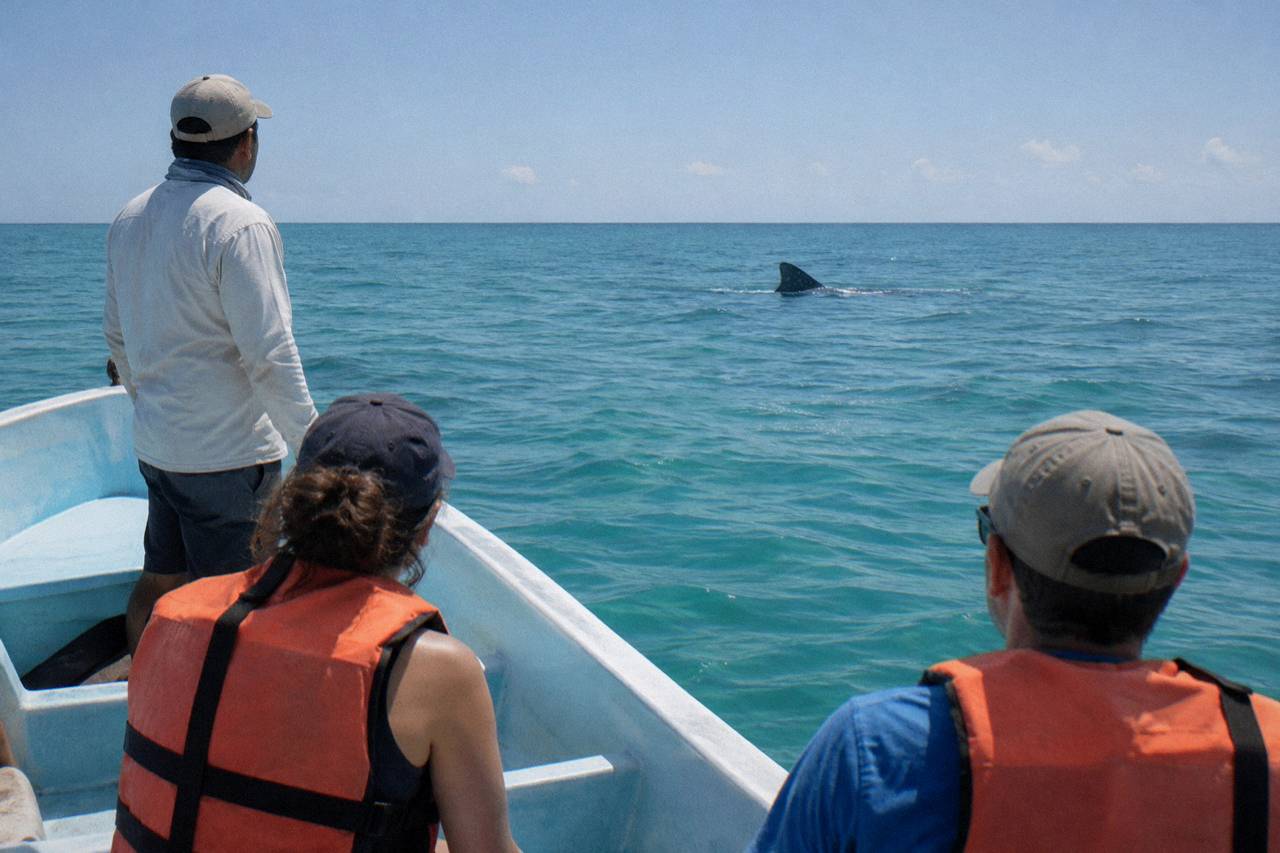
What Is The Best Month To Swim With Whale Sharks In Holbox?
July and August bring the peak whale shark season in Holbox, while June and early September mean fewer boats. A month-by-month guide to choosing your date.
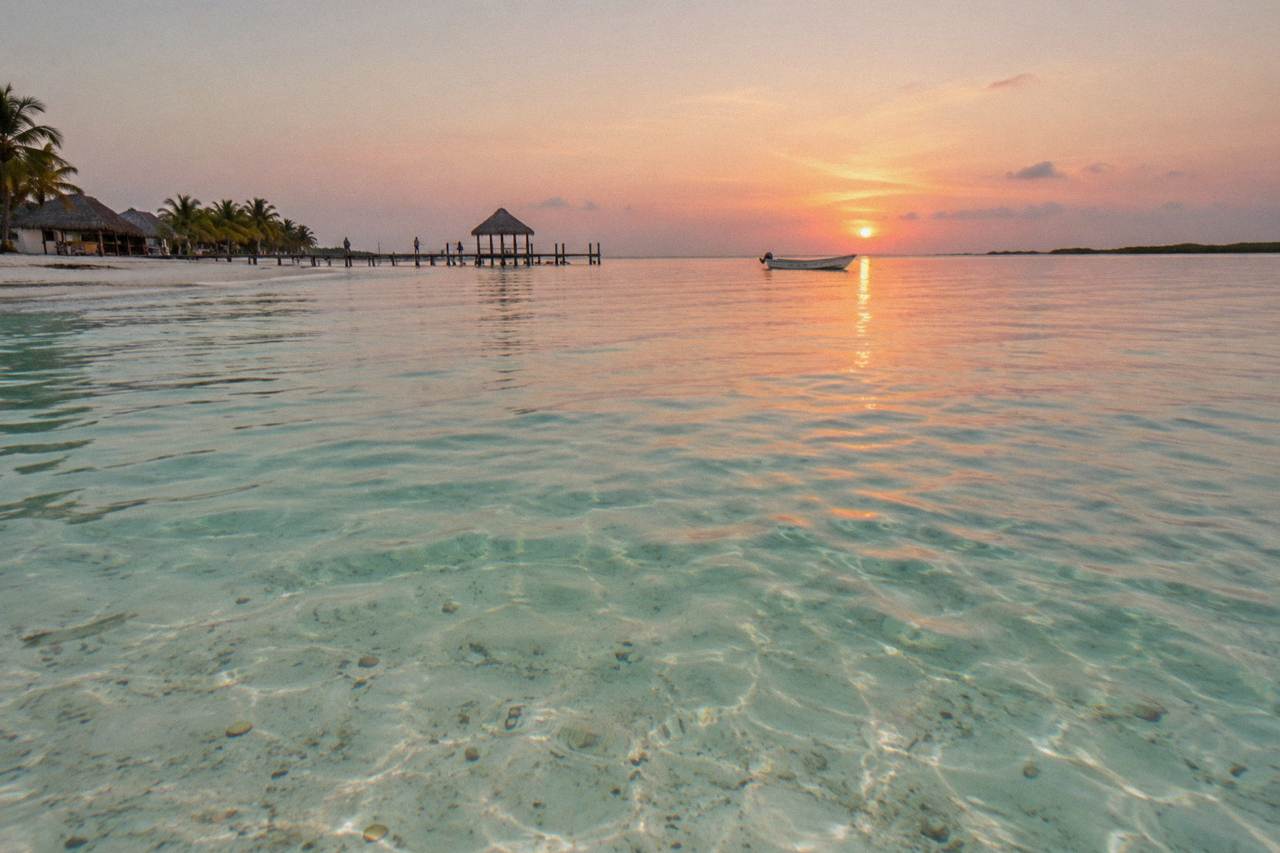
The 2026 Holbox whale shark season ran from 15 May to 17 September under the SEMARNAT notice, and it is now closed. That means anyone planning to swim with whale sharks here is planning for next season, which typically opens in mid-May when the federal notice is published again. Choosing a month is really choosing between two things: how many sharks are likely to be feeding in the Afuera zone offshore, and how many boats are likely to be sharing it with you. Those two peaks do not line up, and the best month depends on which one you care about more. If you want to see how the official window and the practical operator schedules line up before you pick your dates, our guide to the Holbox whale shark season timing lays it all out clearly.
The best months for shark numbers are July and August, when local reports describe the season at its height and the strongest aggregations off Holbox. June and early September are the quieter compromise: fewer boats on the water, solid activity, and lower demand, though sightings are never guaranteed in any month. May opens the official season with activity still building.
That ranking comes from how the 2026 season actually behaved, and from the pattern operators and local press describe year after year. The official window is set by SEMARNAT under the federal whale shark standard, and in 2026 it ran 15 May to 17 September. In practice most operators run roughly from the start of June to mid-September, because late May aggregations are still thin and mid-September seas get less predictable. A July 2026 news cycle quoting the Holbox tourism cooperatives reported 15 to 20 boats going out daily at about half capacity in the middle of the season, which gives a sense of the mid-summer rhythm: busy but not saturated, with July and August named as the peak demand months.
If the month matters more than anything else to your trip, the three Holbox and Isla Mujeres departures below cover the range of styles and prices, from an all-inclusive Holbox boat with French-speaking guides to a hotel-pickup Holbox trip and a high-volume Isla Mujeres swim.
Whichever month you pick, the booking logic stays the same: whale shark swims in Holbox run on a fixed official calendar, dates in the peak weeks fill first, and every Holbox whale shark swim comes with free cancellation, so locking a date early costs you little if plans change. The all-inclusive departure from VIP Holbox Experience suits travelers weighing which month to book: it bundles breakfast, ceviche and gear in one price and runs a full 7 hours, which matters more in the peak months when boats queue for their turn with a shark.
How Does The Season Unfold Month By Month?
The season opens officially in mid-May with sharks still arriving, builds steadily through June, peaks across July and August, and fades through the first half of September before the notice closes the water on a fixed date. Sea temperature climbs from 27.6 degrees in May to 29.4 in August and slides back to 29.3 by the September close.
May is the cautious month. The official opening typically lands in the middle of it, but operators describe the first weeks as thin: sharks are reaching the feeding zone, boats are only beginning to run, and a swim early in the window can mean a long search. June is when the season finds its feet. Activity becomes more consistent, the first sustained aggregations are reported, and demand is still low enough that the water feels emptier. July and August are the months local press describes as the season's high point, with the strongest and most reliable feeding concentrations off Holbox and the neighbouring Cabo Catoche and Contoy areas. September is the taper: the first days can still deliver good encounters, but by the second week activity drops away sharply, and a 3 September 2026 report described demand down nearly 80 percent, with prices on the local market falling from about 2,800 pesos early in the summer to 2,000 to 2,300 pesos, figures from local news reporting rather than published tour prices.
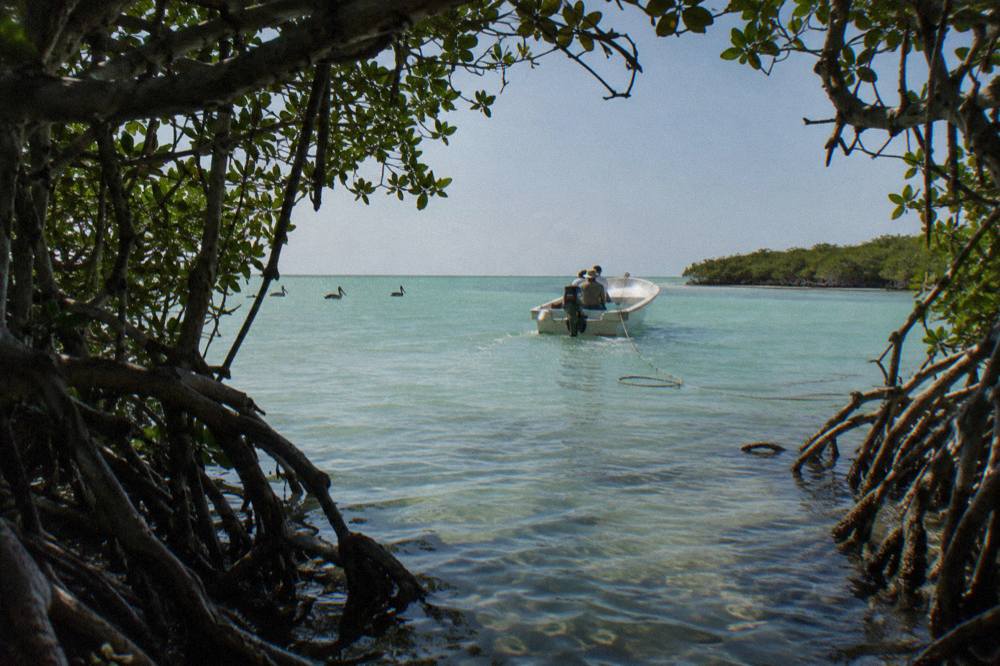
The table below shows the season status and the sea temperature, nothing else, because no reliable per-month sighting count, visibility figure or crowd number exists for Holbox. Anyone publishing a "sharks per day by month" table is inventing it.
| Month | Season status | Sea temperature (average) |
|---|---|---|
| January | Closed | 24.6 C |
| February | Closed | 24.8 C |
| March | Closed | 25.5 C |
| April | Closed | 26.5 C |
| May | Opens mid-May, activity still building | 27.6 C |
| June | Building, most operators running | 28.2 C |
| July | Peak | 28.9 C |
| August | Peak | 29.4 C |
| September | Fading, closes 17 September | 29.3 C |
| October | Closed | 28.5 C |
| November | Closed | 26.6 C |
| December | Closed | 25.4 C |
Sea temperature matters less than you might think for choosing a month, because the whole season sits in a narrow warm band: the difference between the May opening and the August peak is under two degrees. What the temperature curve does tell you is that this is a genuinely warm-water swim, and that the months outside the window, however inviting the island looks in April or October, carry no legal swim season at all. Holbox outside the season still has plenty to do, from bioluminescence kayaking to the three-island boat trips, but a whale shark swim is not one of them. For the wider picture of what the island offers month by month, the full calendar is broken down in the Holbox whale shark season month by month guide.
Since a month choice is a date choice, and dates in July and August go first, it makes sense to hold your spot before the peak weeks tighten up.
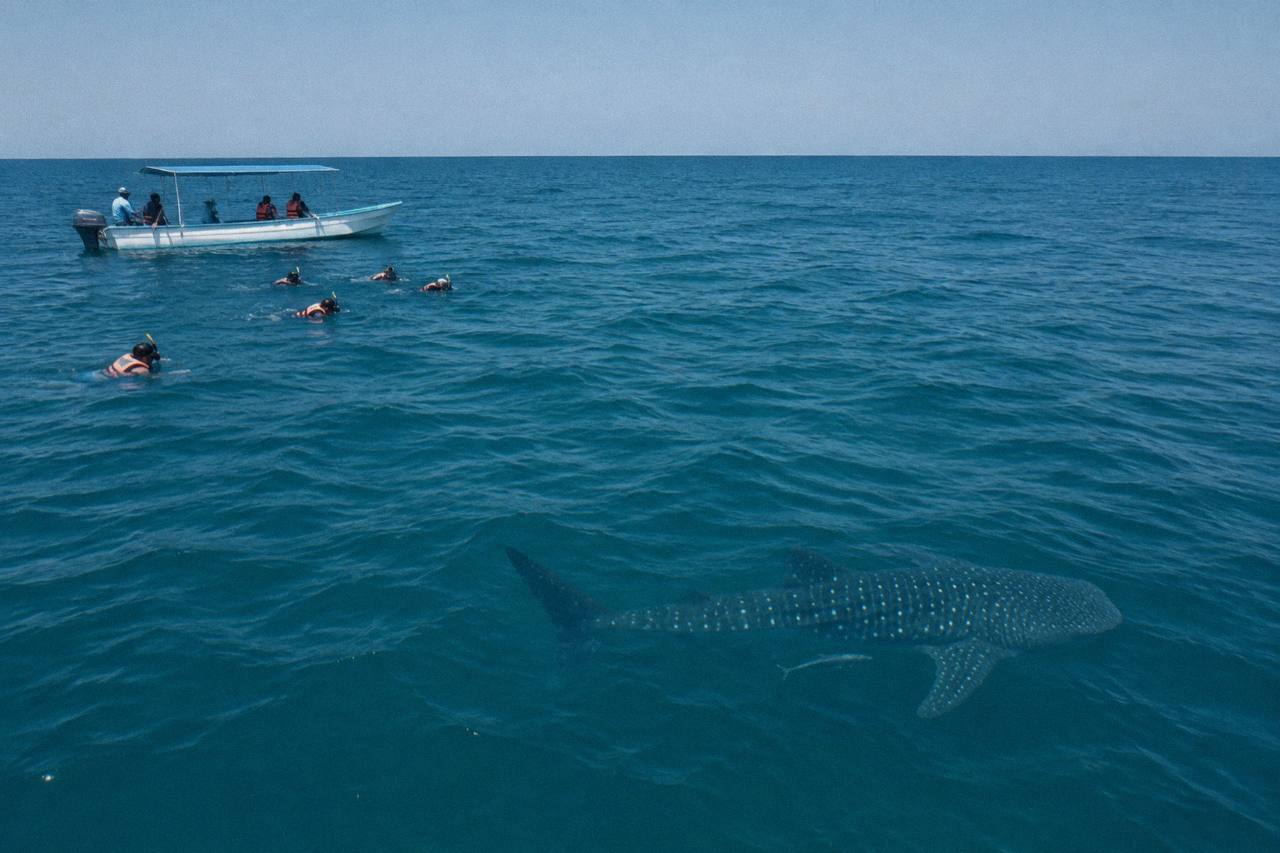
6-Hour Swim, VIP Holbox Experience
6 hours
★ 4.6 · 243 reviews · From $178
Whale shark swims ended for 2026 on 17 September. The 2027 season dates have not been announced, so open calendars may stay blank for now.
Check availability →Why Do July And August Deliver The Most Whale Sharks?
July and August are the months when whale shark feeding activity off Holbox is described as at its strongest, because the warm, plankton-rich water of high summer sustains the largest aggregations in the Afuera zone. Local press in 2026 called these the peak months, and operators describe many sharks in the water in these weeks.
The mechanism is simple. Whale sharks gather where their food gathers, and the warm Gulf waters north of Holbox bloom with plankton through the height of summer. That is what draws the animals into the zone between the island and Cabo Catoche in numbers that sustain a whole tourism season. A 4 July 2026 report described the season at its height with shark arrivals increasing into July and August, and the cooperatives' mid-season account had boats going out daily through the same weeks.
The trade-off is company. Peak feeding weeks are peak tourist weeks, and the federal rules that govern every swim, from the 30-minute limit per boat to the requirement that other vessels wait 50 metres away, exist precisely because the water is shared. The rules are strict and worth knowing before you go: the federal standard NOM-171 sets the boat sizes, the approach distances and the quiet, no-jumping water entry that every licensed operator must follow. A specialised guide stays with a small group of swimmers; the exact swimmer limit is set by the protected-area management programme and operators differ, so treat any fixed number a seller quotes as their own practice rather than the law.
If you are going in July or August and want one of the most-reviewed options in the region, the Holbox departures below are the ones to look at: 4.9 from 1,193 reviews and from $155 per person, one of the cheapest peak-month swims you can book, though it departs from Isla Mujeres rather than Holbox itself.
Travelling from Holbox to Isla Mujeres for a departure is not practical in one day, so that listing suits readers basing themselves on the mainland or split between the two. Staying on Holbox, the equivalent peak-month choice is any of the island departures, which run from $178 to $210 per person for shared boats plus the private listing from $1,246 per group.
Why Choose June Or Early September Instead?
June and early September trade some shark density for much less traffic on the water: June has settled weather and consistent, building activity before the crowds arrive, while the first days of September combine late-season sharks with collapsing demand, reported down nearly 80 percent by early September 2026.
June is the connoisseur's month. The aggregations are established enough that operators run daily with reasonable confidence, the sea is warm at 28.2 degrees on average, and the summer rush has not yet landed. You are not choosing June for maximum sharks; you are choosing it for a calmer day, shorter queues of boats waiting their turn, and a chance to enjoy the island itself without peak-season occupancy. Hurricane season officially runs from 1 June to 30 November with the highest risk in September, so June carries some weather exposure, but the serious risk months come later.
Early September is the bargain hunter's month with an asterisk. The sharks have not read the calendar, and the first week or so of September can still deliver strong encounters. What collapses is demand: the report from 3 September 2026 described tours discounted on the local market and boats idle. The asterisk is that the season's official close lands on a fixed date around mid-September, that seas get rougher, and that weather risk peaks this month, so a September booking needs flexible plans more than a June one does. Never book a date assuming the season runs late: the notice sets the close, and in 2026 it was 17 September.
May is the third quiet option, and the weakest. The official opening typically falls in mid-May, but operators describe the early window as thin, with sharks still arriving and fewer boats running full schedules. A mid-to-late May date is a gamble on the season's front edge; if it pays off you get the emptiest water of the year, and if it does not you get a long boat ride and a reef stop. For travellers whose dates are pinned to May, the advice is to push to June if the itinerary allows.
How Far Ahead Should You Book A Peak-Month Swim?
Book a July or August swim as early as your travel dates are fixed, because peak weeks fill first and Holbox carries only 48 of the region's 146 authorized permits in 2026, a number reported by local press. June and early September dates can be booked closer in, though flexibility on the exact day always helps.
The permit number explains the supply side. Riviera Maya News, quoting CONANP figures via the Holbox cooperatives, reported 146 permits for the 2026 season split 92 Isla Mujeres, 48 Holbox and 6 Chiquila across 14 cooperatives. Holbox is deliberately the smaller, quieter base, with small lanchas carrying roughly 8 to 10 passengers each. That intimacy is exactly what many travellers come for, and it also means fewer seats per day than the mainland hubs. In peak weeks those seats go first.
Free cancellation comes standard across every whale shark tour, which changes the booking psychology: you are not gambling money by booking early, you are holding a seat. The practical pattern is to book your preferred date the moment your flights are set, keep one alternative day in the same week in mind, and watch the weather rather than the calendar in the final days. Operators watch sea conditions and will move a departure rather than run an unsafe or pointless trip. When the ocean does not cooperate, how refunds and re-runs are handled is spelled out in what happens if no whale sharks appear.
For readers who want the logistics end to end, the featured all-inclusive Holbox departure runs 7 hours from the marina at Caleta, from $209 per person, rated 4.9 from 267 reviews, with breakfast, ceviche, gear and drinks included in the listing. Hotel pickup is not included, so plan to make your own way to the marina. If you would rather have pickup in writing, the Holbox Island departure below lists hotel or port pickup and drop-off explicitly, from $210 per person, rated 4.5 from 47 reviews, though its listing notes a departure tax paid at check-in on the day, the amount stated on the listing.
Whale Shark Swims From Holbox Island
★ 4.5 · 47 reviews · From $210
Whale shark swims ended for 2026 on 17 September. The 2027 season dates have not been announced, so open calendars may stay blank for now.
Check availability →A note on money for any month: several Holbox-area listings charge a government, park or conservation fee separately on the day, with the amount stated on each listing rather than printed here. Budget for it in cash. Holbox has few ATMs and they run dry in high season, so arrive with pesos sorted from the mainland.
Does Any Other Month Work, Or Any Other Coast?
No. Outside the mid-May to mid-September window there is no legal whale shark swim season at Holbox, Cancun, Isla Mujeres or anywhere in Quintana Roo, and the notice fixes the dates each year. Another Mexican whale shark window runs on the Baja California Sur coast near La Paz, on the opposite side of the country.
This is worth stating plainly because listings mark the swim season as May to September. The Quintana Roo season is a federal calendar, not a marketing one, and reputable operators stop when the notice closes the water. Travellers who can only travel in the northern winter and who have their hearts set on the encounter have two options: plan the Yucatan trip for the June-to-August band, or look at La Paz as a separate trip, since whale shark tours out of Holbox and the surrounding coast are Quintana Roo departures only and no La Paz products are on offer.
For everyone else, the choice within the season is the one this article has laid out. July and August for the strongest aggregations and the busiest water. June for settled weather, building activity and room to breathe. Early September for late sharks at discounted local prices, with the most weather risk. And whichever month you choose, book the day, hold it with free cancellation, and let the ocean do the rest. The team behind Holbox Island Whale Shark Tours keeps the month-by-month comparison and the three-question trip picker on the homepage for exactly this decision. For when whale sharks are actually present, see when you can actually see whale sharks in Holbox.
If a month is now settled in your mind, the natural next step is comparing standout departures: the all-inclusive Holbox swim, the hotel-pickup Holbox trip, and the Cancun and Riviera Maya tour with the region's largest review pool.
Common Questions About The Best Whale Shark Month
When does the Holbox whale shark season open and close?
In 2026 the official window ran from 15 May to 17 September under the SEMARNAT notice. Most operators run roughly from the start of June to mid-September. Next season's notice has not been published; prior years' notices appeared around May.
Are whale shark sightings guaranteed in the peak months?
No. Sightings are never guaranteed in any month, because weather, sea conditions and shark movement vary. Peak months concentrate the probability, not a promise, and listings explain what happens when no sharks are found.
Is September a good month for a Holbox whale shark swim?
Early September can still deliver encounters with far fewer boats, and local reporting described demand down nearly 80 percent by then. But seas roughen, hurricane risk peaks this month, and the season closes on a fixed mid-September date, so flexibility matters more than in June.
Can you swim with whale sharks in Holbox in October or winter?
No. The season is closed outside the notice's dates, and there is no legal swim from Holbox, Cancun or Isla Mujeres between mid-September and mid-May. Winter travellers looking for the encounter would need the separate La Paz window on the Baja coast, roughly October to April.