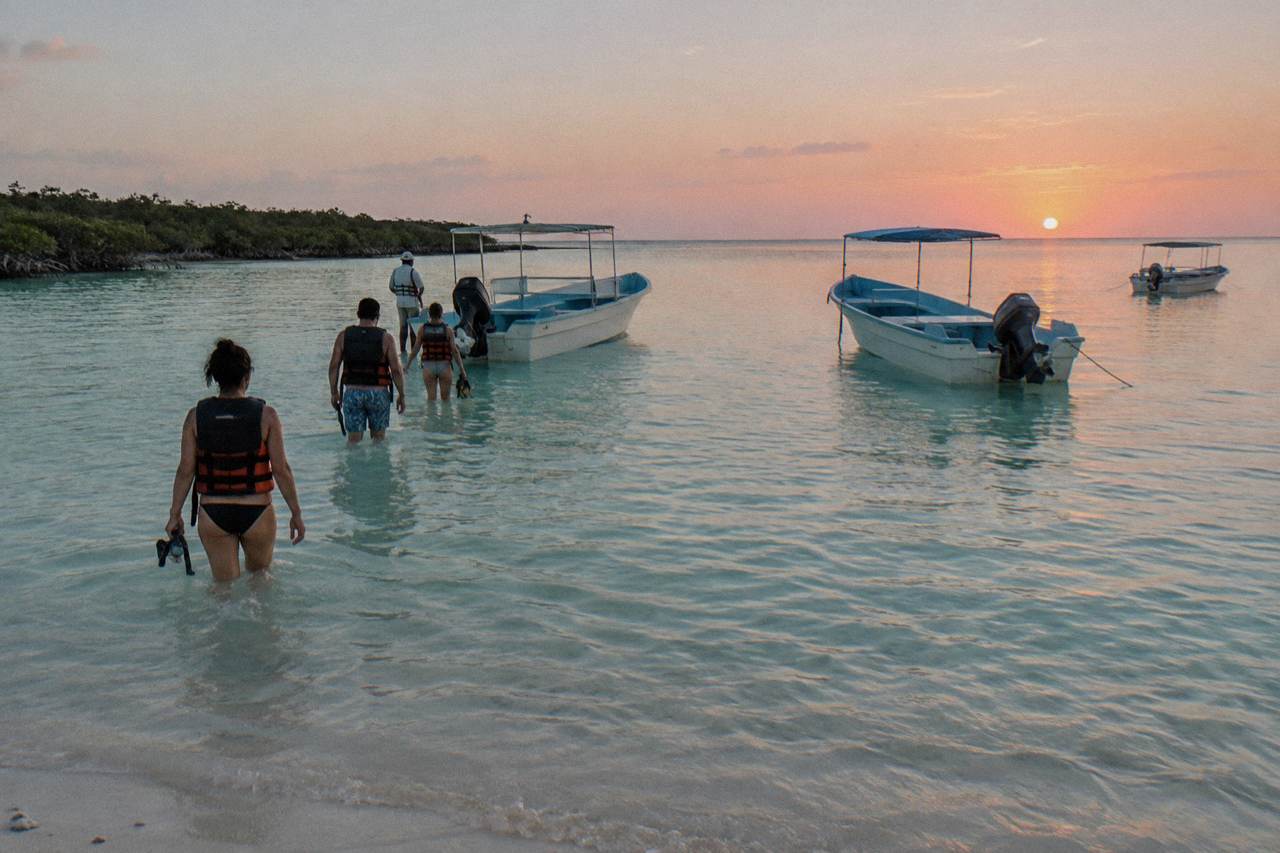
6 hours
★ 4.5 · 47 reviews · From $210
Whale shark swims ended for 2026 on 17 September. The 2027 season dates have not been announced, so open calendars may stay blank for now.
Check availability →The official Holbox whale shark season ran 15 May to 17 September 2026, and it is now closed. July and August were the peak months. Next season should open around mid-May, with the new notice expected near the start of it.
Short answer
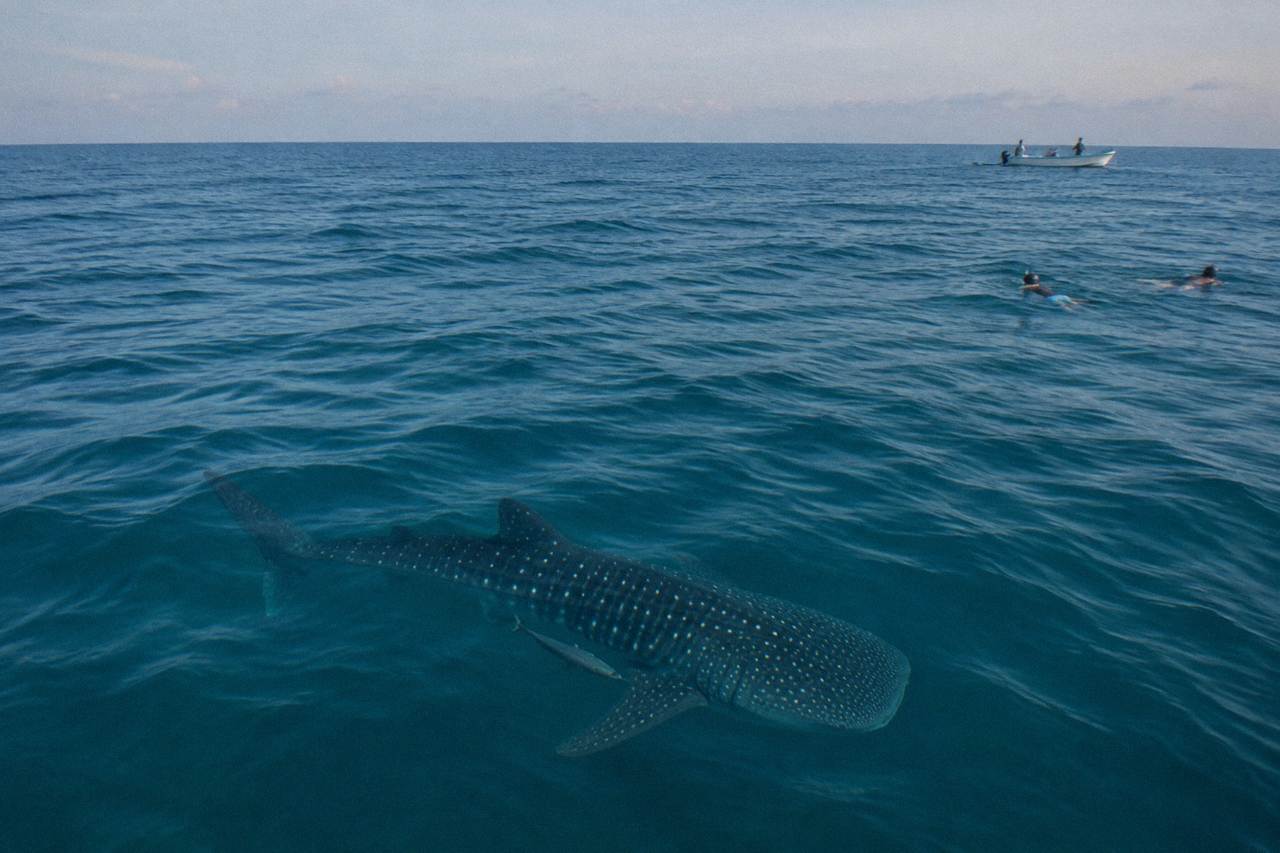
The official 2026 Holbox whale shark season ran 15 May to 17 September under the SEMARNAT notice. July and August were the peak months. Most operators ran roughly 1 June to mid-September. Next season typically opens from mid-May, and no 2027 dates are published yet.
The 2026 whale shark season in Holbox is over. It closed on 17 September 2026, the date fixed by the federal SEMARNAT notice that governs swimming with whale sharks in the Yum Balam reserve and the surrounding protected waters of Quintana Roo. That is the starting point for anyone reading this in late autumn: nothing runs now, and nothing should be booked for a date before the middle of May next year. For a fuller picture of how those final weeks unfolded and how to plan a swim next year, our guide to the end of Holbox's whale shark season and next year's trip has the details.
What the closed season does give you is a clear picture. The official window was 15 May to 17 September 2026, published by the environment ministry under Mexico's whale shark standard, NOM-171. July and August were the busy, reliable months, as they almost always are. May started slowly, June built, and September thinned out fast, with local news reporting demand down nearly 80 percent by early in the month. This guide walks through the season month by month, explains why the peak sits where it does, and helps you pick a week for next year. The site's Holbox Island Whale Shark Tours comparison page pulls the same logic into one place if you want the short version.
The official Holbox whale shark season ran from 15 May to 17 September 2026, set by a SEMARNAT notice under NOM-171 that covers Yum Balam, the Whale Shark Biosphere Reserve and the Caribe Mexicano Biosphere Reserve. That season is closed. Next season typically opens from mid-May, but no 2027 dates have been published.
The notice is the real authority here, not a tour operator's calendar. It fixes the season, opens the permit application window, and defers the number of authorised boats in each zone to CONANP, the national protected areas commission. You can read the 2026 notice yourself as a PDF on the gob.mx site: the season clause is short and unambiguous. In 2026, CONANP authorised 146 permits across the region, split 92 for Isla Mujeres, 48 for Holbox and 6 for Chiquila, across 14 tourism cooperatives, figures reported by local news quoting the Holbox cooperatives.
One nuance matters when you read operator pages. Many Holbox operators describe their practical window as roughly 1 June to mid-September, because the second half of May can be thin for sharks and mid-September thins again. That operator window is a reasonable rule of thumb, and the listing for the all-inclusive Holbox swim is typical of the tours that run it. But the legal season is the ministry's date pair, and swimming outside it is not permitted regardless of what any booking page implies. If a date in late May or mid-September next year looks tempting, check that the operator is actually departing, not just accepting bookings.
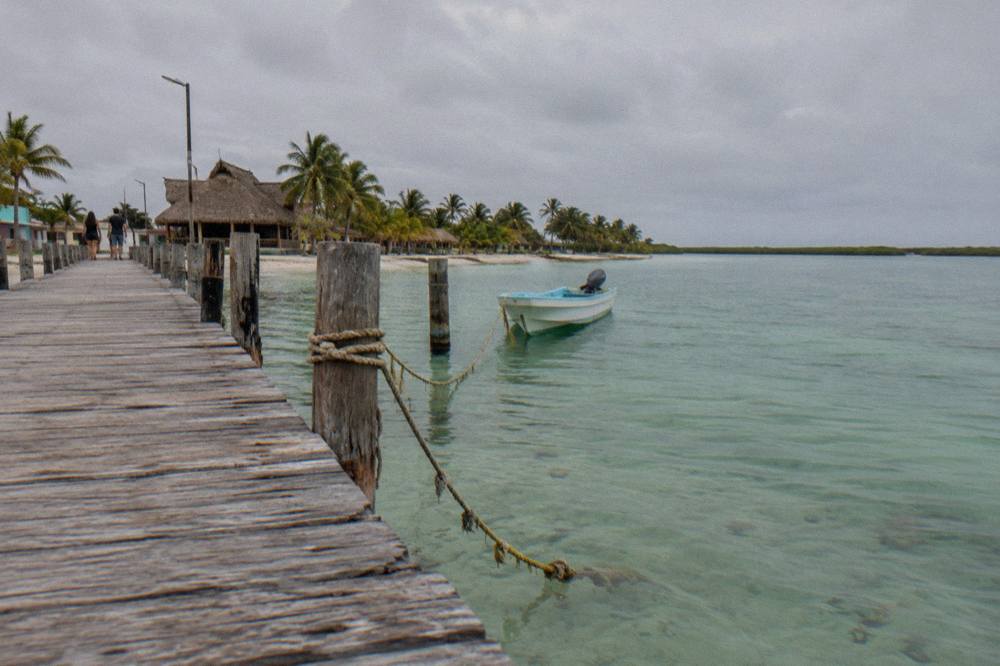
The distinction also explains the calendar's shape. The notice opens the season in mid-May because the sharks' arrival, driven by plankton and warm water, is usually underway by then. Operators hold back until the aggregations are consistent, which is why June, not May, is when the fleet is genuinely busy. By September the animals disperse, the weather turns riskier, and the same operators wind down before the official close. The pattern holds on every departure point from Holbox, from shared boats to the private charter.
May opens the season on 15 May but numbers are still building, June is when most operators get properly going, July and August are the peak months, and September winds down to the 17 September close, with demand reported down nearly 80 percent by early in the month. Each month trades crowd level against reliability.
The table below gives the month-by-month picture: season status and sea temperature only. Sightings vary day to day and no per-month count exists in any official source, so the table deliberately prints none. What you can plan around is the season window and the water warmth, both of which are stable year to year.
| Month | Season status off Holbox | Average sea surface temperature |
|---|---|---|
| January | Closed | 24.6 C |
| February | Closed | 24.8 C |
| March | Closed | 25.5 C |
| April | Closed | 26.5 C |
| May | Season opens 15 May, numbers still building | 27.6 C |
| June | Building, most operators now running | 28.2 C |
| July | Peak | 28.9 C |
| August | Peak | 29.4 C |
| September | Season ends 17 September, activity fading | 29.3 C |
| October | Closed | 28.5 C |
| November | Closed | 26.6 C |
| December | Closed | 25.4 C |
The shape of that calendar is worth sitting with for a moment. The season is not a flat four months of identical swimming. Operators typically run fewer boats early in the season, as sightings build into June, a strong July and August with the fleet at roughly half capacity in late July, and a sharp September drop. The August Festival of the Whale Shark on the island, reported by local news at the end of that month, lands right at the moment the season begins its fade, which tells you something about how the island itself reads the calendar. If you're weighing the quiet edges of the season against its busy middle, our month-by-month guide to picking your whale shark dates makes the tradeoffs plain.
For swimmers, the practical reading is this. Book July or August if you want the strongest odds and accept the most boats. Book June if you want a slightly quieter version of the same season at the same listing prices. Treat the second half of May and the first half of September as shoulder weeks: real, legal, bookable, but with more variance in what the day gives you. The month table in our best month to swim in Mexico guide extends this comparison to the country's other aggregation sites.
July and August are the peak because whale shark numbers off Holbox are reported strongest then, sea temperature reaches its warmest at 28.9 to 29.4 C, and holiday demand peaks, with mid-season reporting describing 15 to 20 boats out daily at about half capacity.
Two things converge in these months. Biologically, operators consistently describe July and August as the months with the most whale sharks and the most reliable sightings, and operators describe many sharks in the water in peak weeks. Commercially, the summer holidays push demand to its annual high, and the permit cap means supply cannot grow to meet it: only 48 Holbox permits existed in 2026. When a fixed number of boats meets peak demand, the weeks fill.
The reporting from inside the 2026 season bears this out. A 4 July piece in local media described the season at its height in July and August, and a 21 July report quoted the head of the Holbox tourism cooperatives describing 15 to 20 boats going out daily, about half of authorised capacity, in an article on the season's momentum. That half-capacity figure is more useful than it looks: it means peak season was busy without being saturated, and it suggests shoulder weeks are genuinely quieter rather than just less reported.
For the swim itself, the peak months are when the Holbox listings earn their price tags. The six-hour VIP Holbox swim and snorkel adventure, from $178 per person and rated 4.6 from 243 reviews, and the eco tour with hotel pickup, from $190 per person, run their fullest calendars in July and August. Book early for these weeks; the listings carry free cancellation, so there is little cost to locking a date and adjusting later.
Peak weeks also concentrate the crowd problem the rules exist to manage. Under NOM-171, one boat at a time holds position around a shark for a maximum of 30 minutes while others wait 50 metres away, and boats approach no closer than 5 metres. More boats in the zone means more waiting between rotations, which is the cost of peak reliability. Swimmers who want shorter waits with only slightly softer odds often prefer late June, and the full rulebook is covered in our swimming rules in Mexico guide.
6 hours
★ 4.5 · 47 reviews · From $210
Whale shark swims ended for 2026 on 17 September. The 2027 season dates have not been announced, so open calendars may stay blank for now.
Check availability →May is legal but early. The season opens on 15 May, yet numbers are still building and many operators start closer to 1 June, so a late-May swim in Holbox is a real possibility with more day-to-day variance and reportedly fewer boats than in peak.
The first half of May is closed, full stop. From the 15th, swimming is permitted, and some operators do run the opening weeks. But the pattern reported across 2026 was a slow start: few boats out initially, aggregations building rather than established, and weather still showing the tail of spring variability. The sea is warm enough at an average of 27.6 C, and it warms fast, so the water is not the constraint. The sharks' arrival schedule is.
That makes late May a choice rather than a mistake. The reported upside is a quieter zone, fewer boats waiting on rotations, and a more relaxed boat. The reported downside is that the aggregation is less settled, so a given day can be thinner. Operators describe many sharks in peak weeks; for May they make no such descriptions, and you should read any May booking as a shoulder-week bet. If your dates are fixed by a school calendar or a cheap flight and late May is what you have, book it, but pick a listing with a flexible date policy.
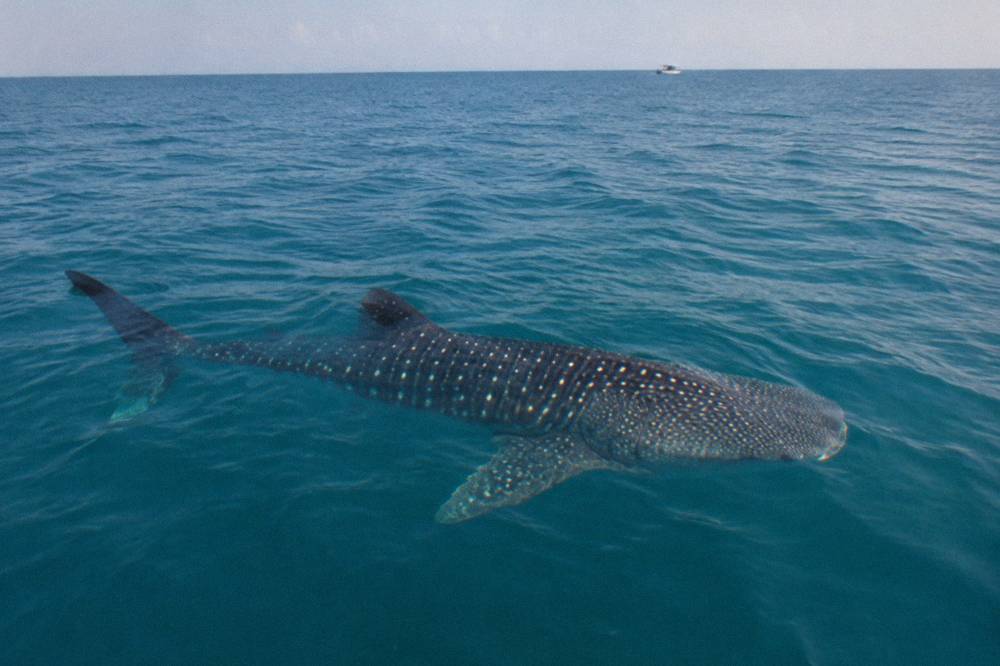
Price is the quiet argument for May and June: the Holbox listings hold the same prices across the season, from $178 to $210 per person for shared swims, so an early or late booking costs no less but buys fewer boats on the water. If your priority is the encounter over the crowd, June is the smarter early booking than May: the operators are fully running, the season is established, and the peak surge has not yet arrived.
The all-inclusive search-and-swim listing, from $209 per person and rated 4.9 from 267 reviews, is the strongest fit for an early-season booking, because its seven-hour format builds in the search time a building aggregation can demand, with a real-time satellite tracker on board and breakfast, ceviche and gear included.
September is a fading month, not a closed one, until the 17th. Demand was reported down nearly 80 percent by early September 2026, tour prices fell in the local market, and the season closes on the 17th, after which swimming is not permitted at all.
The 2026 season ended with a documented slump. Local reporting on 3 September described demand down nearly 80 percent, with locally quoted tour prices falling from about 2,800 pesos at the start of summer to 2,000 to 2,300 pesos, a news-reported market price and not a listing price. Holbox hotel occupancy sat at 58.1 percent for the last week of August. Demand was softening too, and the weather window was narrowing toward September's position as the highest-risk month of hurricane season.
| Early September off Holbox | Mid September | After 17 September |
|---|---|---|
| Season still open, activity fading | Final days, minimal departures | Season closed, no swimming permitted |
| Demand reported down nearly 80 percent | Locally quoted prices at their lowest | Listings carry no bookable swim dates |
| Highest-risk hurricane month begins | Weather windows less reliable | Planning shifts to next mid-May |
Early September can still deliver a good swim, and some swimmers deliberately choose it for exactly the reasons others avoid it: empty boats, willing operators, and the last of the warm water at an average of 29.3 C. But every one of those positives is conditional on luck with weather and sharks, and the hard stop on the 17th removes any slack for rescheduling. If your trip lands in the first week of September, a booking is defensible. In the second week, you are planning against a deadline.
For anyone weighing whether the whole enterprise is worth the calendar gymnastics, our piece on whether the season is already over in Holbox goes deeper on the shoulder-week question, and it is the right companion read if your dates are fixed rather than chosen.
Yes, materially. The Atlantic hurricane season runs 1 June to 30 November, overlapping the entire whale shark season, with September the highest-risk month. May and June carry the lowest storm risk, July and August moderate risk, and September the greatest chance a trip is rescheduled.
Every whale shark booking in Holbox is also a weather bet, and it pays to know the odds by month. The storm season opens on 1 June, so only the second half of May sits outside it. Risk rises through summer and peaks in September, which is one more reason the season's final month is thin: operators and guests both get cautious. None of this means storms, only that the reschedule scenario is a normal part of planning, which is what free cancellation exists for.
The practical protections are straightforward. Book with a listing that names free cancellation, which every Holbox swim listing does. Keep at least one flexible day either side of your swim if your trip allows. And remember the reported pattern from 2026: heavy rain flooded Holbox streets in early October, after the season closed, which is a reminder that autumn weather on this coast is a real variable, not a footnote. The broader weather picture is in our Holbox weather by month guide.
The seven-hour group adventure from Holbox, from $184 per person and rated 4.3 from 86 reviews, is a good storm-season booking in one respect: its longer format includes government fees in the listed price, so a weather-driven reshuffle does not reopen the fee question, and the listing carries free cancellation.
Shared whale shark swims from Holbox run from $178 to $210 per person, plus a private listing from $1,246 per group, and the listing prices hold steady across the season. Some listings add a departure or protected-area fee paid separately on the day, with the amount stated on the listing.
The full Holbox price picture, with what each listing includes, looks like this:
| Listing | Price | Duration | Rating | Pickup |
|---|---|---|---|---|
| VIP Holbox swim and snorkel adventure | from $178 per person | 6 hours | 4.6 from 243 reviews | Meet at departure point |
| Holbox group adventure | from $184 per person | 7 hours | 4.3 from 86 reviews | Meet at departure point |
| Eco tour with lunch | from $190 per person | 7 hours | 4.6 from 57 reviews | Hotel pickup listed |
| All-inclusive search and swim | from $209 per person | 7 hours | 4.9 from 267 reviews | Meet at marina |
| Hotel-pickup swim, Holtours | from $210 per person | 6 hours | 4.5 from 47 reviews | Hotel pickup listed |
| Private swim, VIP Holbox | from $1,246 per group | 7 hours | 4.5 from 27 reviews | Meet at office |
Read the fee lines before you book, not after. The Holtours listing states that its price does not include a departure tax, paid at check-in on the day of the tour, with the amount on the listing. The Holbox Whale Shark Tours group adventure includes government fees; VIP Holbox listings exclude gratuities and taxi but list gratuities and taxi to the meeting point as extras. None of this is hidden; it is printed on each listing's exclusions line, and our full cost breakdown for Holbox swims walks through every line item.
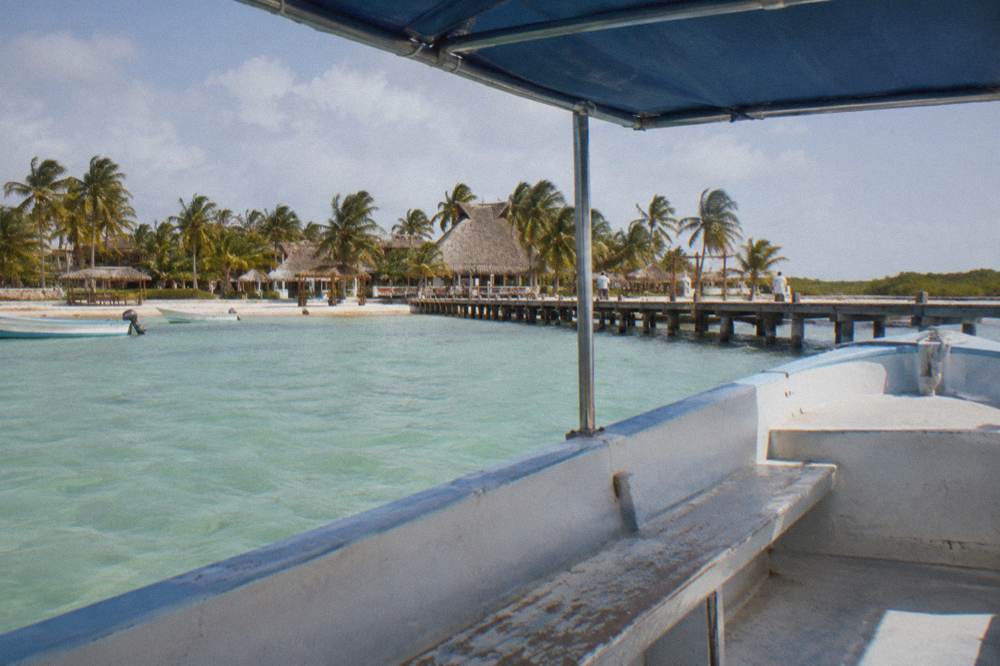
The season affects what you pay less than you might expect. The discounting reported in September happened in the local walk-up market, not on the booking pages. What the season does change is availability and value: the same $209 buys a settled aggregation and a full boat in August, or a quieter, more variable day in June. Choosing your month is choosing which of those you prefer.
Book next season's swim as soon as your dates are firm, aiming for a July or August week, because permits cap the fleet at a fixed size while peak demand fills it. The 2027 notice has not been published; prior notices appeared around May, and the season typically opens from mid-May.
The situation for next year is simple. The 2027 season dates do not exist yet in any published form, and any page claiming to know them is guessing. What you can rely on is the pattern: the notice tends to appear around May, the 2026 season opened on 15 May; the 2027 date has not been announced, and most operators run from roughly 1 June to mid-September. Planning against that pattern, with a booking you can cancel for free, costs you nothing and holds your boat.
Timing the booking matters more than timing the price. With 48 Holbox permits and a fixed fleet, July and August weeks are the scarce commodity, and the strongest listings fill first. The all-inclusive swim and the eco tour with hotel pickup are the two most exposed to that squeeze. Booking early, before the notice even appears, is safe on every listing here because all of them carry free cancellation; you are reserving a place in line, not gambling money.
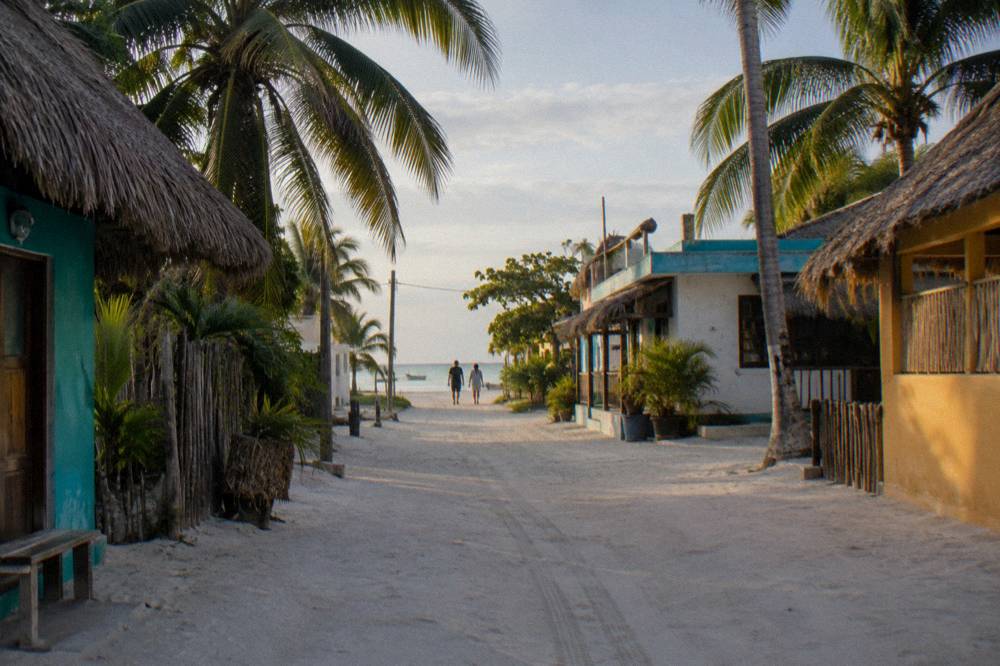
If your dates are flexible rather than fixed, the sweet spot most experienced planners land on is the second half of June or the first half of July: the aggregation is established, the peak crowds have not fully arrived, and the hurricane risk is still moderate. Pair that with a couple of buffer days and a listing that includes breakfast and gear, and the main remaining variable is simply the sharks' schedule, which nobody controls.
The Holtours listing, from $210 per person and rated 4.5 from 47 reviews, is worth an early booking for one reason: it is one of two Holbox swims (alongside the $190 eco tour) with hotel pickup and a maximum of 8 travelers, a smaller boat figure than the 10-traveler listings, which matters most in the weeks when demand is highest.
Outside the mid-May to mid-September window, Holbox is a functioning island destination: boat tours of the three islands, bioluminescence kayak trips commonly described from May to October, and a car-free village reached by the Chiquila ferry. The whale shark swim is simply off the table until next season. If you're already eyeing next season's swim, our Holbox sargassum report for whale shark season explains why this Gulf-facing island was relatively spared from sargassum in 2026.
Travellers who land in Holbox between October and April are not stranded; they are just swimming with a different calendar. Island tours run year-round, from $38 to $92; the three-island boat tours from $38 to $39, visiting Bird Island, Passion Island and the Yalahau cenote spring. Bioluminescence is commonly described as strongest from roughly July to September and visible into October on dark nights near the new moon, never guaranteed. The full picture of what the island offers when the sharks are away is in our things to do in Holbox guide.
The one mistake to avoid is treating the closed season as a technicality. Swimming with whale sharks outside the official window is prohibited, no operator licensed under NOM-171 will take you, and the federal standard's rules on distances, times and conduct apply to every lawful swim inside it. The season dates are not marketing; they are the legal frame around the entire activity, published in the official journal text of NOM-171 and renewed each year by notice.
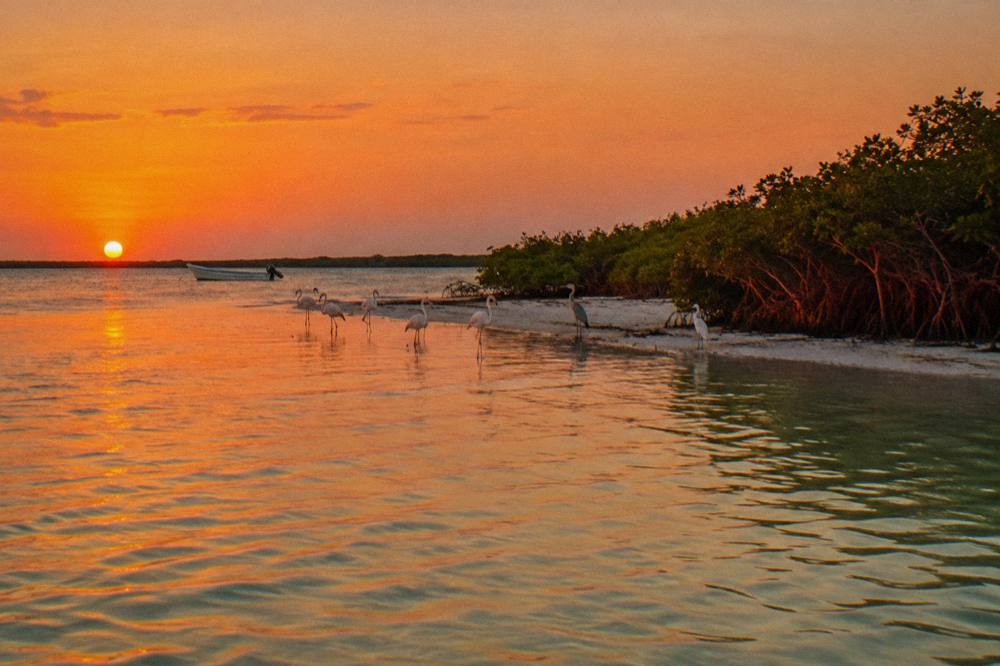
For a trip built around the swim, the sequence that works is: pick July or August if you can, June if you want quieter water, confirm the notice has opened the season before you commit to a shoulder date in May, and hold everything on free-cancellable listings. The season is short and it is genuinely seasonal, which is precisely why the weeks inside it are worth planning properly.
July and August are consistently described as the peak months by local reporting and operators, with the strongest aggregations and the most boats out. Late June offers a similar experience with fewer boats, while May and September are shoulder weeks with more day-to-day variance.
Yes. The season closed on 17 September 2026 per the SEMARNAT notice, and no swims are permitted after that date. The next season is expected to open around mid-May, with the new notice typically appearing near the start of it.
From 15 May, yes, within the official season. Numbers are still building early on, and many operators start closer to 1 June, so late May is a quieter, more variable shoulder week than the peak of July and August.
Early September can still deliver a swim with far fewer crowds, but activity fades through the month and the season closes on the 17th. September also carries the highest hurricane-season risk, so build in flexible dates if you book it.
Book as soon as your dates are firm, especially for July and August weeks, because the permit-capped fleet is a fixed size while peak demand fills it. Every tour carries free cancellation, so an early booking holds your place without financial risk.
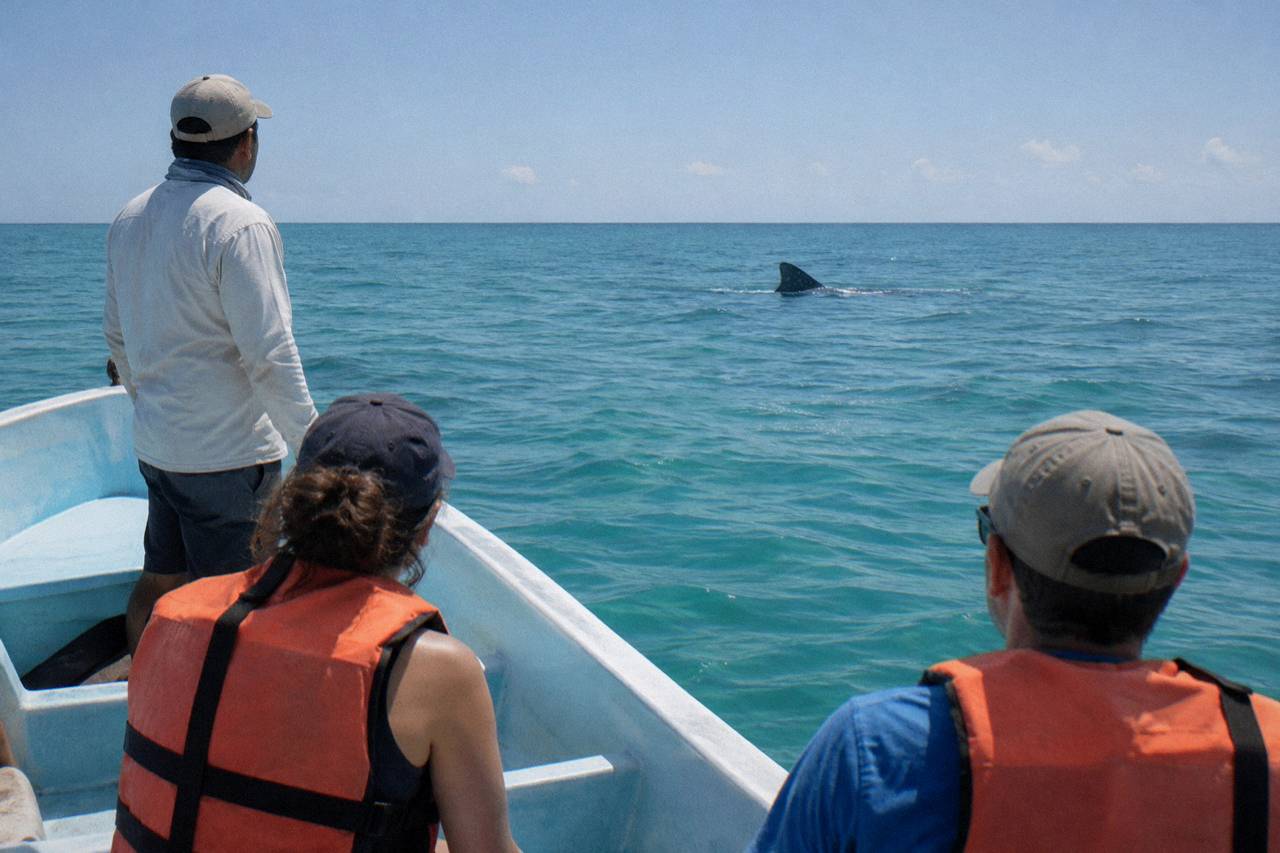
Before you go, the pick for this guide:
All-Inclusive, Three Languages
★ 4.9 267 reviews · From $209
Check availability →