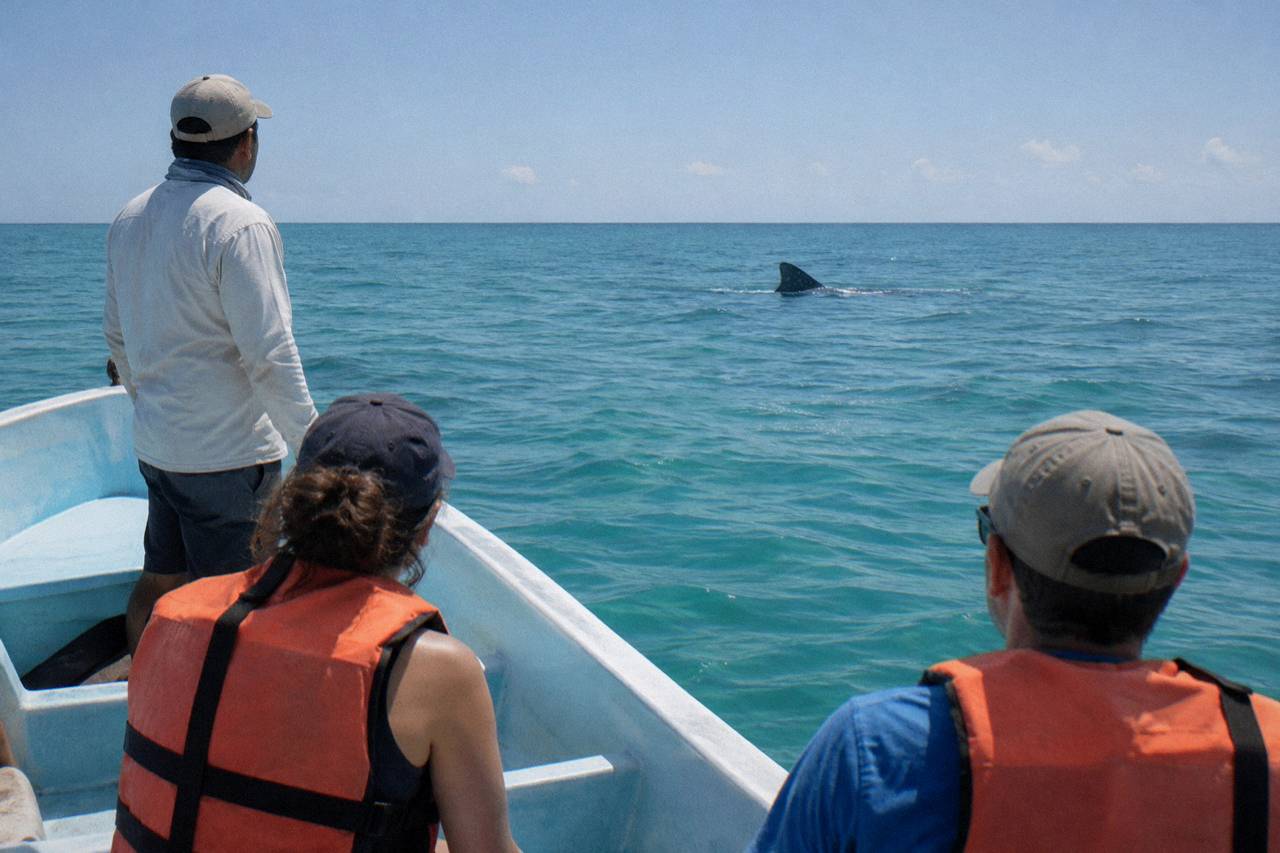
When Can You See Whale Sharks In Holbox?
The official whale shark season in Holbox ran 15 May to 17 September 2026. Here is how the official window, the practical operator window and the July and August peak fit together for planning next season.
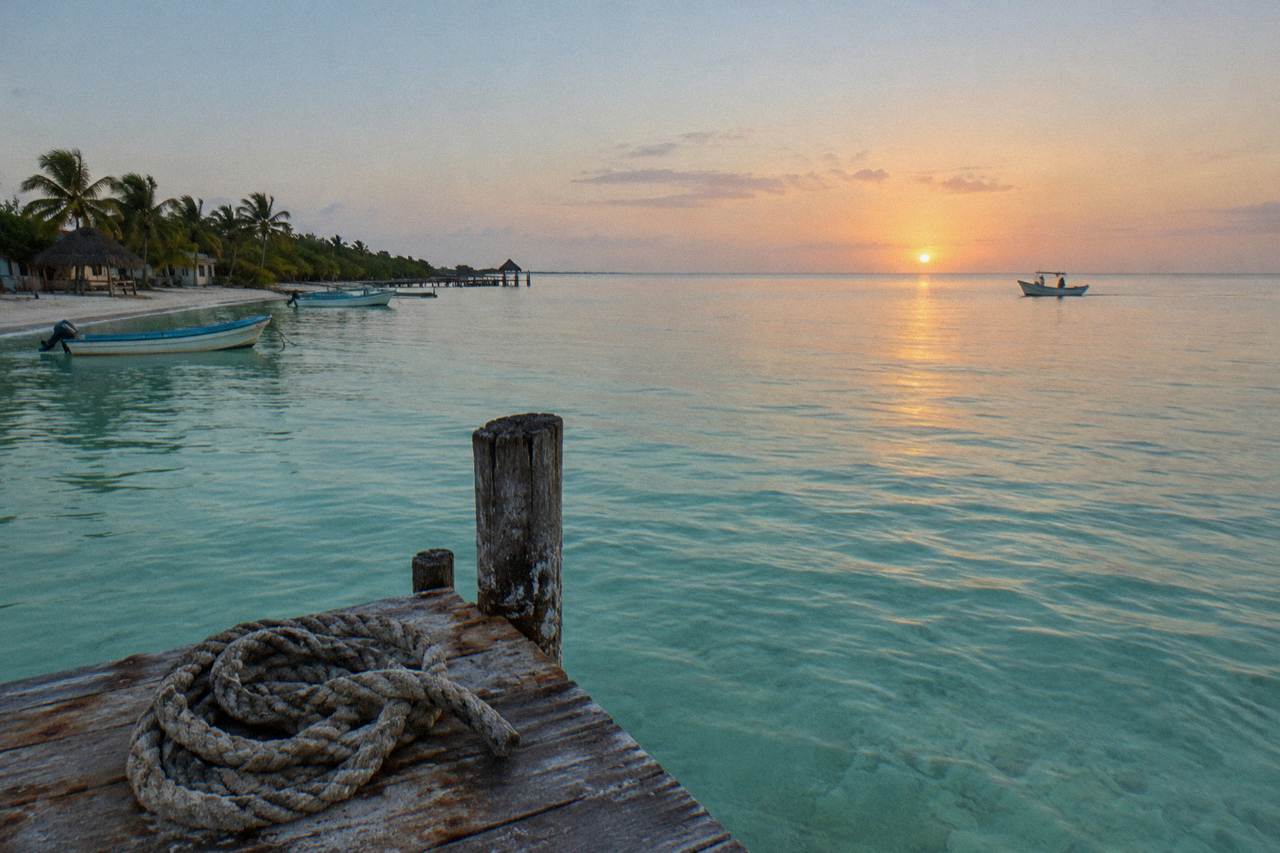
The 2026 whale shark season in Holbox is over. It closed on 17 September 2026 under the federal notice that sets the dates each year, and no swim tours have run since. If the question on your mind is when the next chance comes, the answer has two layers: an official season window published by the environmental ministry, and a practical window of roughly 1 June to mid September during which most Holbox operators actually put boats on the water. July and August sit at the centre of both. To weigh those windows against each other, our month-by-month guide explains what each stretch of the season actually delivers.
The official season for swimming with whale sharks in Holbox ran from 15 May to 17 September 2026, set by the SEMARNAT notice under federal standard NOM-171, and that season is now closed. Most local operators ran boats from roughly 1 June to mid September, and July and August were the peak months. Next season typically opens from mid May, though the 2027 notice has not yet been published. For a closer look at how the final weeks on the water unfolded and how to plan a swim once permits reopen, read our guide to the end of Holbox's whale shark season.
The two-layer answer matters because booking decisions usually land in the gap between the layers. The official window, published each year by Mexico's environment ministry, opens the protected area to licensed swimming activity and sets the legal boundary: no licensed operator may run whale shark swims outside it. In 2026 that boundary ran from 15 May to 17 September across three protected areas, including the Yum Balam reserve that shelters Holbox. The notice itself is a public document, and the gob.mx notice for the 2026 season states the dates in its own words.
The practical window is narrower. Through 2026, Holbox operators generally started regular departures around 1 June and wound down by mid September, aligning their calendars with when aggregations of sharks gather reliably in the feeding zone offshore and with weather that keeps small boats on the water. Mid to late May departures exist but are thin on the ground; late September does not exist at all. When a listing says a tour runs "May to September," read that as the legal season, not the daily reality.
For anyone planning, the practical takeaway is simple: target mid June through early September, aim at July or August if you want the peak, and treat mid May as a bonus week that only some boats serve. The Holbox Island Whale Shark Tours homepage comparison groups the current Holbox departures by price and duration if you want to see what next season's options look like side by side.
The Holbox departures that run when the season opens range from $178 to $210 per person for shared boats, plus the private listing from $1,246 per group. Three of the most useful listings for a timing-driven booking:
Why Does The Official Season Open Earlier Than Most Boats Run?
The 15 May opening is a legal date set for the whole protected area system, not a promise that sharks have gathered or that boats are sailing. Operators wait for aggregations to build and for weather to settle, so regular Holbox departures typically start around 1 June. The official window simply cannot be shorter than the biology, so the first two weeks are quiet by design rather than by accident.
There is a good reason the ministry does not simply declare the season to be July and August. Whale sharks arrive to feed on plankton blooms that build through late spring, and the timing shifts a little every year with water temperature, currents and wind. A 15 May opening gives licensed cooperatives room to start whenever the animals show up in numbers, without each operator needing a separate permit date. Operators note the first arrivals vary each year.
The operator side is economic as much as biological. Running a six or seven hour offshore trip with breakfast, ceviche and crew costs money whether or not the aggregation is dense, so cooperatives that saw 15 to 20 boats going out daily at mid season, at about half capacity, start far fewer in the thin weeks. A Riviera Maya News report from 21 July 2026, quoting the head of the Holbox tourism cooperatives, described exactly that picture: boats running at about half capacity in peak weeks, which implies very light activity earlier.
For a reader deciding a booking date, this gap is where value hides. Early June sits inside the legal season, before peak crowds, with operators already running daily. Mid May sits inside the season too but with fewer departures and less predictable activity. The choice is not "official season versus no season"; it is "full schedule versus thin schedule."
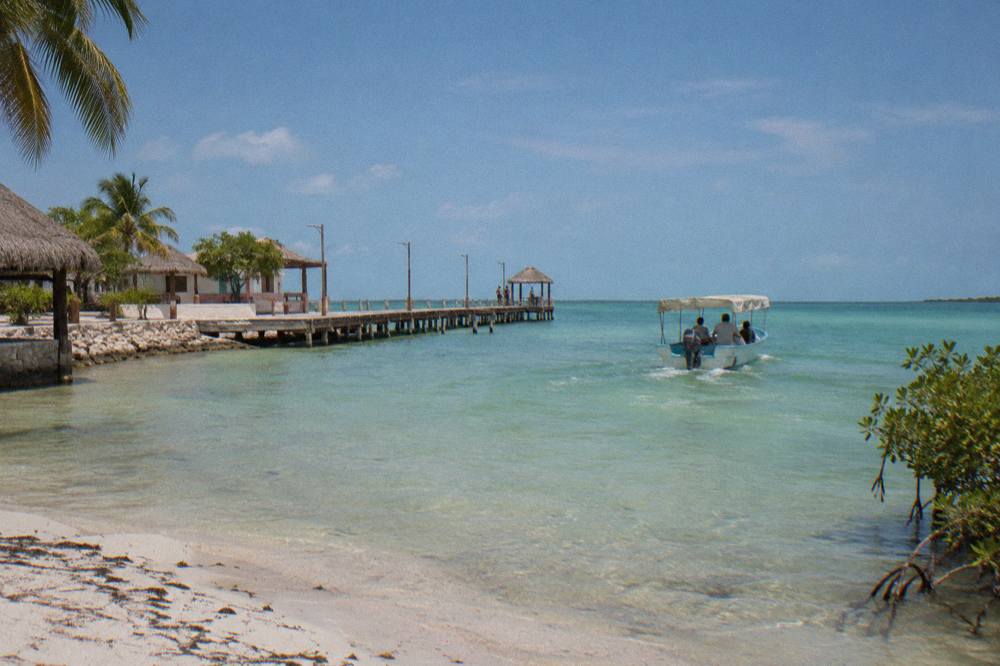
If the timing question is really a booking question, the all-inclusive Holbox swim fits a peak-season date: it runs 7 hours, from $209 per person, with a 4.9 rating from 267 reviews and free cancellation listed on the listing.
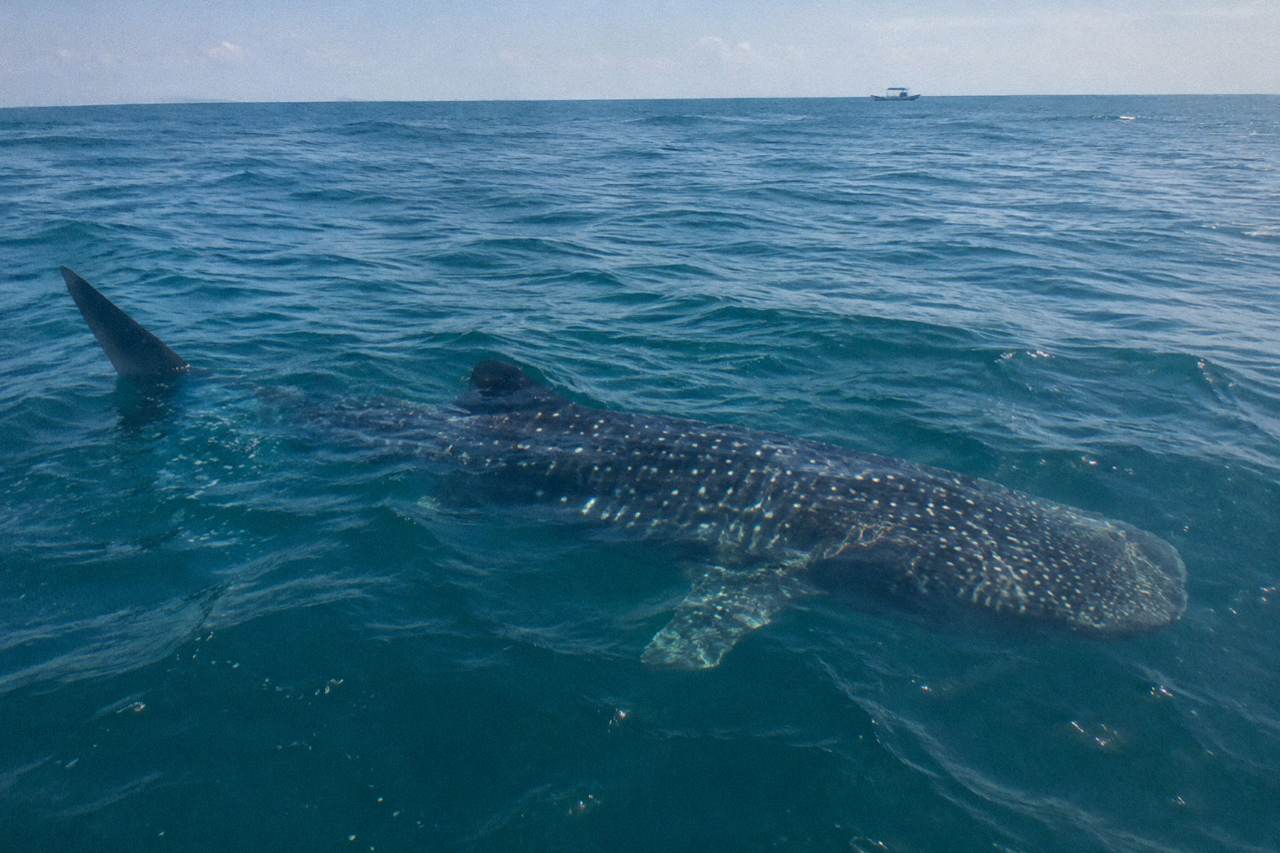
7 hours
★ 4.6 · 57 reviews · From $190
Whale shark swims ended for 2026 on 17 September. The 2027 season dates have not been announced, so open calendars may stay blank for now.
Check availability →Which Months Are The Peak For Whale Sharks In Holbox?
July and August are the peak months for whale shark activity off Holbox, a point on which local news reporting, tourism cooperatives and operator calendars all agree. Aggregations build through June, hold at their densest through July and August, and fade through the first half of September. Sea temperatures in those peak months average 28.9 and 29.4 degrees C, the warmest of the year.
The peak is not a marketing claim; it is the pattern repeated across the 2026 season's reporting. Noticaribe reported in early July that the season was reaching its height with July and August the strongest months, and Riviera Maya News made the same call from the cooperative side on 21 July 2026. Operators describe many sharks in the peak weeks in the feeding zone offshore, though no official count is published and none should be trusted in a brochure.
What the peak feels like on the water is a different question from what it means for sharks. Peak weeks bring the most boats, the fullest schedules and the highest demand, and the rules of the federal standard manage the crowding: one boat at a time per shark for a maximum of 30 minutes, other boats waiting 50 metres away, a specialised guide in the water with a small group of swimmers. The exact swimmer limit is set by the protected-area management programme and operators differ, so ask the operator rather than trusting a fixed number in a review.
August carries one extra planning consideration. It is warm, busy and biologically strong, but it sits late in the hurricane season's ramp-up, and September historically brings the highest storm risk of the period. A July or early August date captures the peak with slightly more schedule certainty than early September.
Not every reader will depart from Holbox. The Isla Mujeres and Cancun departures swim the same broad feeding zone from the other side, and one of the most reviewed of them, the Whale Shark Adventure from Isla Mujeres, holds a 4.9 rating from 1193 reviews and runs from $155 per person. The ocean safari listing from Isla Sea Tours, from $146 per person with a 4.8 rating from 207 reviews, is the cheapest way into the same water. Check availability beside the fuller comparison in the Holbox versus Cancun versus Isla Mujeres guide.
Why Are May And September Quieter Months?
May is quiet because the season has only just opened and the aggregation is still building, so few boats run before early June. September is quiet because numbers fade after the first week or two, storm risk peaks, and demand collapses: news reporting described demand down nearly 80 percent by early September 2026, with local tour prices falling from about 2,800 pesos to 2,000 to 2,300 pesos.
The two shoulder months are quiet for opposite reasons, and knowing which is which changes the planning logic. Mid to late May is quiet on the supply side: the legal season is open, but aggregations are still forming and cooperatives are still ramping up, so departures are fewer and activity reports thinner. The risk of booking mid May is not that the tour cancels; it is that the sharks are scattered and the day involves more searching.
September is quiet on the demand side, and that creates the counterintuitive opportunity. The Riviera Maya News report of 3 September 2026 described demand plunging nearly 80 percent as the season wound down, with tours repriced from about 2,800 pesos at the height of summer to 2,000 to 2,300 pesos. Those are local prices reported by the news, not listing prices, and they illustrate the pattern rather than quote a bookable rate. Early September can still deliver good encounters with far fewer boats around; the trade-off is fading shark numbers and the year's highest hurricane-season risk, with the official close falling on 17 September.
For the reader whose dates are fixed rather than chosen, the shoulders are not a write-off. Late May works if you accept a thinner schedule, and the first days of September work if you accept weather risk for thinner crowds. For everyone else, the middle of the season is the safer allocation of a single travel day.
The month-by-month season guide breaks each month's status, sea temperature and crowd character in more detail, including the one listing that names its season May through September.
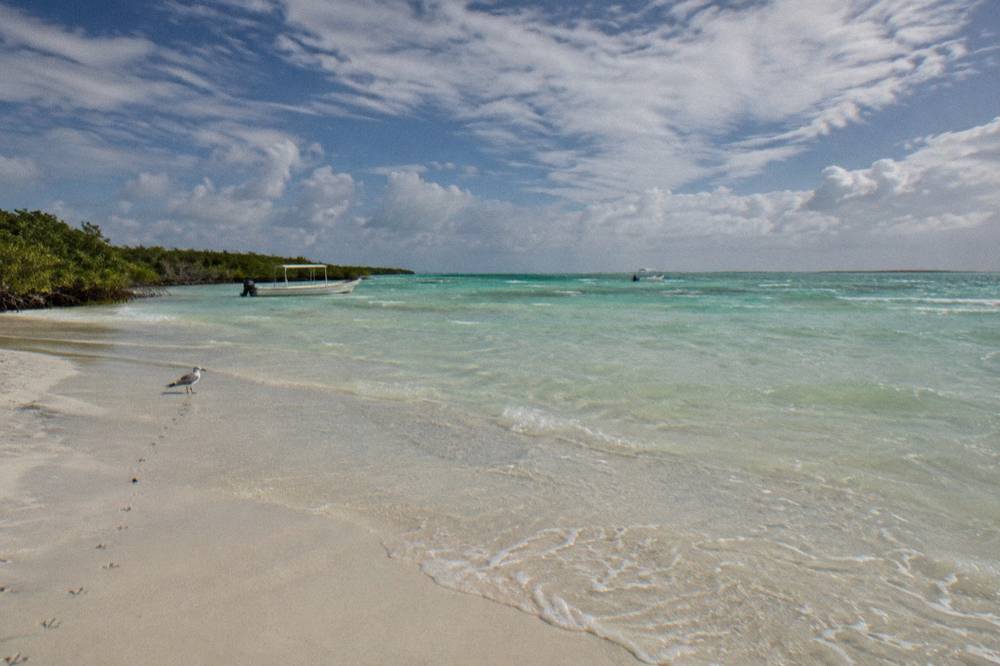
What Is The Sea Temperature In Each Month Of The Season?
Sea surface temperature off Holbox rises from 27.6 degrees C in May to 28.2 in June, 28.9 in July and a yearly high of 29.4 in August, then eases to 29.3 in September when the season closes, based on satellite monthly averages. Outside the season the water cools steadily, from 28.5 in October to 24.6 in January before warming again.
Temperature is one of the few month-by-month figures that can be printed with confidence, because it comes from satellite averages rather than from sighting claims. It also explains the shape of the season: plankton, the food that draws the sharks, thrives in warm water, and the aggregation tends to coincide with the warmest weeks of the year. No per-month shark counts, visibility figures or crowd percentages exist in any reliable public source, and any table that promises them is guessing.
| Month | Sea temperature (C) | Season status |
|---|---|---|
| January | 24.6 | Closed |
| February | 24.8 | Closed |
| March | 25.5 | Closed |
| April | 26.5 | Closed |
| May | 27.6 | Season opens 15 May, numbers still building |
| June | 28.2 | Building, most operators running daily |
| July | 28.9 | Peak |
| August | 29.4 | Peak, warmest month |
| September | 29.3 | Season closes 17 September, numbers fading |
| October | 28.5 | Closed |
| November | 26.6 | Closed |
| December | 25.4 | Closed |
First, the season dates shown are the official 2026 window; the 2027 notice has not been published, and prior notices appeared around May, so treat mid May as the typical opening rather than a confirmed date. Second, a warm month is not a sighting promise: whale sharks are wild animals, conditions vary day to day, and no operator or official body guarantees an encounter. What the table does tell you is which months are even eligible, and how the water behaves while you are out there. For a fuller picture of how likely an encounter really is once you are inside the right window, our guide to how often whale sharks actually show up around Holbox puts the odds in context.
Can You See Whale Sharks In Holbox Outside The Season?
No. Licensed whale shark swimming is legally limited to the official season window, which ran 15 May to 17 September 2026, and no Holbox operator may run swim tours outside it. Anyone advertising an October or April whale shark swim from Holbox is either mistaken or operating outside the rules. Outside the season, Holbox offers island, kayak and bioluminescence tours instead.
The closed season is not an inconvenience to work around; it is the core protection for the species in the feeding zone. The federal standard that governs the activity, published in the official gazette, sets the framework, and the annual notice sets the dates. The DOF text of NOM-171 spells out the operating rules that apply during the season: boats up to 11 metres, an identification pennant, a 30 minute maximum per boat around one shark, distances of 5 metres for the boat and 2 metres to the side of the head and 3 metres from the tail for swimmers, no touching, no flash, no selfie sticks, quiet water entry, biodegradable sunscreen only, and a life vest or wetsuit with mask, fins and snorkel.
Visitors in the closed months are not short of water. The island tours category runs year round: three-island boat tours from $38 per person, bioluminescence kayaking from $47, sunrise mangrove paddles from $46, and a private fishing charter from $362 per group for up to 6. None of these is a whale shark swim, and none promises one, but they fill an off-season week comfortably. The things to do in Holbox guide lays out the full year-round menu.
If the whale shark swim is the reason for the trip, the smart planning move is to build the whole itinerary around the season, not to hope for an exception. Pick a June through early September window, book the swim for the front of your stay so a weather reschedule still fits, and keep a flexible day behind it. Every Holbox swim listing carries free cancellation, so an early booking costs little to move.
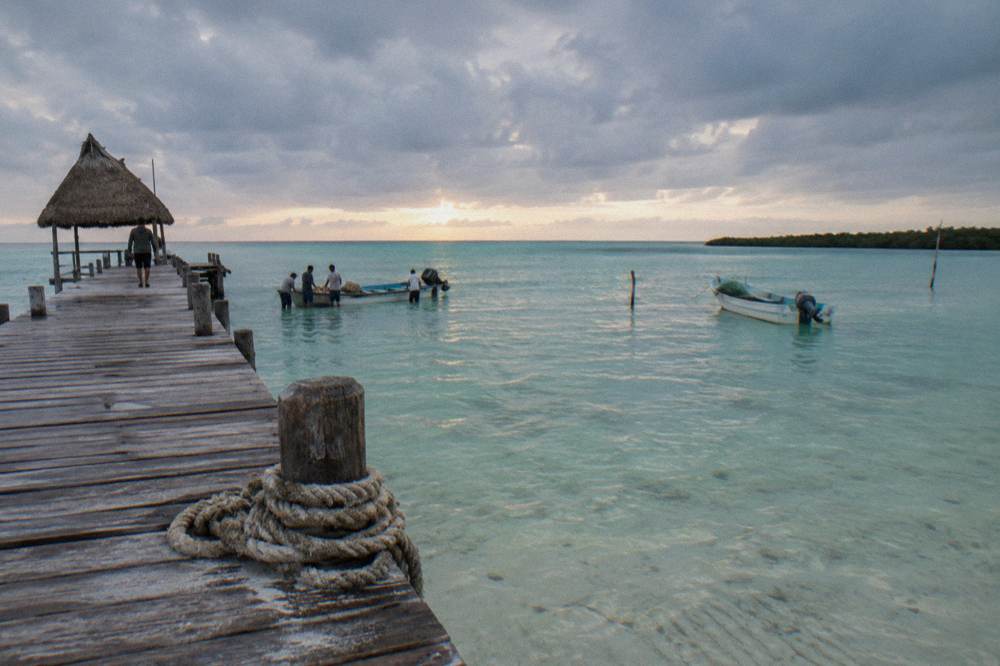
How Should You Plan For The Next Holbox Season?
Plan around a typical mid May opening and a mid September close, book for late June through August for the peak, and wait for the official notice before treating any 2027 date as fixed. Prior notices appeared around May, so the practical move is to choose a July or August window now, watch for the notice, and use free cancellation to adjust if the dates shift.
The rhythm of announcements is stable even when the dates are not. Each year the environment ministry publishes the notice under NOM-171 naming the season window for the protected areas, and in recent years that notice has appeared around May. Once it lands, cooperatives set their calendars and listings firm up their operating dates. Nothing about the 2027 season is published yet, and any specific date printed anywhere before the notice is speculation.
Booking strategy follows from that calendar. July and August give the strongest aggregation reports and the fullest schedules, at the cost of peak crowds and peak prices. June gives most of the biology with less demand, and it is the month where the value sits for readers flexible enough to avoid school holidays. Early September trades certainty for emptiness, and it is the one window where the weather, not the sharks, is the main risk.
A few practical notes make any of those windows work better. Book the swim early in your stay, not your last day, so a rescheduled departure still fits the trip. Bring cash for on-the-day fees: several listings charge a departure, dock or protected-area fee separately on the day, and the listing states the amount, so read the exclusions line before you go. And carry pesos generally, since Holbox has few ATMs and cards can carry surcharges, a point the getting to Holbox guide covers alongside the ferry and transfer details.
For the date-driven reader, the group adventure listing from Holbox Whale Shark Tours is a useful benchmark: 7 hours, from $184 per person, with government fees included rather than collected on the day, a 4.3 rating from 86 reviews, and free cancellation listed. It is one of the few Holbox lines that folds the fees into the price.
Common Questions About Whale Shark Timing In Holbox
Is The Whale Shark Season In Holbox Over For 2026?
Yes. The official close was 17 September 2026, and no licensed swim tours have run since. Local reporting described demand down nearly 80 percent by early September as the season wound down. The next season typically opens from mid May.
What Is The Best Month To Swim With Whale Sharks In Holbox?
July and August are the peak months, when aggregations are at their densest and operator schedules are fullest. June is a strong alternative with fewer crowds as numbers build. Early September can work with thinner boats but carries the highest storm risk of the period.
Can You Swim With Whale Sharks In Holbox In May?
Sometimes, from 15 May onward, the official opening. But aggregations are still building and most operators start regular departures around 1 June, so mid to late May has fewer boats and less predictable activity than the peak months.
Are Whale Shark Sightings Guaranteed In The Peak Months?
No. Whale sharks are wild animals and no operator, cooperative or official body guarantees a sighting in any month. July and August offer the strongest reported activity, but conditions vary day to day, and listings handle no-sighting days per their own policies.
Do Whale Shark Tours Run From Holbox All Year?
No. Licensed swimming is limited to the official season window, 15 May to 17 September in 2026. Outside those months Holbox operators run island boat tours, kayaking, bioluminescence trips and fishing charters, none of which is a whale shark swim.