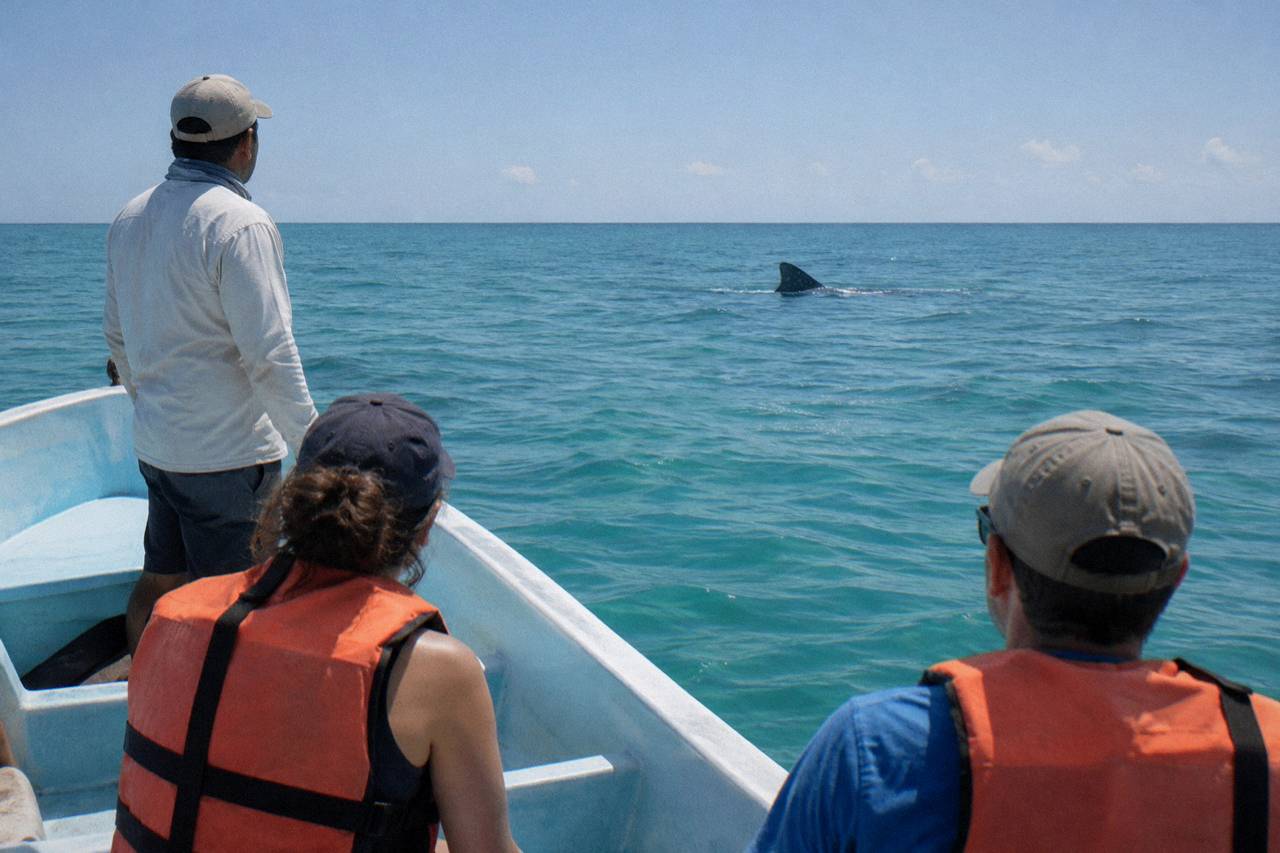
How Rare Is It To See A Whale Shark In Holbox?
Sighting odds in the Holbox aggregation area, what the 2026 season reports said, why the season window matters more than luck, and why no tour can promise a shark.
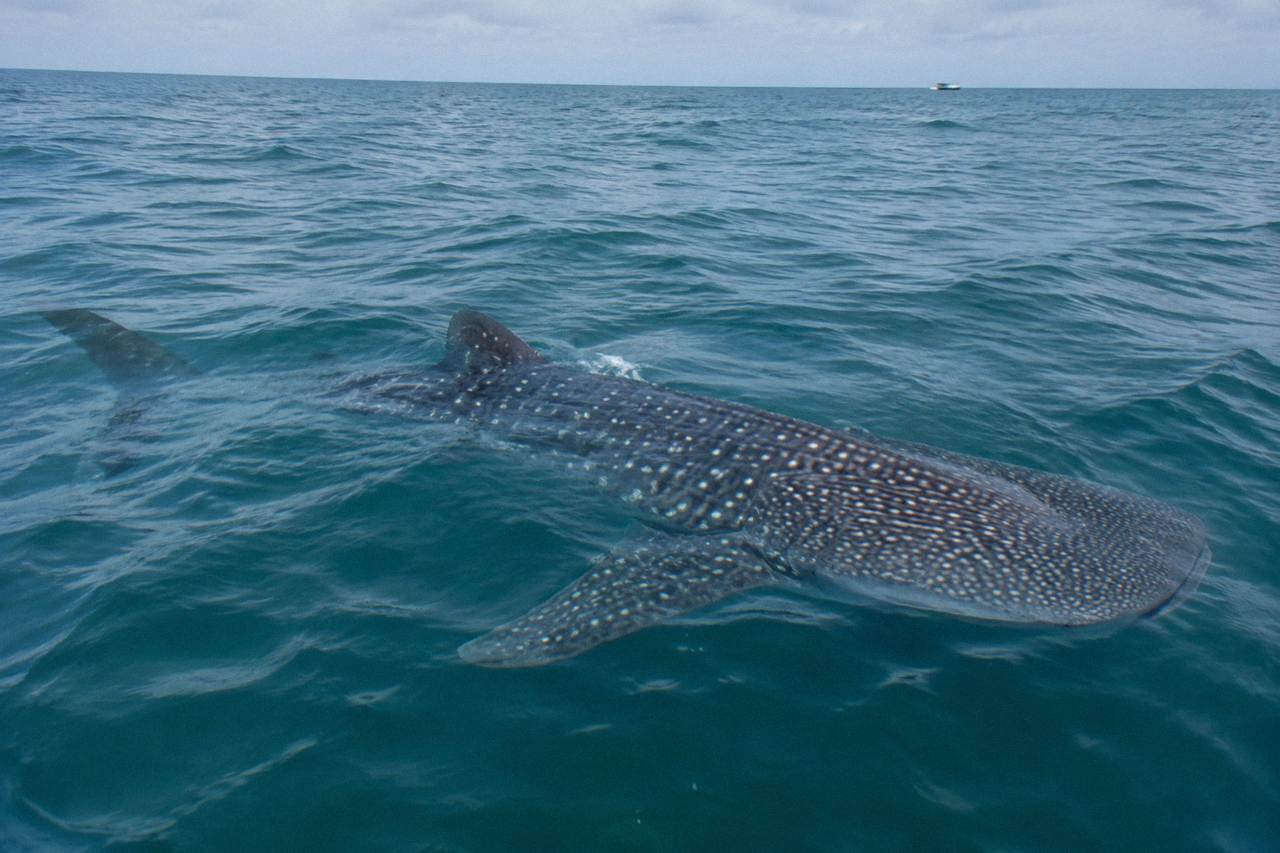
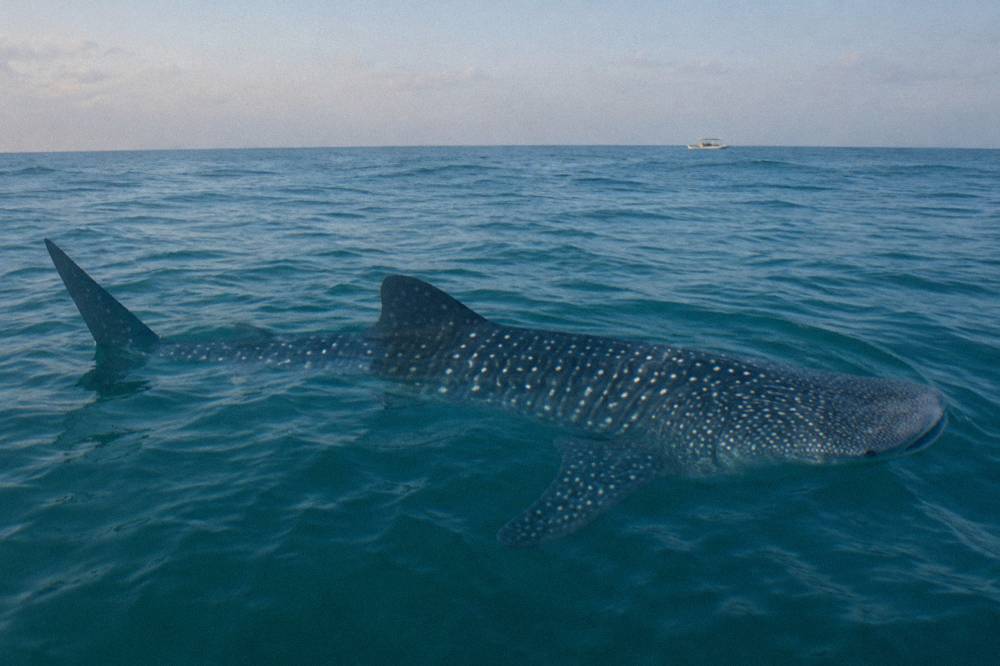
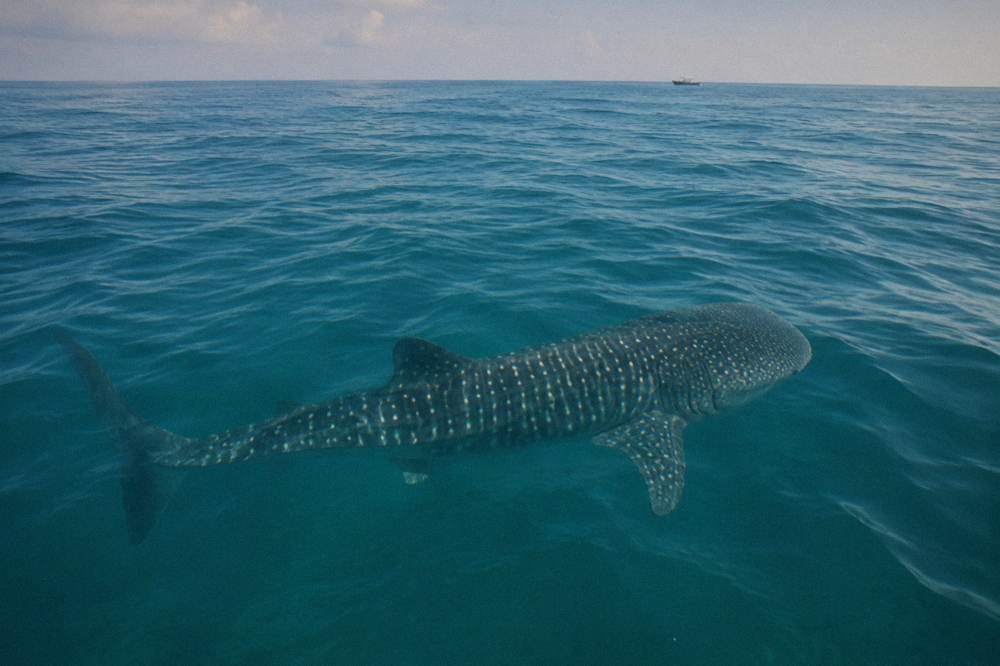
A whale shark gathering happens off Holbox every year, and that single fact separates this island from almost every other beach destination in Mexico. Between mid-May and mid-September, the world's largest fish feeds in the plankton-rich water where the Gulf meets the Caribbean, and Holbox sits inside the Yum Balam reserve that protects part of that feeding ground. The reserve around the sharks covers about 146,000 hectares from Isla Contoy down the coast, a known seasonal gathering area for whale sharks.
Rarity, then, is the wrong frame for most of the summer. The answer has three parts: whale sharks are globally uncommon animals, they predictably show up off Holbox in season, and no individual tour can promise a specific encounter on a specific morning. This article works through what the 2026 season reports actually said, why the season window matters more than luck, and what happens on the days the sharks do not cooperate.
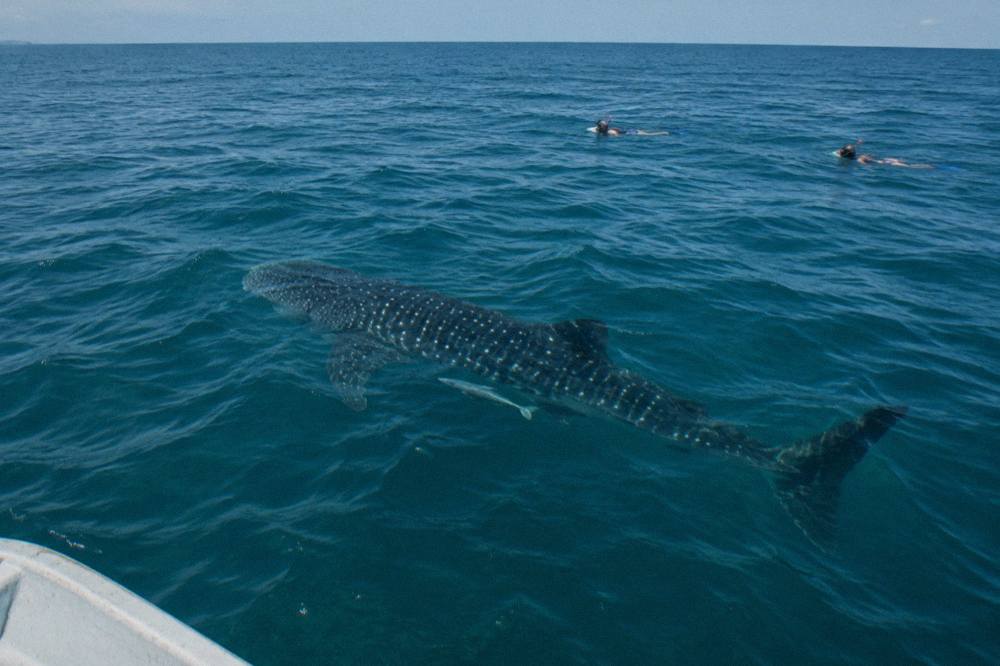
In season, whale sharks off Holbox are reliably present rather than rare, and July and August are the months local reports describe as the peak. Outside the season window, which ran 15 May to 17 September in 2026, there are no sanctioned swims at all, so a sighting then is effectively off the table. No operator may guarantee an encounter, and none does.
That distinction, globally rare animal versus locally predictable visitor, is worth holding onto. Whale sharks roam enormous distances and appear in only a handful of concentrated feeding areas worldwide. Holbox, together with the waters off Isla Mujeres and Isla Contoy, is one of those areas. The sharks come for the plankton and fish eggs that bloom in the warm summer water, and the aggregation builds through June, peaks in July and August, and fades through the first half of September.
The 2026 season is now closed. The SEMARNAT notice under the federal whale shark standard set the window at 15 May to 17 September 2026, and prior years' notices have tended to appear around May, so anyone planning for next season should think in terms of a mid-May opening, unconfirmed until the official notice is published. Mid-season local reporting gave a useful picture of activity: a Riviera Maya News article on 21 July 2026, quoting the head of the Holbox tourism cooperatives, described 15 to 20 boats going out daily at about half capacity. That is a snapshot of effort and demand, not a count of sharks, and it is the kind of qualitative signal that tells you the fishery was active without anyone promising you a shark. If you're weighing whether the price matches the experience, our cost-and-value look at Holbox whale shark tours lays out what your money buys and who should skip it.
If the question behind the question is whether booking a swim is a reasonable bet, the practical answer is that a July or August departure from Holbox is about as good a position as a traveller can put themselves in, and that the island's most-booked ways to do it lean on exactly that window.
Why The Gathering Area Off Holbox Makes Sightings Routine In Season
Holbox departs directly into the Yum Balam and Whale Shark Biosphere Reserve, a protected feeding area of about 146,000 hectares where sharks concentrate each summer to feed on plankton. Because the whale sharks gather in these waters to feed, boats search a zone the sharks are already using, which is why in-season sightings are described as common rather than lucky.
The biology drives everything. Whale sharks are filter feeders that follow blooms of plankton and fish eggs, and the surface waters north of Holbox and east toward Cabo Catoche and Isla Contoy produce those blooms on a predictable summer cycle. The water warms from 27.6 degrees C in May to 29.4 in August, and the sharks follow that warmth and the food it supports. When operators describe many sharks in peak weeks, they are describing a feeding aggregation, the same mechanism that makes other famous whale shark sites, like La Paz in Baja California Sur between roughly October and April, work on their own calendars.
Boats from Holbox are small. The federal standard caps authorized vessels at 11 metres, and the island's listings typically carry a maximum of 8 or 10 travelers per booking. That does not change how many sharks are in the water, but it shapes the experience of the search: a small boat running out to the feeding zone with a guide scanning the surface, rather than a large vessel on a fixed schedule. The ride out depends on where the sharks are feeding that day, which is why a Holbox tour runs six to seven hours in total.
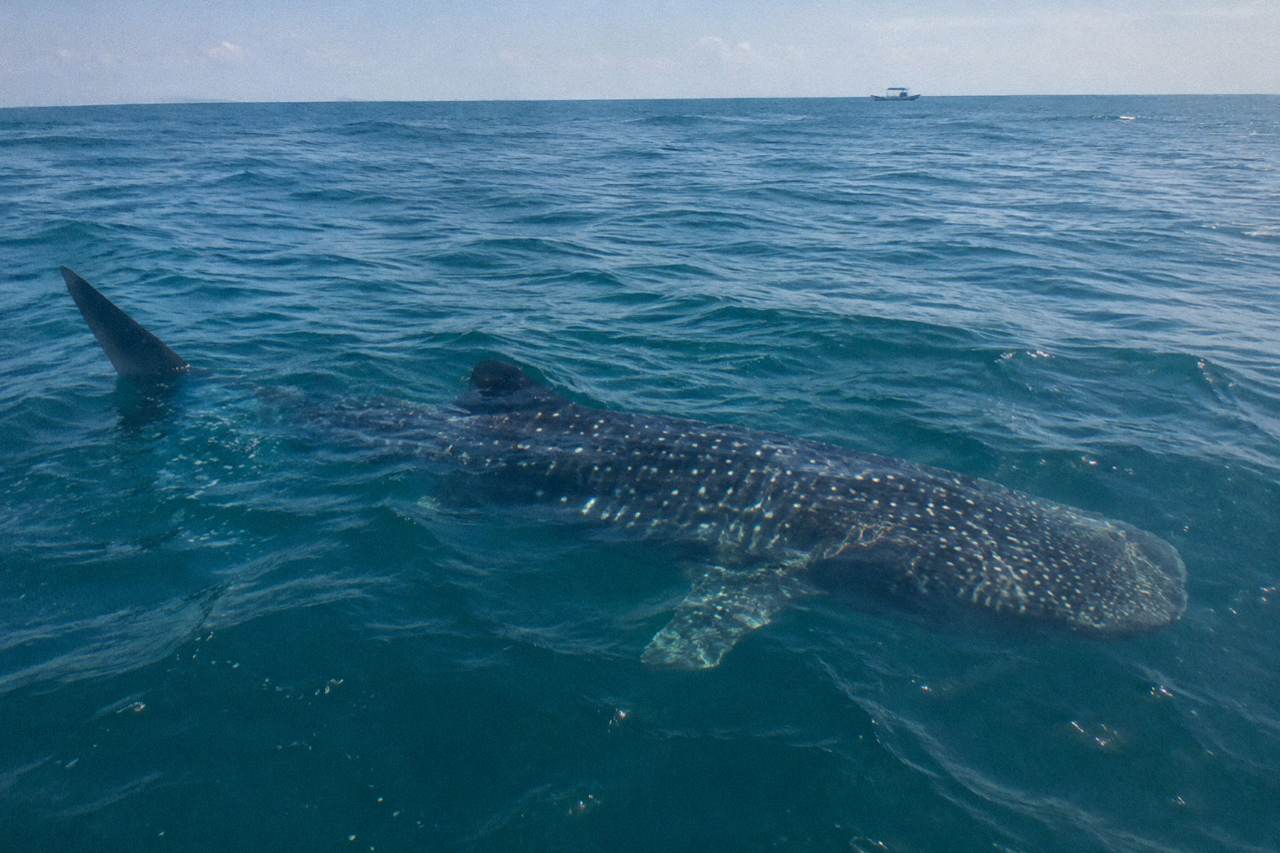
7 hours
★ 4.6 · 57 reviews · From $190
Whale shark swims ended for 2026 on 17 September. The 2027 season dates have not been announced, so open calendars may stay blank for now.
Check availability →The featured departure for this article is the all inclusive Holbox swim from VIP Holbox Experience, which holds a 4.9 rating from 267 reviews, from $209 per person for a seven hour trip. Its listing includes breakfast, ceviche, guacamole, snorkel gear, a satellite tracker for security, free cancellation listed, and the taxi to the meeting point not included. It is the most reviewed whale shark departure on the island, and you can check the all inclusive listing alongside the month by month season guide when weighing timing.
Not every listing carries hotel pickup, and that detail is worth checking rather than assuming. The group adventure from Holbox Whale Shark Tours, from $184 per person, includes government fees in its price but meets you at the operator's yellow Mayan house office, with the taxi to the meeting point excluded. Reading the fine print on pickup, fees and meals matters more on a wildlife tour than on a fixed-attraction trip, because the day starts early and ends tired.
What The 2026 Season Reports Actually Said
Local reporting through 2026 described an active, stable season: 15 to 20 boats a day operating at about half capacity in July, strong July and August peaks, and a sharp demand drop of nearly 80 percent by early September. None of this is a shark count, and no official daily count is published, but the qualitative picture was one of reliable in-season activity.
The 21 July 2026 Riviera Maya News piece is the season's most useful midpoint snapshot. Quoting the president of the Holbox tourism cooperatives, it reported 15 to 20 boats heading out daily, running at roughly 50 percent capacity, with operators hoping for a late-summer boost. The same article carried the permit picture: 146 CONANP permits split 92 to Isla Mujeres, 48 to Holbox and 6 to Chiquila across 14 cooperatives. Permits cap boats, not sightings, but a permitted fleet going out daily and finding enough to keep selling is itself a signal.
| Period in 2026 | What reporting described | Season status |
|---|---|---|
| Mid-May | Official opening on 15 May; early activity limited | Season open, building |
| June | Numbers building as water warms to 28.2 C | Active, pre-peak |
| July | 15 to 20 boats daily at about half capacity; peak begins | Peak |
| August | Peak continues; warmest water of the year at 29.4 C | Peak |
| Early September | Demand reported down nearly 80 percent; local prices from about 2,800 pesos down to 2,000 to 2,300 pesos | Declining |
| 17 September | Official close of the season | Closed |
Two caveats on that table. First, the peso figures come from a news report about local pricing at season end, not from any listing price, and should never be read as a bookable rate. Second, the boats-per-day figure reflects Holbox departures only; Isla Mujeres, with 92 permits, runs a larger fleet into the same broader feeding zone from the other side.
By 3 September 2026, the same outlet reported the season winding down hard, with demand down almost 80 percent and occupancy softening, which is the normal September pattern in Quintana Roo rather than a sign the sharks had vanished. Families go home, hurricane risk peaks, and the aggregation thins. For a reader asking about rarity, September's lesson is that the fish follow a calendar, and so should you.
Why The Season Window Matters More Than Luck
No amount of luck produces a sanctioned whale shark swim outside the season window: the activity is legally closed from mid-September until the notice reopens it, typically around mid-May. Inside the window, your odds are shaped mostly by month, weather and sea conditions, which is why guides say pick the date before you pick the tour.
The legal frame is the federal standard NOM-171-SEMARNAT-2018, which regulates observation and swimming nationwide and sets the operating rules in the water: one boat at a time around a shark for a maximum of 30 minutes, other boats waiting 50 metres away, no swimming in front of the animal, no touching, and biodegradable sunscreen only. The annual SEMARNAT notice sets the dates, and the 2026 notice closed the season on 17 September. Nothing swims commercially after that, no matter how warm the water looks.
| Month | Season status | Average sea temperature |
|---|---|---|
| January | Closed | 24.6 C |
| February | Closed | 24.8 C |
| March | Closed | 25.5 C |
| April | Closed | 26.5 C |
| May | Opens mid-May, numbers building | 27.6 C |
| June | Active, building | 28.2 C |
| July | Peak | 28.9 C |
| August | Peak | 29.4 C |
| September | Fades, closes mid-month | 29.3 C |
| October | Closed | 28.5 C |
| November | Closed | 26.6 C |
| December | Closed | 25.4 C |
Temperatures are satellite monthly averages from seatemperature.info, and they tell the story cleanly: the sharks arrive as the water climbs past 27 degrees and thin as it falls. Within the open window, the difference between a mid-May trip and a mid-July one is real. May trips run, but operators describe early numbers as building; July and August are the months local reporting consistently calls the peak. For a deeper dive into the trade-offs, the best month guide for Holbox swims breaks down crowds, weather and water conditions month by month.
Weather is the second lever. Hurricane season runs 1 June to 30 November with the highest risk in September, and a windy week can scatter surface plankton or keep boats in port. A booking with free cancellation, which every Holbox whale shark tour carries, gives you room to move your date if a front rolls through.
How Rare Are Sightings If You Depart From Elsewhere?
The sharks gathering off Holbox are the same population reached from Cancun and Isla Mujeres, so the underlying rarity does not change with your departure point; what changes is the boat, the ride and the price. Holbox listings run from $178 to $210 per person plus a private option from $1,246 per group, while Cancun and Isla Mujeres departures run from $146 to $220 per person.
Every departure city aims at the same summer aggregation. Cancun operations add hotel pickup and a marina transfer, which stretches the door-to-door day to 7 or even 12 hours on the longest listings. If you are already staying on Holbox, departing from the island saves the mainland transfer entirely, and if you are based in Cancun or Playa del Carmen, the calculus reverses. The wider set of guides lives on Holbox Island Whale Shark Tours.
| Departure | Listing price range | Typical day length | Pickup on listings |
|---|---|---|---|
| Holbox | From $178 to $210 per person; private from $1,246 per group | 6 to 7 hours | Mixed: some list hotel pickup, some meet at a dock |
| Cancun | From $146 to $220 per person | 5 to 12 hours with transfers | Hotel pickup listed on most |
| Isla Mujeres | From $146 to $165 per person | 6 to 7 hours | Most meet at a dock; transport to the island often excluded |
The comparison guide covers this in detail, including the crowd differences between the small Holbox boats and the larger mainland fleets, in Holbox versus Cancun versus Isla Mujeres. The short version: the sharks do not care where you slept, but your fatigue level and your wallet might.
One Holbox listing that softens the logistics is the eco tour from Xtreme Holbox, from $190 per person for seven hours, which lists hotel pickup within Holbox along with a Cabo Catoche snorkeling stop and two water entries per couple with guide supervision. It suits readers who want the shark search bundled into a fuller day on the water.
What Happens On The Days The Sharks Do Not Cooperate?
No whale shark tour listing promises a sighting, and the federal rules treat the shark as a wild animal you may observe, not a product you are owed. In practice, operators handle blank days with rescheduling or partial alternatives, and the exact policy is stated on each live listing, which is why free cancellation is worth more than any sighting claim.
Every listing page says it in one form or another: sightings depend on weather, sea conditions and the sharks themselves. A good operator manages the risk by reading the water, communicating with other boats and staying out long enough to search properly, which is exactly why Holbox tours run six or seven hours rather than three. The satellite tracker the all inclusive listing carries is a logistics tool, but the search itself is skilled work.
July and August bring the season's strongest, most consistent aggregations, and common enough that every ticket has terms. Read the cancellation and reschedule language on the operator's live listing before you book rather than after. The blog piece on what happens if there are no whale sharks in Holbox covers refund policies and realistic expectations in more depth.
There is also a soft rule worth naming: the experience is bigger than the shark. The ride out across the shallow Yalahau Lagoon, the reef or beach stops several listings include, the ceviche on the way home, these are the parts a listing can actually promise. Readers who anchor their whole day to a single animal set themselves up for disappointment even in a good week.
How To Stack The Odds In Your Favour
Choose July or August, depart from Holbox if you are staying there, book a listing with free cancellation and a full-length day, and leave flexible dates if a front moves through. Those four choices do more for your sighting odds than any operator comparison, because they put you in the water at the right time with room to adapt.
Start with the month. The month table above sums it up: peak is July and August, May is early, September fades fast. Then pick a departure that matches where you sleep. A Holbox departure from a listing like the snorkeling adventure from VIP Holbox Experience, 4.6 from 243 reviews and from $178 per person for six hours, including breakfast, ceviche, snorkel gear and drinks, keeps your day compact. The hotel-pickup listing from Holtours, from $210 per person, suits readers who would rather not think about a dock meeting point, though its listing notes a departure tax paid at check-in on the day.
Next, protect the date. Every Holbox whale shark departure comes with free cancellation, so a weather-driven reschedule costs you nothing but an email. Finally, go early. Operators run morning departures, typically between 6:30 and 7:30, because the sea is calmer and the sharks feed near the surface before the afternoon wind picks up.
Pack for the rules, not just the sun. The standard requires biodegradable sunscreen, a life vest or wetsuit with mask, fins and snorkel, and bans flash, selfie sticks and touching. The packing guide for a Holbox swim lists it all, including the motion sickness preparation that quietly ruins more trips than any missing shark.
What The Rules Mean For Your Chances
The federal interaction rules, one boat per shark for 30 minutes, orderly rotation, no crowding, exist to protect the animals, and they also shape your sighting: they slow the conveyor belt but keep the aggregation coming back year after year. A sustainable fishery is what makes Holbox reliable, so the rules and the rarity question are the same question.
The NOM-171 standard, published in the Diario Oficial de la Federación, sets the operating code: vessels up to 11 metres flying an identification pennant, approach no closer than 5 metres, swimmers keeping 2 metres from the head and 3 metres from the tail, quiet water entry with no jumping, and a specialised guide staying with a small group of swimmers, with the exact limit set by the protected-area management programme since operators differ. Enforcement falls to CONANP and PROFEPA, and the permits themselves, 146 across three ports in 2026, cap the fleet.
A reader can read those rules two ways. The pessimistic read is that rotation limits your minutes in the water. The realistic read is that a managed aggregation is why the sharks return each May at all, and why operators in Holbox can describe many sharks in peak weeks without the fishery collapsing under the tour boats. For readers weighing the ethics, the ethics guide for Holbox swims works through the evidence on both sides.
Common Questions About Seeing Whale Sharks In Holbox
When Is The Best Month To See Whale Sharks In Holbox?
July and August are the months local reporting consistently describes as the peak, with water at its warmest, 28.9 to 29.4 degrees C on monthly satellite averages. May trips run but numbers are still building, and September fades toward the official close.
Can A Tour Guarantee You Will See A Whale Shark?
No. Sighting claims are never guarantees: the animals are wild, and conditions vary. Operators describe the experience in detail, carry free cancellation where stated, and run long days precisely so crews have time to search properly.
Is The Whale Shark Season Still Open?
The 2026 season closed on 17 September 2026 under the SEMARNAT notice. Next season is expected to open around mid-May, but no 2027 notice has been published yet, so treat any date before that as tentative.
Does Departing From Cancun Or Isla Mujeres Improve Your Chances?
The underlying aggregation is the same, so the sharks' presence does not depend on your departure port. What changes is ride time, boat size, day length and price, from $146 to $220 per person on Cancun and Isla Mujeres listings versus $178 to $210 per person on Holbox departures.
Planning is the part you control.