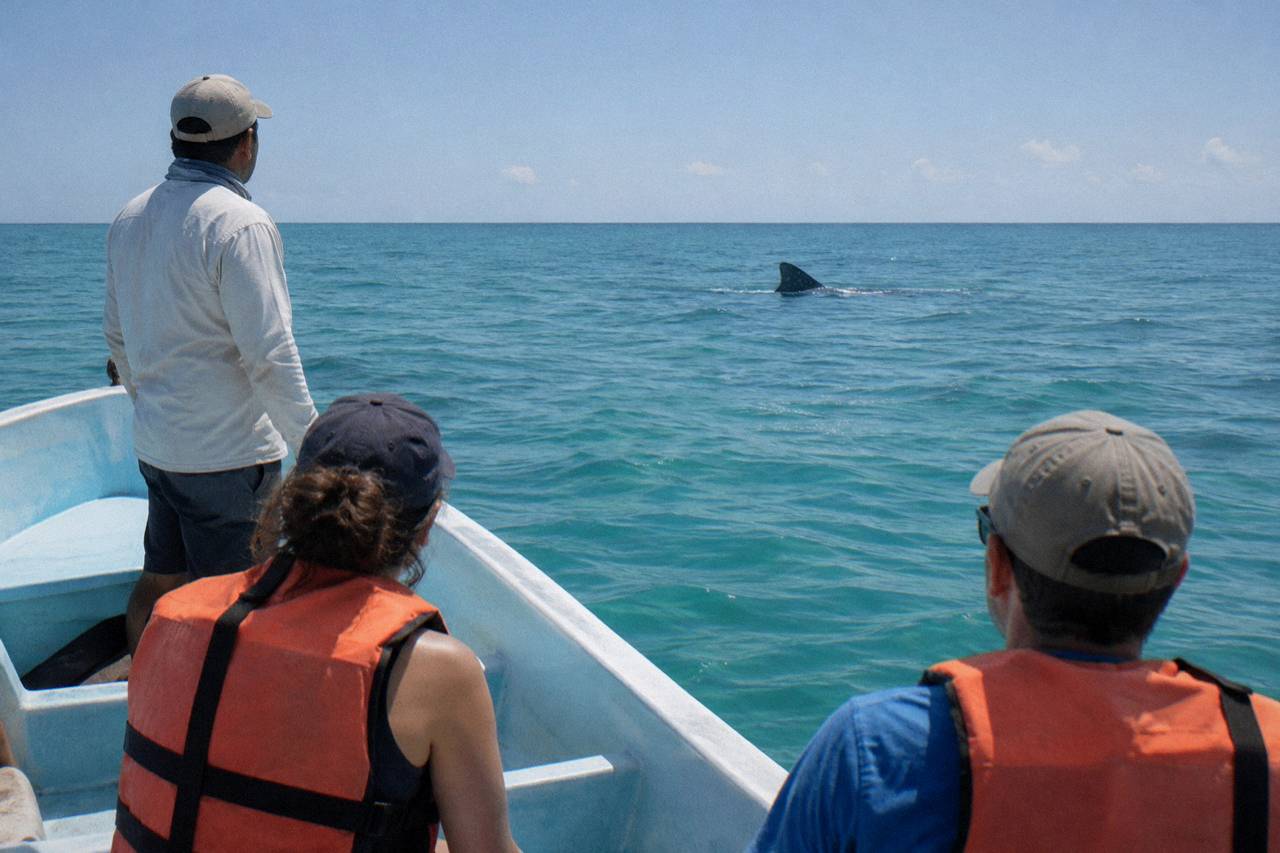
Has A Whale Shark Ever Attacked A Person In Holbox?
A direct answer to the safety question nervous swimmers ask before booking a Holbox whale shark tour: what the animal is, what the rules say, and where the real risks actually sit.
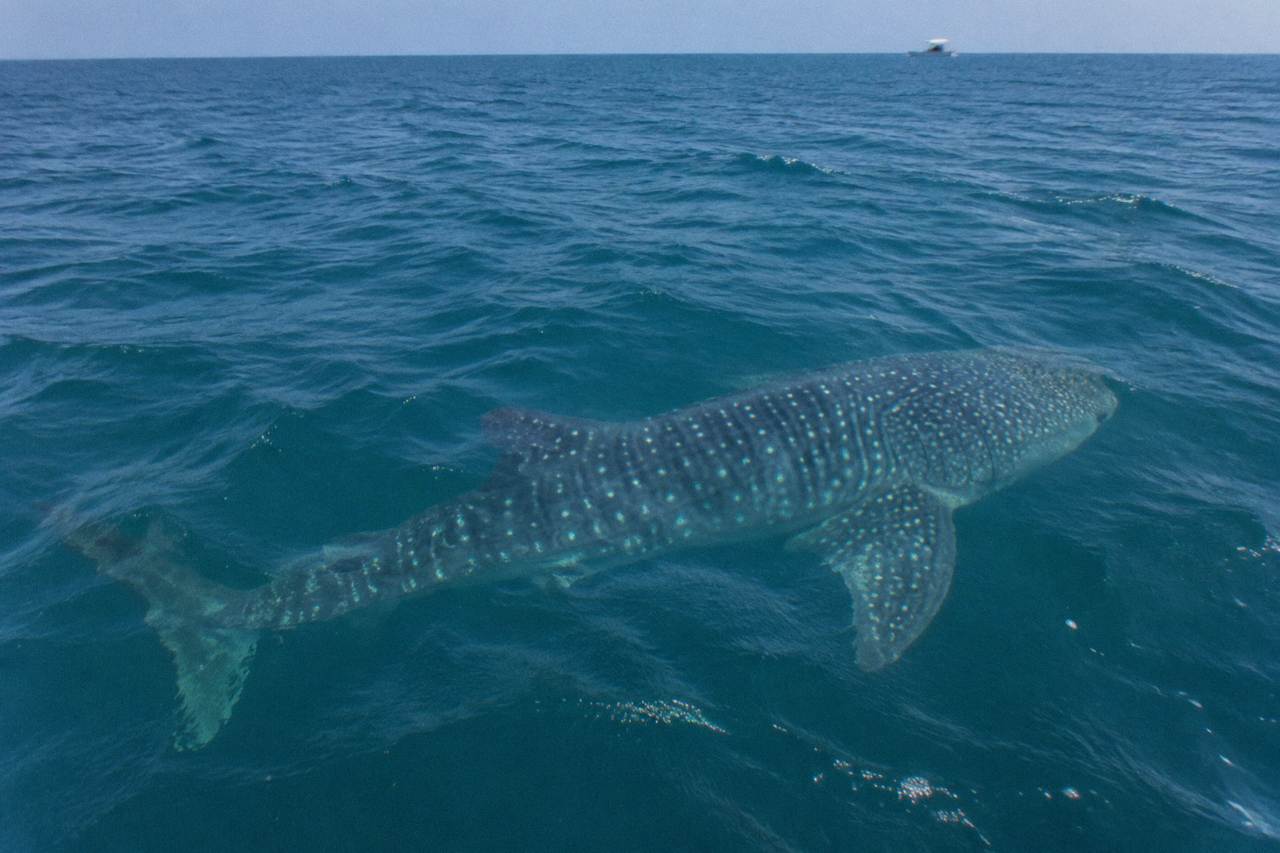
No attack on a swimmer by a whale shark appears anywhere in the 2026 news reporting, and nothing in the scientific or regulatory record suggests one is likely. Whale sharks are filter feeders with tiny teeth, thousands of them, each a few millimetres long, evolved for straining plankton rather than biting. Every wildlife swim carries some risk, but the documented concerns around Holbox swims involve boats, crowding and seasickness, not the shark.
That is the short answer, and it is the answer nervous swimmers deserve to hear plainly rather than buried under reassurance. The longer answer is more interesting. The whale shark is the largest fish in the sea, routinely described as reaching lengths that dwarf the boats that carry swimmers out to meet it, and yet it eats some of the smallest food in the ocean. Understanding why that combination makes an attack effectively impossible is the best way to stop worrying about the wrong thing.
This article walks through the biology, the federal rules that govern every licensed swim in Quintana Roo waters, and the risks that actually deserve your attention when you book a Holbox departure. The 2026 season closed on 17 September under the official SEMARNAT notice, so everything here is framed for next season, which typically opens from mid-May, with most operators running roughly from the start of June to mid-September.
If reading about the animal has already nudged you toward booking, the three Holbox departures that best suit swimmers who care about safety and small groups are all listed further down, with prices and trip lengths included.
Why A Whale Shark Cannot Really Attack A Swimmer
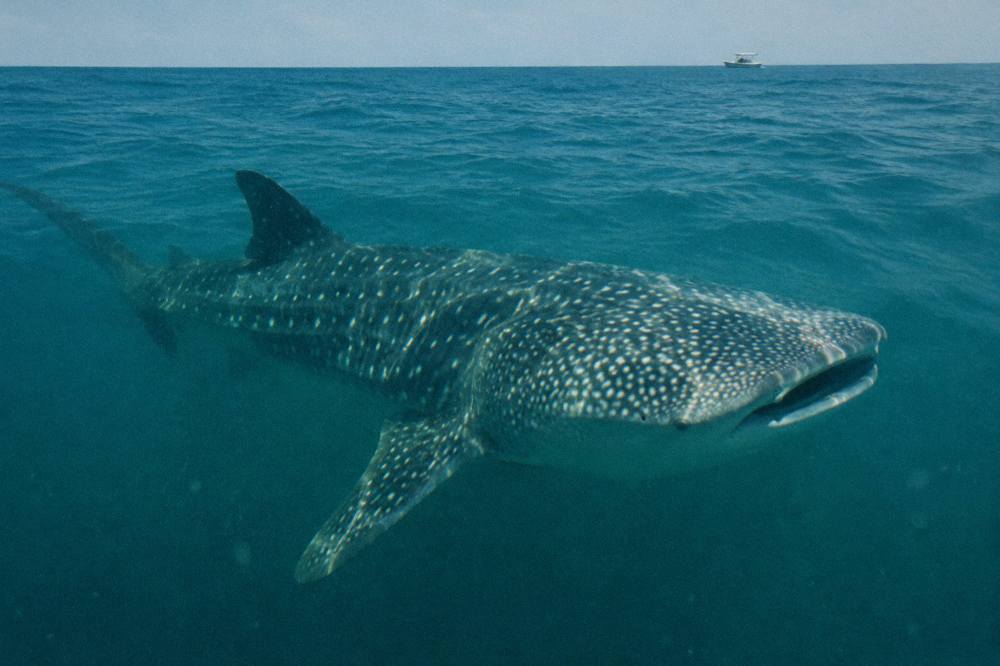
A whale shark feeds by swimming forward with its mouth open, filtering plankton, fish eggs and small krill from the water through comb-like gill rakers. Its teeth are vestigial, thousands of them but each only millimetres across, and they play no role in feeding. The species has no hunting behaviour toward large prey, no defensive aggression pattern toward swimmers, and every guide briefing and operator description frames it as a slow, surface-cruising filter feeder.
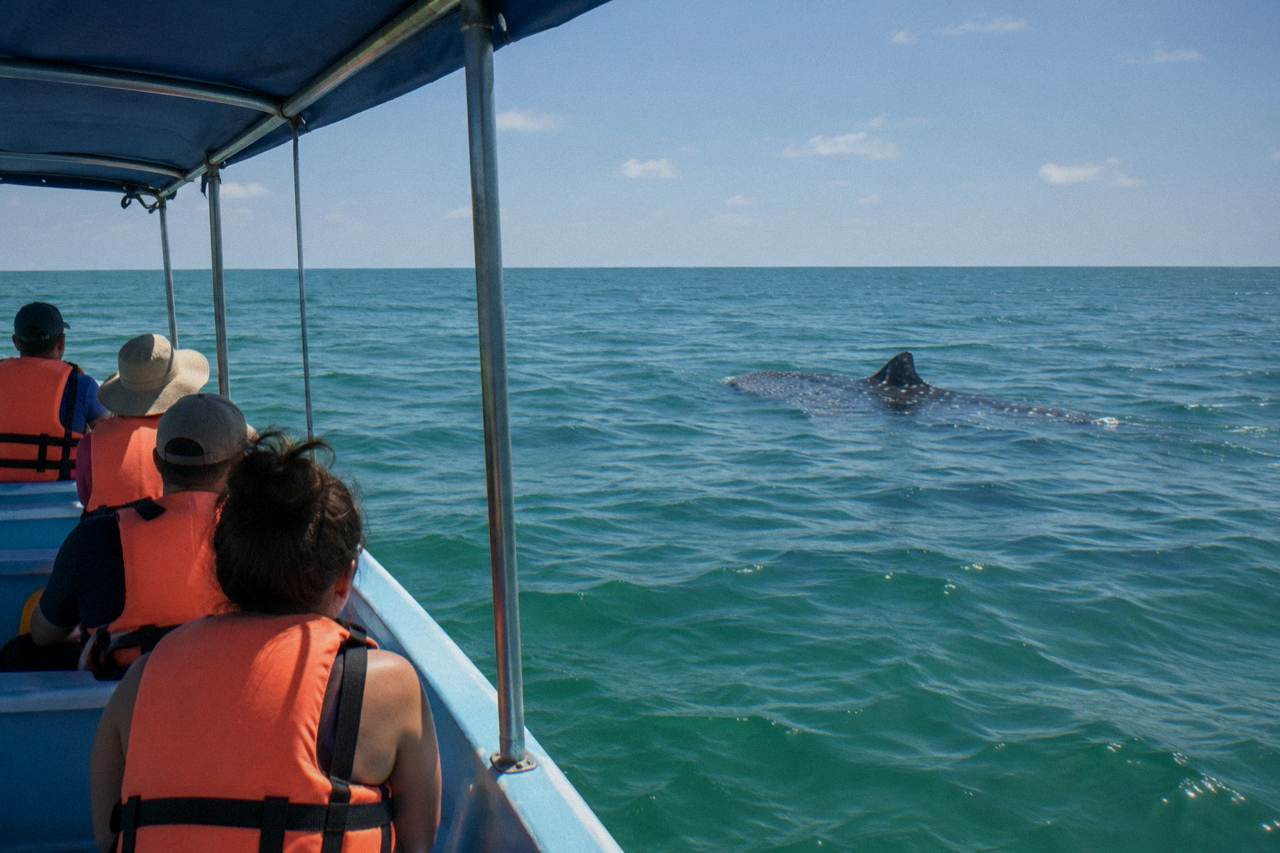
Whale Shark Swims From Holbox Island
★ 4.3 · 86 reviews · From $184
Whale shark swims ended for 2026 on 17 September. The 2027 season dates have not been announced, so open calendars may stay blank for now.
Check availability →The mouth is the part that unsettles first-time swimmers, and it is genuinely enormous on a large animal, wide enough that a person could theoretically fit inside it. The reality is the opposite of the image. A whale shark's throat is narrow, sized for the tiny animals it strains from the water, and its feeding method is ram filtration: it moves forward, water flows in across the rakers, food is trapped, water exits through the gills. There is no strike, no bite reflex aimed at large animals, no chasing. The behaviour that draws boats to the Afuera zone off Holbox in summer is precisely this: animals cruising slowly near the surface, mouths agape, feeding on plankton blooms.
Operators and guides describe the animal as docile in the way they report it, tolerant of boats and swimmers nearby, and the entire regulated tourism model in Quintana Roo is built on that temperament. If whale sharks fled or lashed out at snorkellers, a 30-minute interaction window per boat, the rule set out in the federal standard, would be unworkable. The species' reputation for calm is not marketing; it is the reason the activity exists at all in its current form.
What the reporting does not say matters too. No shark count, no named incident, and no attack report appears in the 2026 local and trade reporting. That reflects what is documented rather than every encounter in every ocean. The danger with wildlife copy is the confident "never", which is why you will not find one here.
For swimmers whose nerves are about the water rather than the animal, the companion piece on whether whale shark swims are safe covers the general safety picture, and how rare a whale shark sighting is explains why the species gathers off Holbox each summer in the first place.
What The Federal Rules Do To Keep Swimmers Safe
Mexico's federal standard, NOM-171-SEMARNAT-2018, keeps swimmers safe mainly by controlling the scene around them: only one boat at a time may spend up to 30 minutes near a given shark while others wait 50 metres away, swimmers stay 2 metres from the sides of the head and 3 metres from the tail, and everyone enters the water quietly, with no jumping. Written to protect the shark, they protect swimmers as a direct side effect.
The full text is published in Mexico's Diario Oficial de la Federación, and the operational detail is worth reading directly: the NOM-171 standard on the DOF site. Key provisions a nervous swimmer should know: no touching, riding, harming, chasing or blocking the shark's path; no swimming in front of it; no flash, artificial light or selfie stick; biodegradable sunscreen only before entering the water; and a life vest or wetsuit plus mask, fins and snorkel as standard equipment. Boats are limited to 11 metres and carry an identification pennant, and a specialised guide stays with a small group of swimmers in the water, with the exact ratio set by the protected-area management programme rather than by a single nationwide number.
| NOM-171 rule | What it means on the water |
|---|---|
| One boat per shark, 30 minutes maximum | No pile-up of vessels competing around one animal; other boats wait 50 m away |
| 5 m boat distance, 2 m from the head, 3 m from the tail | Swimmers enter beside the animal, never in front of its path |
| Quiet entry, no jumping | The shark is not startled, which keeps its movement predictable for swimmers |
| Guide in the water with the group | A trained briefing and a person watching swimmers, not just the shark |
| No flash or selfie sticks | No sudden stimuli that could change the animal's direction abruptly |
The 2026 season notice, which set the 15 May to 17 September window, is also public: the SEMARNAT aviso on gob.mx. It names CONANP as the body that announces authorized boat numbers per zone, and 2026 saw 146 permits across the state's cooperatives, 48 of them in Holbox, per a July news report quoting the tourism cooperatives. The point for a nervous reader is structural: this is a licensed, capped, inspected activity, not a free-for-all where boats chase animals at will.
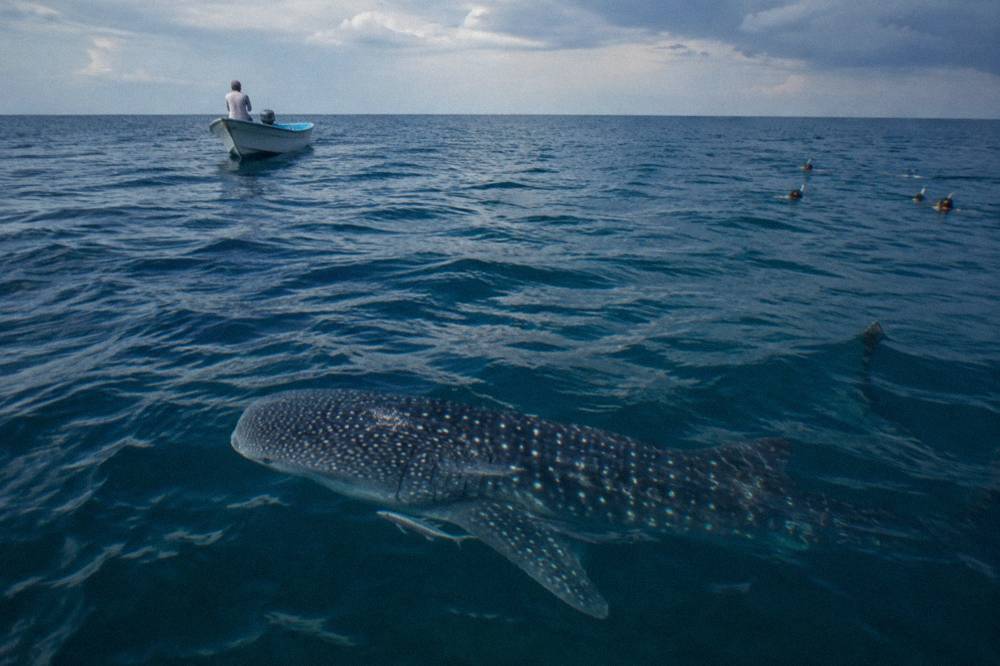
So the question of which tour to book comes down to group size and boat style, and safety is a big part of that choice. The Whale Shark Group Adventure from Isla Holbox is a departure that suits nervous first-timers especially well: a 7-hour shared trip from $184 per person, rated 4.3 from 86 reviews, with a bilingual guide, snorkel gear, breakfast, ceviche and government fees included, up to 10 travelers per booking, and free cancellation listed. The shared format means you enter the water in rotations while others wait on the boat, which suits swimmers who want a breather between entries. All the listings compared here include free cancellation, so check the live listing for the terms before you rely on it.
The Real Risks: Boats, Crowds And Seasickness
The risks worth taking seriously are operational, not the sharks themselves: propellers and boat traffic in the aggregation zone, crowded water in July and August when many boats work the same feeding area, and seasickness on the open crossing, which varies with where the sharks are feeding. None of these involve a shark attacking anyone, and all are manageable with a well-run operator and good preparation.
Start with boats, because that is where the real physics live. The interaction rules keep one boat at a time beside a shark, but the wider aggregation zone holds multiple vessels transiting, waiting and rotating, and a swimmer in the water is small and low. This is why the guide-in-the-water rule and the quiet-entry procedure matter, and why staying with your group rather than swimming off toward the animal is drilled at every briefing. A mid-season 2026 news report quoted the head of the Holbox tourism cooperatives describing 15 to 20 boats going out daily at about half capacity, which gives a sense of the zone's traffic without promising anything about a given day.
Crowds shape the experience more than the risk. In peak weeks the water can feel busy, with boats circling and rotations running quickly, and reviewers across the Holbox departures praise the small-boat intimacy while noting that busy days compress the time in the water. The mitigation is scheduling, not courage: numbers build through June, peak in July and August, and fade in September, so late June or early September can trade peak density for calmer water. The trade-off is real: fewer boats in shoulder weeks can also mean more searching, and sightings are never guaranteed on any departure.
Seasickness is the risk most likely to actually ruin a day. The run out from Holbox to the summer feeding grounds is an open-water crossing in a small boat, and summer conditions mean chop, swell and humidity. The guide to seasickness on Holbox whale shark tours covers medication timing and prevention in detail; the short version is to take motion sickness remedies before boarding, stay on deck rather than below, and skip the heavy breakfast until after the first water entry. Most Holbox listings include a light breakfast.
There is one more category worth naming for completeness: accidental contact. Swimmers who chase or crowd a shark can be knocked by its tail or fin, not through aggression but simple scale, which is why the 3-metre tail distance exists in the standard and why guides position swimmers beside the head's path rather than behind the animal. Follow the briefing and the geometry works in your favour. The full packing and preparation list is in what to bring on a Holbox whale shark tour. Accidental bumps are one thing, but a deliberate hand on the animal is a legal matter entirely, and the explanation of why touching a whale shark is illegal covers the federal rule and what guides do the instant contact happens.
How Guides And Operators Describe The Animal
Across the Holbox listings, the language operators use for the whale shark is consistent: docile, gentle, curious in a slow and indifferent way, and entirely focused on feeding. Guides brief swimmers on distance and behaviour rather than on defensive reactions, and the standard equipment list, mask, fins, snorkel and a life vest or wetsuit, reflects an animal you float beside, not one you flee from.
That register is worth noticing because it is unusual for wildlife tourism. Cage-diving operations brief clients on what to do if the animal approaches the cage. Predator dives rehearse emergency procedures. A whale shark briefing, in the operator listings, is closer to an etiquette lesson: stay 2 metres from the head, 3 from the tail, let the animal pass, do not block its path, enter quietly. The code of conduct assumes calm on both sides, and the season after season of operation supports the assumption.
The biologically interesting detail is what the animal is actually doing while you swim beside it. The Afuera zone off Holbox draws whale sharks in summer because plankton and fish eggs concentrate near the surface in the warm water, and the sharks spend those months ram-feeding in long, predictable lines. Sea surface temperatures off Holbox average 27.6 degrees in May when the season opens, rising to 28.9 in July and 29.4 in August at the peak, and the animals follow the food that warmth produces. A swimmer beside a feeding shark is, from the shark's perspective, furniture in the room while it eats.
Docile is a description of temperament, not a guarantee of behaviour, and wildlife is wildlife. The rules, the guide and the distances exist precisely because the animal is large and wild. The whale shark is a gentle filter feeder by nature, provided you treat it as a large wild animal rather than as a petting-zoo exhibit. On which point, why touching a whale shark is illegal covers what the contact ban protects, and it is mostly the shark.
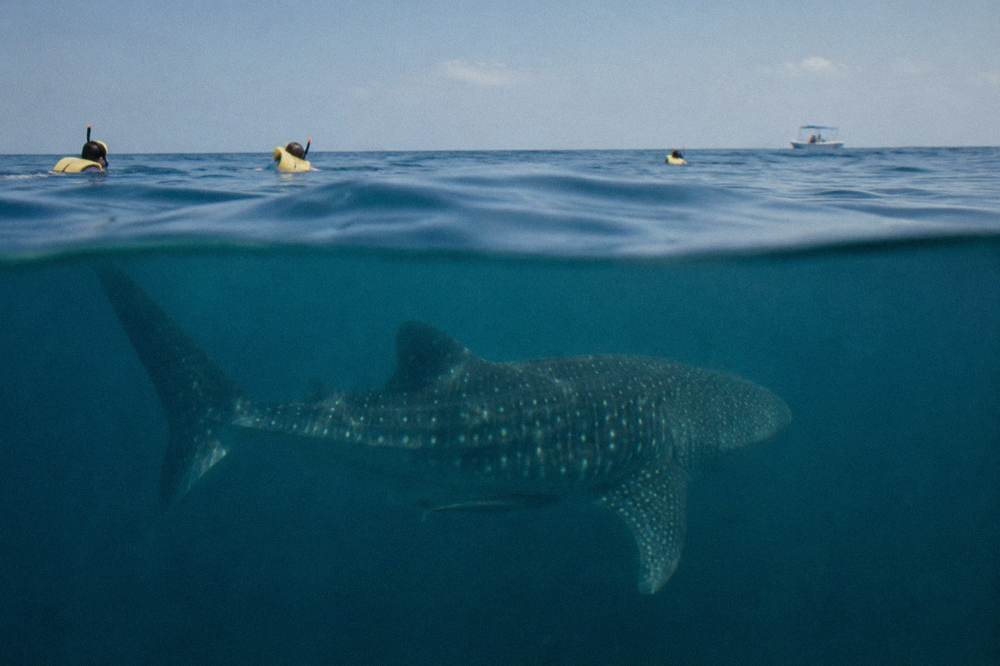
For swimmers who want the calmest possible version of the water, the private option changes the arithmetic: only your group on the boat, entries on your rhythm, and the guide's attention undivided.
The private swim from VIP Holbox Experience runs 7 hours from $1,246 per group, rated 4.5 from 27 reviews, with the boat, breakfast, ceviche, gear and a bilingual guide included for your party alone. It is the pricier route, and for a swimmer whose nerves are the main obstacle, undivided guide attention is often what tips the day from endured to enjoyed.
What Nervous Swimmers Should Actually Worry About And Book
Worry about the boat, the crowd and your stomach, in that order, and treat the shark as the safest element of the day, since no attack on a swimmer appears in the 2026 reporting reviewed. Book a small-group or private Holbox departure, choose the building or fading shoulder of the season if busy water worries you, take seasickness remedies before boarding, and follow the guide's positioning briefing in the water.
There is a decision flow worth writing down. If your nervousness is about the animal, any licensed Holbox departure answers it, because the rules and the biology do the work regardless of price point. If it is about the water and crowds, pay for the smallest group you can: the shared Holbox departures cap bookings at 8 to 10 travelers depending on the listing, and the private option removes every variable except the sea. If it is about the crossing, pick a date outside the July and August peak and medicate early. And if it is about money on top of nerves, the listings on Holbox Island Whale Shark Tours that name free cancellation give you a genuine escape hatch if the morning arrives and the swell does not cooperate.
The all-inclusive option sits between shared and private on the reassurance scale, worth a look if you want the logistics handled end to end.
It runs 7 hours from $209 per person, rated 4.9 from 267 reviews, the most reviewed whale shark departure in the Holbox set, with breakfast, ceviche, gear, a satellite tracker for security and an activity bracelet included. The review pool is the largest of the Holbox swims, which for a nervous reader is its own kind of information: hundreds of people have come back and written about it.
One last framing thought. The question this article answers is asked in search bars all the time, usually at night, usually by someone half-decided on a booking. The answer the evidence supports is quiet rather than dramatic. The biggest fish in the sea eats some of the smallest food in the sea, has teeth it does not use on anything bigger than plankton, and spends its summers off Holbox cruising the surface with its mouth open. The things that will genuinely test you that morning are an early alarm, a long crossing and the moment you slide off the boat. Prepare for those, and the shark takes care of itself.
Common Questions About Whale Shark Safety
Has A Whale Shark Ever Attacked A Person?
No attack on a swimmer by a whale shark appears anywhere in the 2026 reporting, and the species' biology makes an attack effectively impossible: it is a filter feeder with thousands of vestigial millimetre-scale teeth, no hunting behaviour toward large prey, and a documented temperament that operators describe as docile. This is an absence in reviewed accounts, never a global claim that nothing has ever occurred anywhere.
Can a whale shark bite a human?
A whale shark has the tooth count to make the idea sound alarming and the anatomy to make it meaningless. Its teeth are tiny and play no role in feeding, its throat is narrow, and it feeds by ram filtration of plankton and fish eggs. There is no documented biting behaviour toward swimmers; the animal simply cruises and filters.
Is it dangerous to swim with whale sharks in Holbox?
The regulated swim is considered low risk, and the documented concerns are boats, crowded water in the July and August peak, seasickness on the open crossing, and accidental tail contact if swimmers crowd the animal. Federal rules under NOM-171 keep one boat per shark for 30 minutes at a time, set swimmer distances of 2 metres from the head and 3 from the tail, and put a specialised guide in the water with the group.
What happens if you touch a whale shark?
Touching, riding, chasing or blocking a whale shark is prohibited by the federal standard, and operators brief this hard before the water entry. The ban protects the shark's sensitive skin and behaviour, and guides can end a swimmer's water time for breaking it. Contact mainly endangers the animal, not the swimmer.
Are whale sharks aggressive when feeding?
No. Feeding behaviour is forward cruising with the mouth open, and the animal's attention stays on the plankton line. Guides position swimmers beside the feeding path, never in front of it, and the shark's movement while feeding is slow and predictable, which is exactly why the activity is run the way it is.
Should nervous swimmers book a private whale shark tour?
It is a reasonable choice. A private boat, from $1,246 per group for 7 hours with VIP Holbox Experience, gives undivided guide attention and entries on your rhythm, which helps swimmers whose nerves are the main barrier. A small shared departure, from $184 per person, works well too, since rotations mean you can rest between water entries.