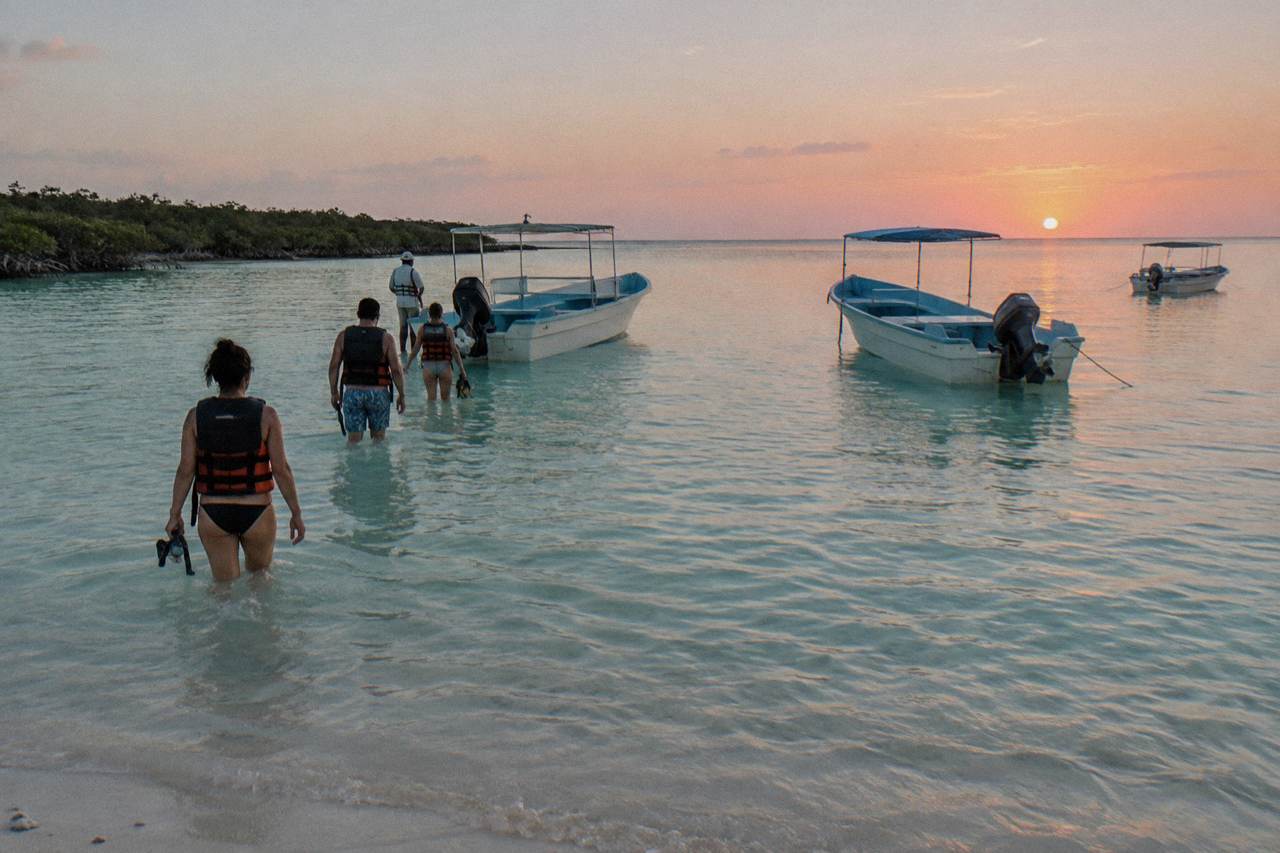
Whale Shark Swims From Holbox Island
★ 4.5 · 47 reviews · From $210
Whale shark swims ended for 2026 on 17 September. The 2027 season dates have not been announced, so open calendars may stay blank for now.
Check availability →Holbox splits the year into two distinct trips: a warm, humid, occasionally stormy summer that brings the whale sharks, and a drier winter built for beach days, kayaking and birdlife. Here is how the months actually compare.
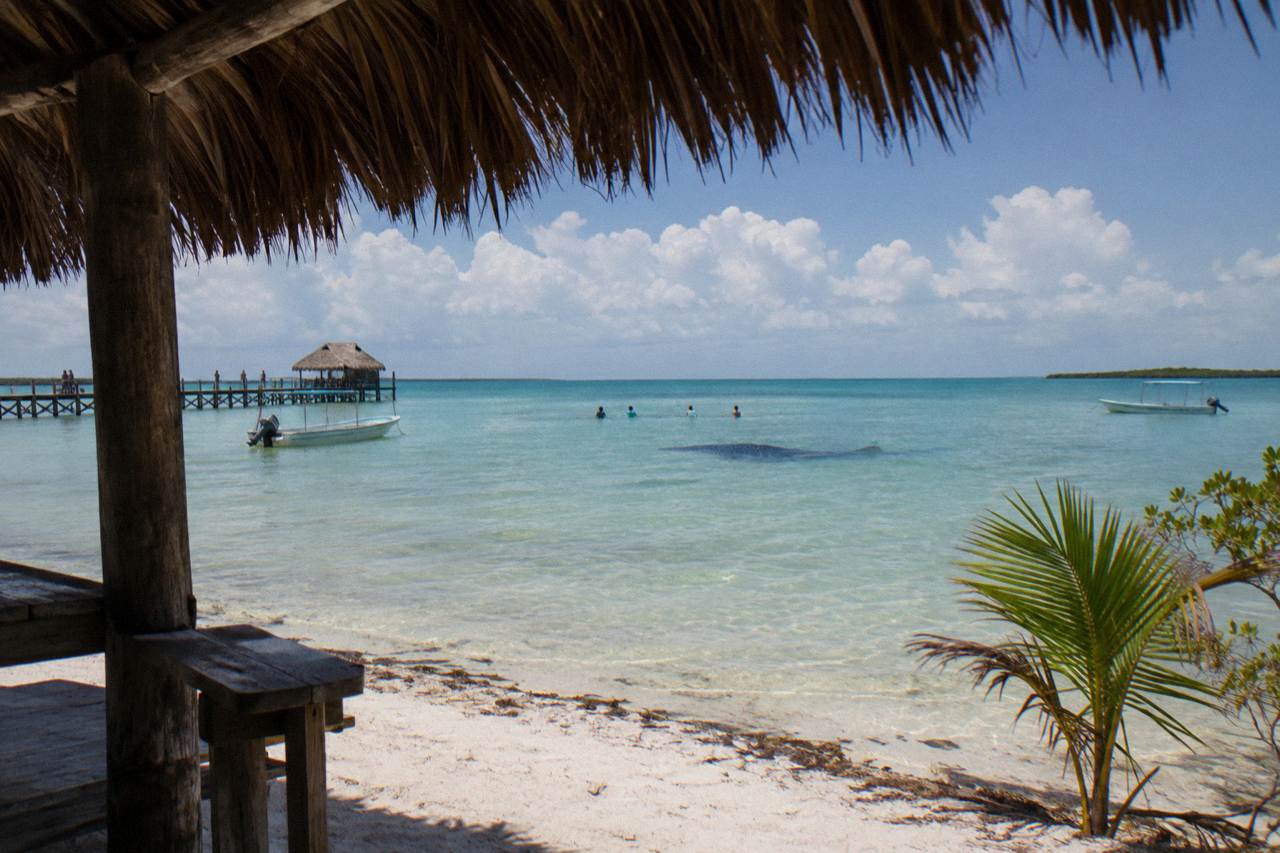
Short answer
The official 2026 whale shark season ran 15 May to 17 September, and next season should follow a similar mid-May pattern. Sea temperature ranges from about 24.6 C in January to 29.4 C in August. July and August are peak shark months; December to April is the drier beach season; hurricane risk runs 1 June to 30 November.
The best month to visit Holbox depends entirely on which Holbox you want: the summer island that launches boats toward feeding whale sharks, or the winter island of empty sandbars, flamingo flats and long dusks. Weather is the hinge. The warm, wet half of the year is when the sharks arrive and when the Atlantic hurricane window is open; the dry half is calmer, cooler and built for the beach. There is no month that gives you everything, and this guide lays out the trade month by month, using the official season notice, satellite sea temperature averages and the island's 2026 conditions as its anchors.
Two frames before the detail. First, the 2026 whale shark season has closed: SEMARNAT's notice under NOM-171 set it from 15 May to 17 September 2026, and every whale shark swim is a next-season prospect, typically from mid-May. Second, Holbox faces the Gulf rather than the open Caribbean, which changes its weather story: in a heavy 2026 Atlantic sargassum year, local reports described the island as relatively spared while southern Quintana Roo beaches absorbed the worst of it. If you're curious how the island's seaweed situation plays out across the season, our guide to Holbox water clarity and sargassum explains why this coast tends to stay clearer than Cancun or Tulum.
Holbox has a wet summer half and a dry winter half. The wet months, roughly May to October or November, bring heat, humidity, afternoon showers and the hurricane window that opens 1 June and closes 30 November; December to April is drier and marginally cooler, with sea temperatures sliding from about 28.5 C in October to 24.6 C in January before climbing again.
Whale Shark Swims From Holbox Island
★ 4.5 · 47 reviews · From $210
Whale shark swims ended for 2026 on 17 September. The 2027 season dates have not been announced, so open calendars may stay blank for now.
Check availability →The shape of the year is simple even when the day-to-day is not. Rain in the wet season tends to arrive in bursts, showers and thunderstorms rather than all-day soakers, and mornings are usually the most reliable window for anything on the water. Boat operators run early departures for exactly this reason. The dry months trade that volatility for steadier sunshine, though the sea cools enough that long swims feel different by January.
Humidity is the constant. Even in the drier months Holbox is a tropical island in the Gulf of Yucatan, and the shoulder months of April and May heat up noticeably before the first rains settle in. Wind matters more than the thermometer on any given week: a northerly push in winter can churn the shallow Yalahau Lagoon crossing and close the small-boat tours, while a calm June morning can feel like glass. None of this is promiseable in advance, which is why free cancellation comes standard on every whale shark tour, and why flexible dates beat a perfect date.
A practical note on October 2026 specifically: local reports described heavy rain flooding Holbox streets in early October, a reminder that late-season trips carry real, occasional disruption even when the sharks have gone. The flooding made getting around harder and caused some power issues, but mobility on a flat, sea-level island without cars is weather-sensitive in a way Cancun's hotel zone is not.
| Months | Season character | What it suits |
|---|---|---|
| December to April | Drier, cooler, steadier sunshine | Beach days, kayaking, birdlife, bioluminescence fades late in the window |
| May and June | Heat builds, first rains, shark season opens mid-May | Shoulder-season sharks with fewer crowds |
| July and August | Wet-season peak, humid, storm-risk afternoons | Peak whale shark weeks, peak bioluminescence |
| September and October | Wet season winding down, highest hurricane risk in September | Early September sharks, late October quiet and cheaper |
| November | Transition, wet season closing 30 November | Low season, recovering conditions |
If your interest is the swim rather than the island generally, the month tables in the whale shark season month-by-month guide break the season window down further, and the best month to swim comparison places Holbox against the country's other aggregation sites.
The official 2026 window ran 15 May to 17 September under the SEMARNAT notice, and most operators run roughly 1 June to mid-September inside it. July and August are the peak months. Next season's notice has not been published; prior notices appeared around May, so plan on a similar mid-May pattern and watch for the announcement.
Whale shark season is a summer phenomenon because the sharks follow the warm, plankton-rich water that builds through June, peaks in July and August and fades in September. The SEMARNAT notice that sets the dates covers the Yum Balam, Tiburón Ballena and Caribe Mexicano protected areas and is published each year; the 2026 version is on the federal portal (the SEMARNAT notice for 2026). The 2027 notice does not exist yet, and any operator selling confirmed 2027 dates before it appears is guessing.
What the pattern means in practice: a mid-May arrival lands you at the season's opening, when numbers are still building and boats are fewer; a July or August booking lands you in the weeks local news described as the season's apogee in 2026; an early September booking trades some density for thinner crowds and lower prices, at the price of the year's highest hurricane-risk weeks. Mid-season 2026 reporting described 15 to 20 boats going out daily from Holbox at about half capacity, against 48 CONANP permits for the island, so even peak weeks are not a free-for-all at the dock.
The all-inclusive search-and-swim listing in that band is the natural anchor for a next-season booking: from $209 per person, 7 hours, from Holbox, 4.9 from 267 reviews, with free cancellation listed, real-time satellite tracking on board and guides in English, Spanish and French. It is the one departure every whale shark season plan is built around, because the dates, the meeting point at Marina VIP Holbox and the inclusions line up with how most visitors actually experience the island's shark season.
Booking behaviour matters as much as timing. Demand in 2026 fell steeply by early September, with local news reporting tours discounted from about 2,800 pesos at the start of summer to 2,000 to 2,300 pesos at season's end. The inverse is true in July and August: the good small-boat departures fill first. Lock the swim before you lock the hotel if sharks are the point of the trip, and keep the free-cancellation window in mind while your plans firm up.

Satellite monthly averages put Holbox water at 24.6 C in January, warming steadily to 29.4 C in August, then cooling through 28.5 C in October to 25.4 C in December. The swim season months all sit above 27 C; the winter beach months sit in the mid-20s, comfortable for short swims and cool for long ones.
Sea temperature is the one weather figure that can be printed month by month with confidence, because it comes from satellite averages rather than promises about any particular day. It is also the figure that quietly explains the whole calendar: the sharks arrive as the water crosses the high-20s in late spring, the bioluminescence is strongest in the warmest months, and winter swimmers notice the difference the moment they wade in past Punta Mosquito.
| Month | Sea temperature (monthly average) | Season status |
|---|---|---|
| January | 24.6 C | Closed |
| February | 24.8 C | Closed |
| March | 25.5 C | Closed |
| April | 26.5 C | Closed |
| May | 27.6 C | Season opens 15 May, numbers still building |
| June | 28.2 C | Building |
| July | 28.9 C | Peak |
| August | 29.4 C | Peak |
| September | 29.3 C | Season ends 17 September |
| October | 28.5 C | Closed |
| November | 26.6 C | Closed |
| December | 25.4 C | Closed |
The averages come from seatemperature.info's Holbox page, a satellite-derived secondary source, and they describe the water, not the weather above it. A warm sea in late September can still sit under an unsettled sky, and a cool sea in March can come with the year's most reliably blue days. Use the numbers to pick your wetsuit tolerance, not your rain odds.
For swimmers, the practical reading is that no month of the season requires more than a light rash guard for most people, and operators supply snorkel gear and life vests per the federal rules, which require a vest or wetsuit plus mask, fins and snorkel in the water. For beachgoers, January and February water in the mid-24s is brisk by local standards and perfectly swimmable by anyone used to a Mediterranean August.
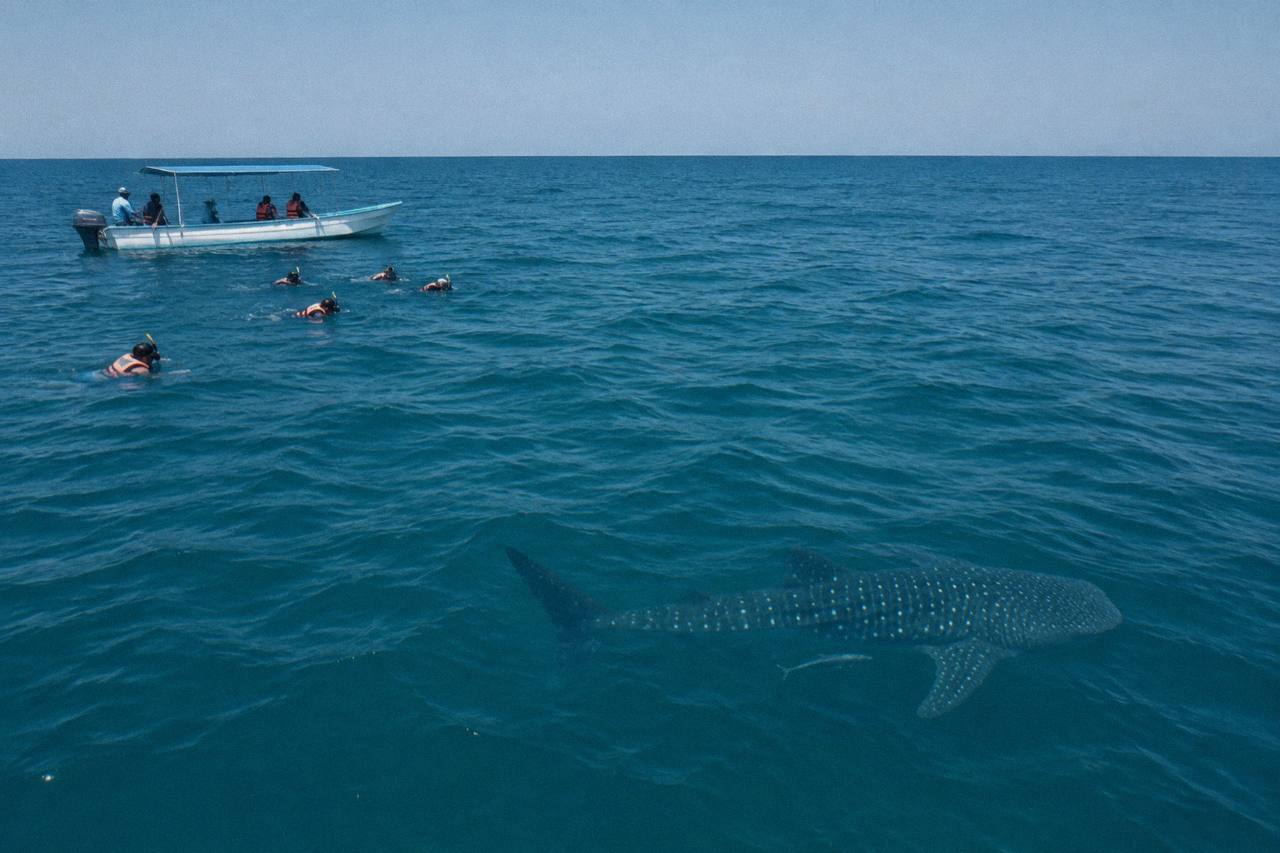
6-Hour Swim, VIP Holbox Experience
6 hours
★ 4.6 · 243 reviews · From $178
Whale shark swims ended for 2026 on 17 September. The 2027 season dates have not been announced, so open calendars may stay blank for now.
Check availability →The Atlantic hurricane season runs 1 June to 30 November, and September carries the highest risk of any month. The whole whale shark window sits inside the season's first two-thirds, so a summer shark trip accepts some storm-trip risk; free cancellation on the listings is the practical hedge, and local reporting found no season-wide suspension in 2026.
The overlap between shark season and hurricane season is the single biggest trade-off in Holbox planning, and there is no way to price it away. The sharks come in the warm months; so do tropical systems. What the record adds is texture: storms in this basin are episodic, not constant, and the typical summer pattern is long stretches of workable weather punctuated by disturbed days when boats stay in. Operators watch the forecast, departures shuffle, and a flexible itinerary absorbs what a rigid one cannot. Other pages covering the same trip are gathered on Holbox Island Whale Shark Tours.
Within the season the gradient is real. June and July carry moderate risk and are the months most visitors choose. August risk rises. September is the peak-risk month, and it is also the month shark demand collapses, as the 2026 reporting showed with demand down nearly 80 percent by early September. October and November risk tapers off; the early-October 2026 street flooding on Holbox came from heavy rain in that shoulder, a local report of disruption rather than a named catastrophe, but a fair sample of what late-season travel looks like occasionally.
| Period | Hurricane-season risk | Whale shark season status |
|---|---|---|
| Early June | Low to moderate | Season open, numbers building |
| July | Moderate | Peak weeks begin |
| August | Moderate, rising | Peak |
| September | Highest of the year | Season closes 17 September, demand down sharply |
| October | Declining | Closed |
| November | Season ends 30 November | Closed |
If your dates are locked to school holidays or a specific week, book the swim with cancellation cover and plan a non-boating fallback day. If your dates are flexible, mid-June to late July threads the needle: peak-building sharks, moderate storm risk, and water already above 28 C. The federal rules that govern the activity, including the 30-minute limit per boat around one shark and the 5-metre boat distance, are set out in the NOM-171 text in the Diario Oficial, and they apply in every weather state.
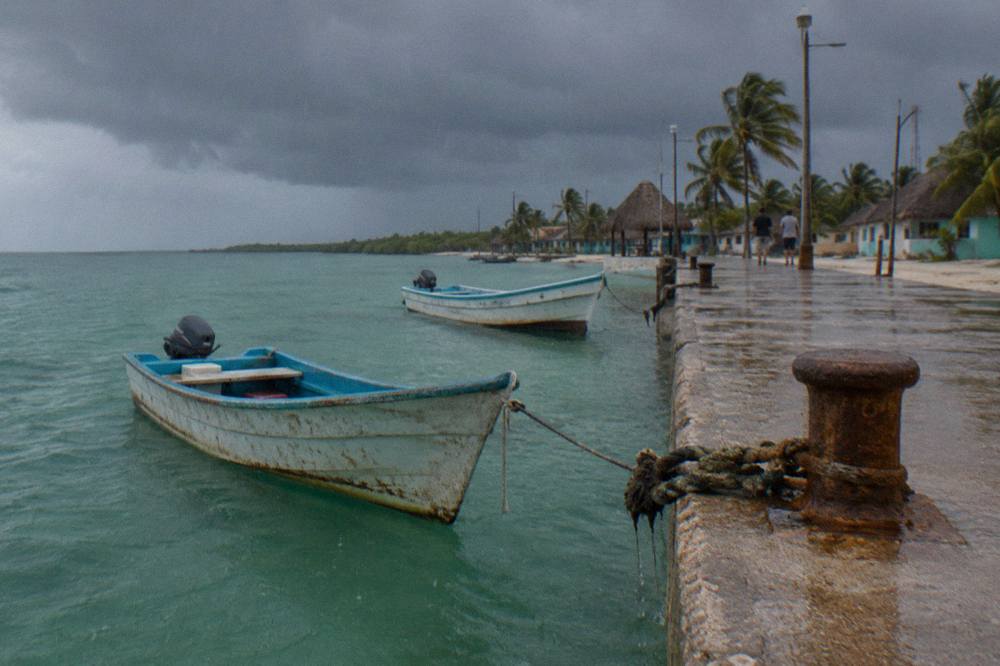
December to April is Holbox's dry season and its best pure beach window: steadier sunshine, lower humidity, sea in the mid-20s and no hurricane risk. The trade is explicit, because whale sharks are absent, bioluminescence fades toward the dry months, and the winter northerlies can still scrub boat days even under a blue sky.
If the swim is not the point of your trip, the winter half of the year is genuinely the better island holiday. The sandbars at Punta Mosquito, the flats where flamingos feed year-round in the Yum Balam reserve, the three-island boat circuits to Isla Pajaros, Isla Pasion and the Yalahau spring: all of it runs through the winter, in weather that is friendlier to walking, cycling and long lunches than any August afternoon. Crowds rise around the December holidays and again at Easter, and prices follow, but the shoulder weeks of late November, January after the holidays and late April are among the island's quietest good-weather stretches.
The winter caveats are wind and water temperature. Cold fronts pushing down from the north, known locally as nortes, can bring several days of strong wind and churned water between the fine spells, and the small-boat and kayak tours stand down when they hit. The sea at 24.6 to 26.5 C is swimmable but no longer the warm bath of August. Neither caveat spoils the season; both shape what you pack and how many alternative plans you hold.
A dry-season trip also reopens the logistics comfortably. The crossing from Chiquila runs about every 30 minutes from 6:00 a.m. to 9:30 p.m., a 2026 ferry guide lists the adult one-way fare at 330 pesos, and the drive from Cancun airport to Chiquila takes about 1.75 to 2.5 hours by road; the full logistics, including parking and the car-free island rules, are laid out in the guide to getting from Cancun to Holbox.
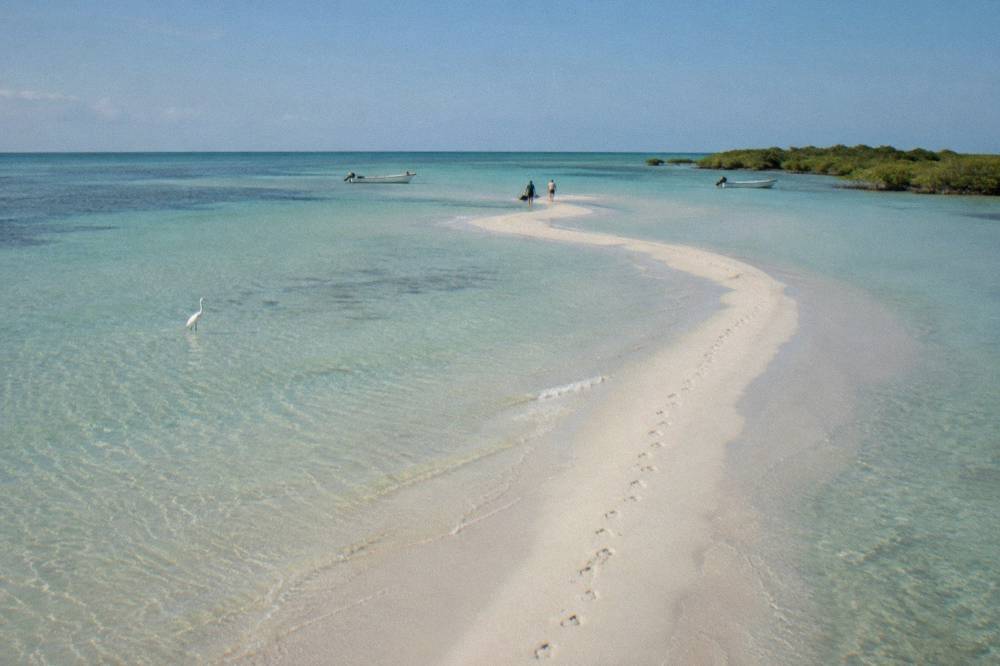
Holbox reads mostly blue or green on the state sargassum colour map in mid-October 2026, a year in which local reports describe the island as relatively spared while 2026 was heavy across the Atlantic; bioluminescence is commonly described as May to October, strongest in the warm months and best on dark nights near the new moon, and never guaranteed; rain in the wet season arrives in bursts rather than all-day storms.
Sargassum is the question that follows any Caribbean summer booking, and Holbox's answer is structurally different from Tulum's or Playa del Carmen's. The island faces north across the shallow Gulf, and the prevailing transport of sargassum mostly feeds the east-facing Caribbean shore. In 2026, one of the heaviest Atlantic sargassum years on record, local reports described Holbox's key beaches, Holbox Centro, Punta Mosquito and Punta Cocos, reading blue or green on the SEMA colour scale while southern beaches struggled. None of that guarantees a clean beach on a given day: wind shifts move weed quickly, and the state's live colour map is the pre-trip check. But the base rate on Holbox is favourable.
Bioluminescence is the wet season's quiet bonus. The glow in the shallow bays is commonly described as running May to October, with the strongest months in the July-to-September stretch, and tours schedule around the lunar calendar because a full moon washes the effect out. Even then it is not a certainty: calm water, minimal wind and rain, and sufficient plankton all have to line up, and operators who promise a glow on a specific night are promising something nobody controls. What you can control is timing: a dark-sky night in August, on a calm evening, on a small kayak departure, is about as good as the odds get.
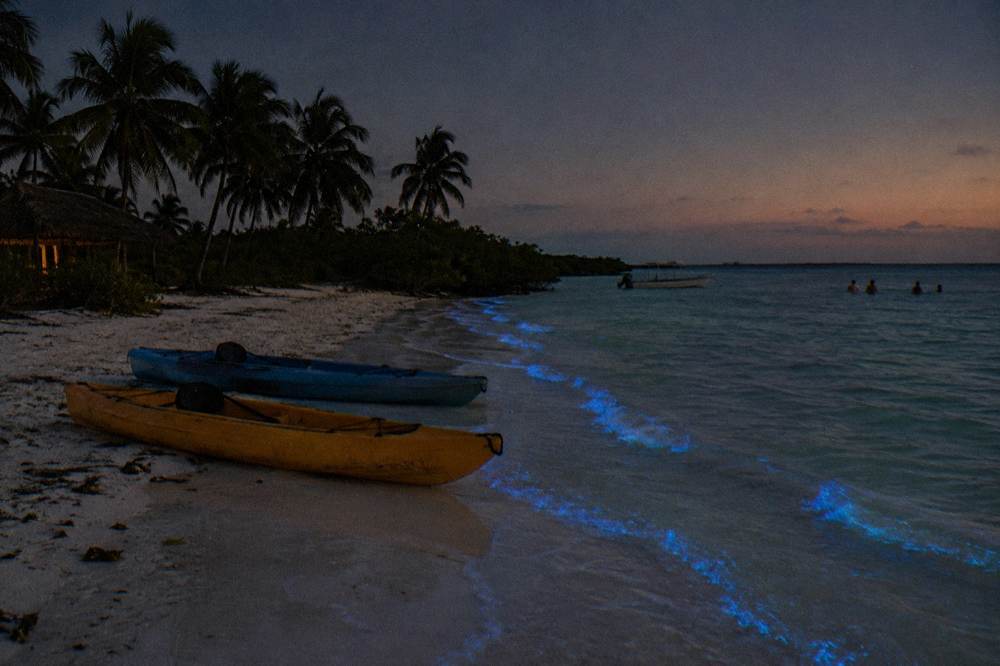
The bioluminescence and stargazing kayak run captures that formula: from $49 per person, 2 hours, hotel pickup within Holbox listed, life jackets and a dry bag per couple, 4.6 from 360 reviews. The sunrise mangrove paddle from the same selection, from $46 per person, 3 to 3.5 hours, 4.9 from 174 reviews, works in either half of the year, since mangroves and birds do not follow the shark calendar. Both pair naturally with a summer swim booking as the calm-water half of a trip.
On rain itself, restraint is the safest position. No reliable month-by-month rainfall or daytime-high figures for Holbox exist in a form worth printing, and inventing them would be worse than the qualitative truth: the wet season is wetter and stormier, the dry season is drier, and any individual week can buck the pattern. Plan around the season-level facts and check the forecast inside your cancellation window.
Visit in the wet-season summer if the whale shark swim is the reason for the trip, ideally mid-June through August, accepting heat, humidity and some storm-trip risk; visit in the dry winter if the beach, the flats and the birdlife are the point, ideally January through April, accepting cooler water and the occasional norte. Book the swim, not the weather.
The framing sounds glib until you see how the two halves of the year price and crowd differently. Summer brings the sharks, the bioluminescence and the highest hotel occupancy of the island's year; local 2026 reporting put Holbox occupancy at 58.1 percent for the week of 22 to 28 August, with July and August the strongest weeks and a steep fade in September. Winter brings the beach crowd around the holidays and Easter, then a long, quiet, reliably sunny shoulder. There is no secret third season; there is only the question of which Holbox you are buying.
| Your priority | Best months | What you accept |
|---|---|---|
| Whale shark swim | Mid-June to August | Heat, humidity, moderate storm-trip risk |
| Peak bioluminescence | July to September, dark-sky nights | Summer wet season |
| Quietest beaches | Late April, May, late November, early December | Some closed seasons, fewer boats running |
| Classic beach holiday | January to April | No sharks, cooler sea, occasional norte |
| Lowest prices | September shoulder and late autumn | Highest or declining storm risk, thinner services |
For Cancun-based travellers the calculus is sharper, because the day-trip maths is brutal in both directions: the journey from Cancun to Holbox, about 1.75 to 2.5 hours by road to Chiquila plus the 25-minute ferry each way, is generally described as too long for a comfortable same-day visit. If you are staying in Cancun and want sharks without the logistics, departures from Isla Mujeres and the north Cancun marinas put you in the same feeding zone from the other side, a comparison the site's Holbox versus Cancun versus Isla Mujeres guide works through in detail. If you want the island itself, stay on it: at least two nights, three if a swim is booked, because a single storm-scrubbed morning should not cost you the only reason you came.
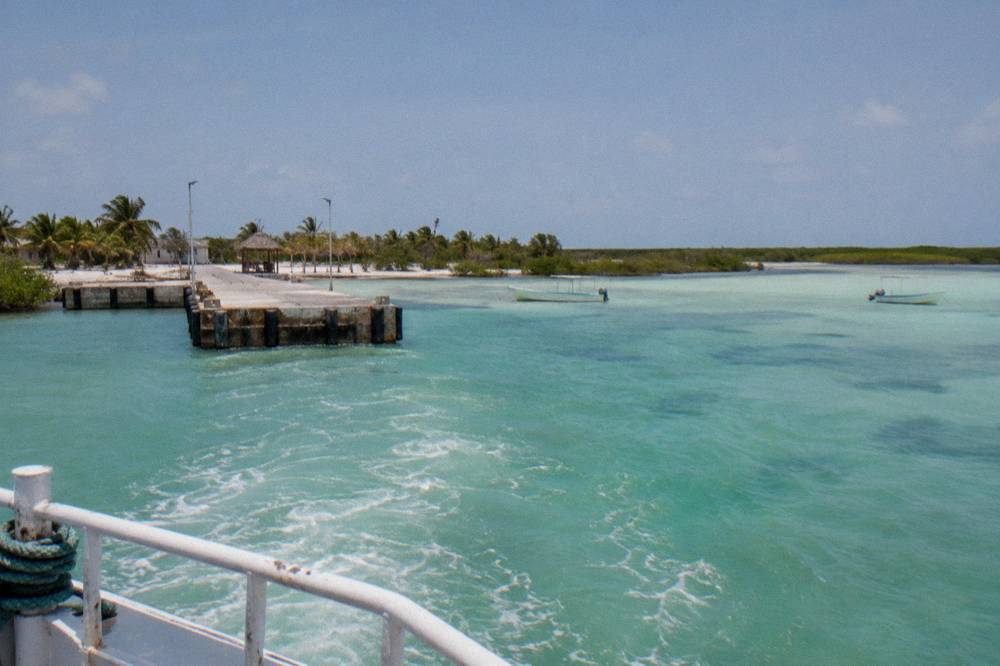
One booking-pattern note from the island side. Holbox departures run smaller boats than the big-base marinas; the shared listings here state maximums of 8 or 10 travelers, and the listing that includes hotel pickup within Holbox, from $210 per person with a 4.5 rating from 47 reviews, is worth checking early for July and August dates precisely because the small-boat slots thin out first. The summary of this page in one sentence: the best weather month and the best shark month are not the same month, and the best trip is the one booked around whichever of the two you actually came for.
Roughly May to October or November, with the heaviest, most humid stretch from June through September. Rain typically arrives in showers and afternoon storms rather than all-day soakers, and mornings are the most reliable window for boats and kayaks.
By sea temperature, August, with a monthly average of 29.4 C, just ahead of July at 28.9 C and September at 29.3 C. January is the coolest at 24.6 C.
Less than the Caribbean-facing coast. Holbox read mostly blue or green on the state colour map in mid-October 2026, a year local reports describe as relatively spared for the island despite heavy Atlantic sargassum overall; check the live state map before travel.
Commonly described as May to October, strongest in the warm months, and best on dark nights near the new moon. It depends on calm water and plankton and is never guaranteed on a given night.
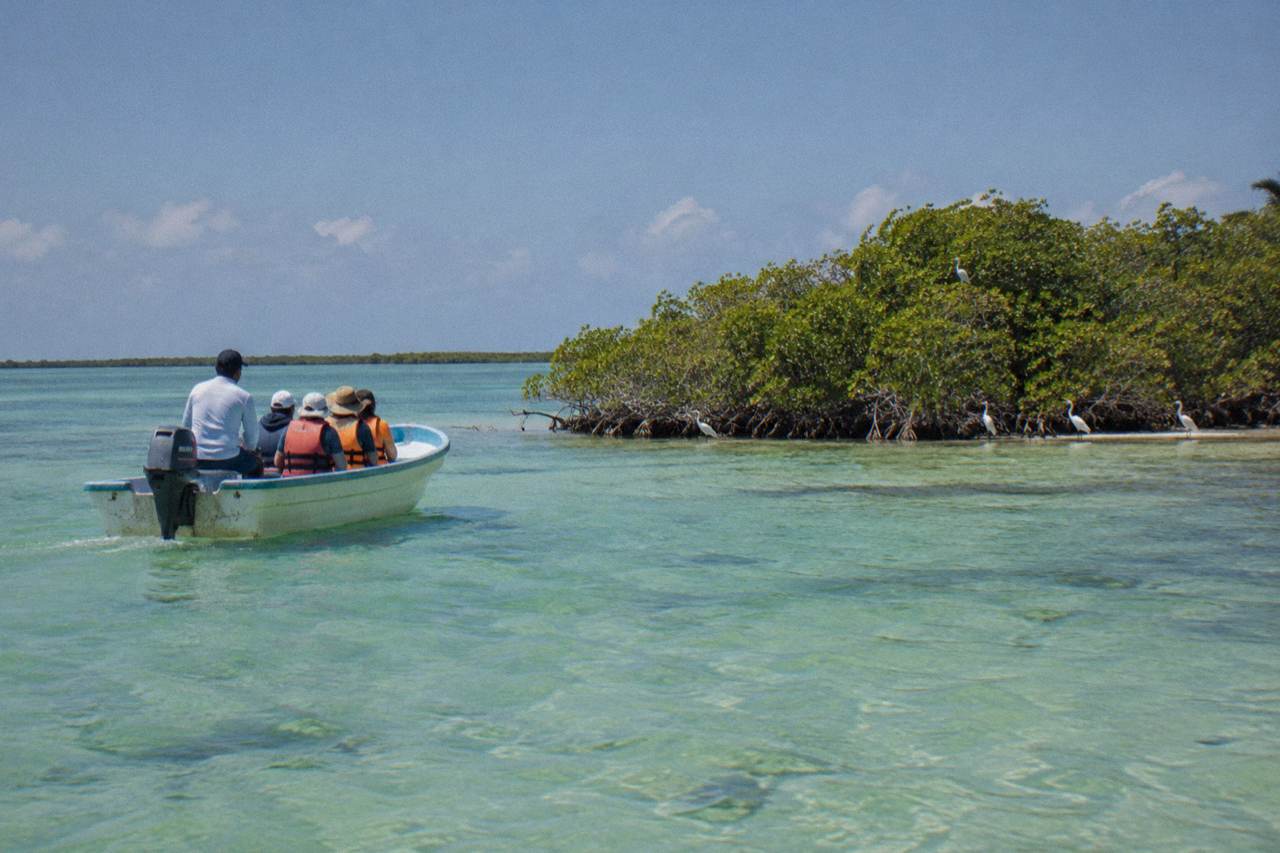
Before you go, the pick for this guide:
Three Islands, Pickup Included
★ 4.5 217 reviews · From $39
Check availability →