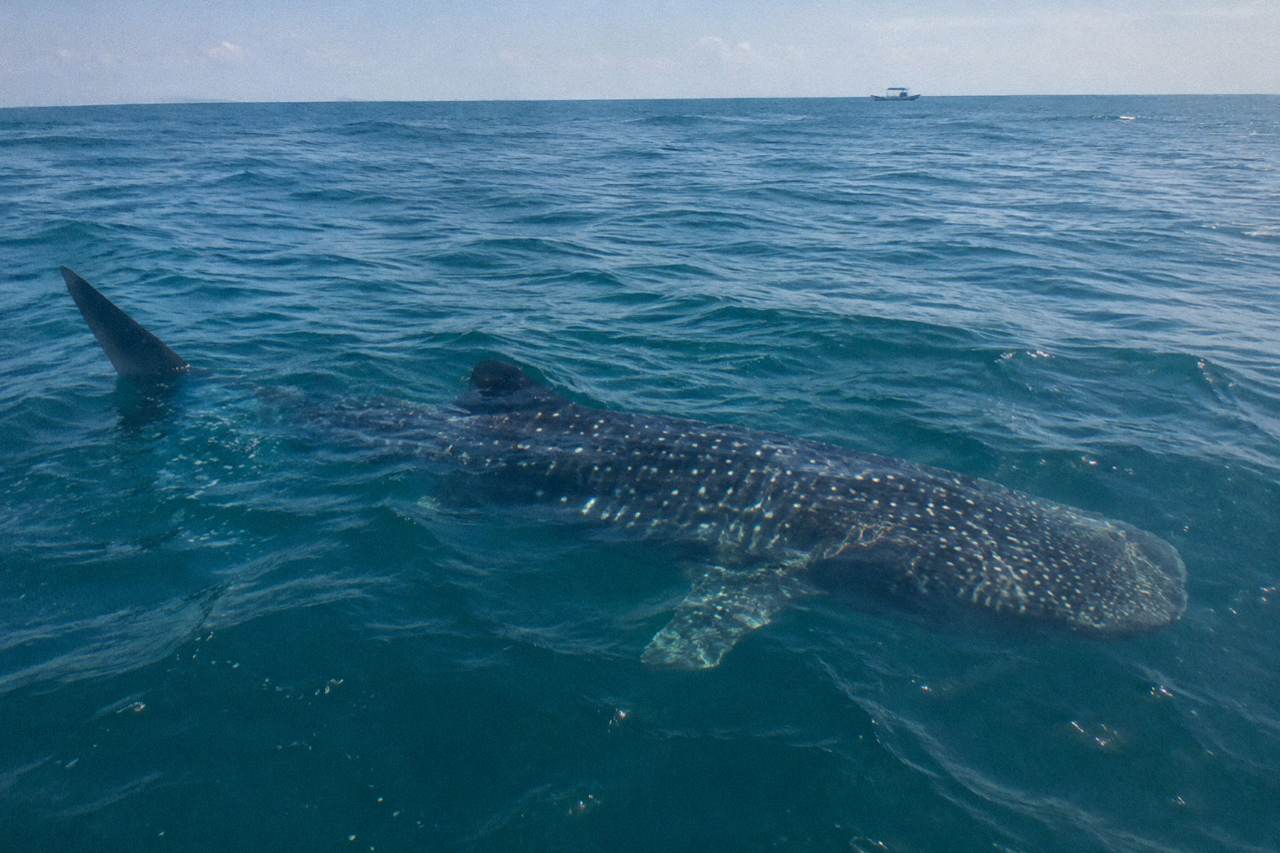
7 hours
★ 4.6 · 57 reviews · From $190
Whale shark swims ended for 2026 on 17 September. The 2027 season dates have not been announced, so open calendars may stay blank for now.
Check availability →Holbox faces the Gulf of Mexico rather than the open Caribbean, and that geography does most of the work in keeping seaweed off its beaches. This report explains the colour-coded state map, what local reports observed through 2026, and why sargassum rarely decides whether a whale shark boat sails.
Short answer
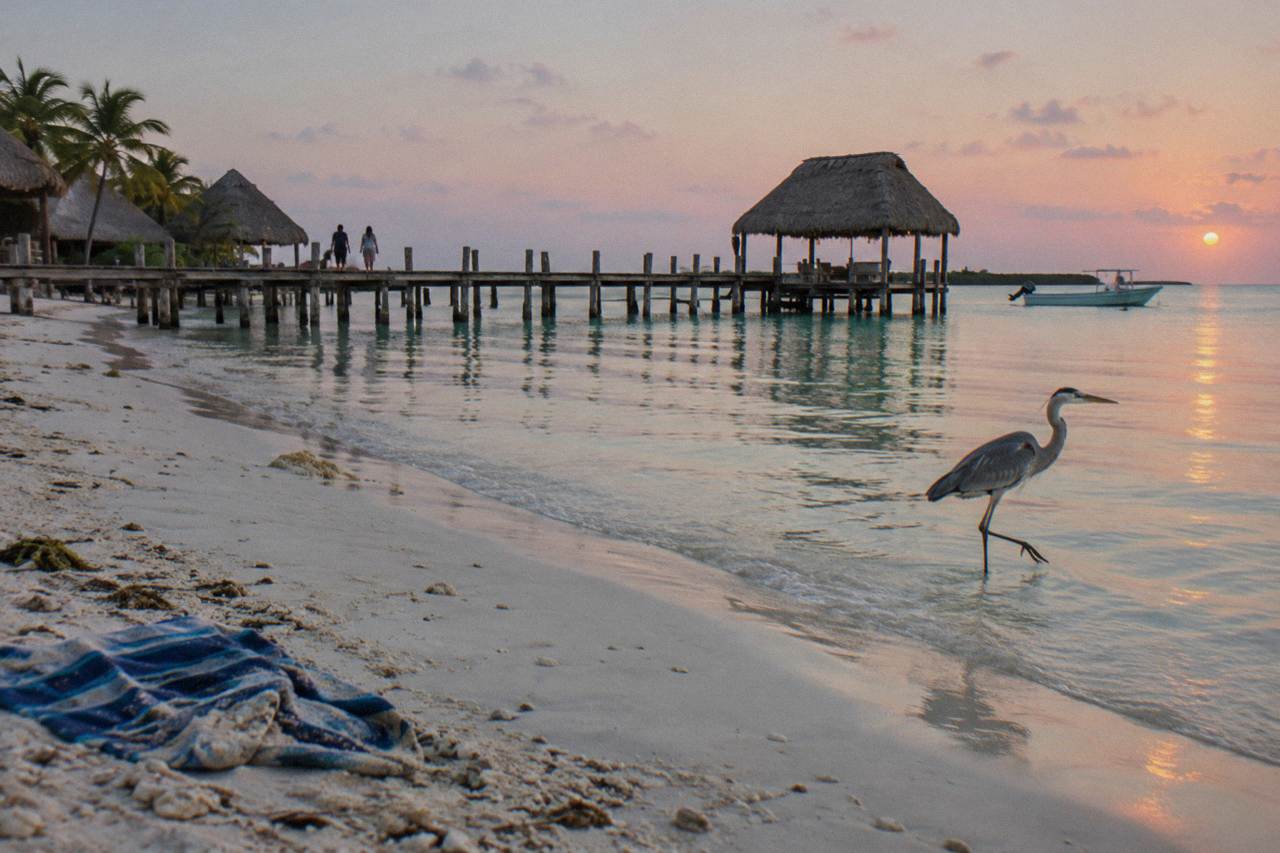
Holbox sits on the Gulf side of the Yucatan and consistently reads blue or green on the state sargassum colour map while Caribbean-facing beaches like Tulum and Playa del Carmen take the heavy arrivals. 2026 was a big Atlantic sargassum year and Holbox was relatively spared, per local reports. Whale shark swims happen offshore and seaweed does not open or close the season.
Seaweed is the question that quietly decides a lot of summer holidays on the Quintana Roo coast. A traveller imagines clear water, sees a photo of a brown mat on a beach, and starts googling. Holbox answers that worry better than almost any island in the state, and the reason is simple geography: the island faces north onto the open Gulf of Mexico, with the Yalahau Lagoon behind it, while the prevailing sargassum currents push floating weed onto the east-facing Caribbean shore, at Tulum, Playa del Carmen and the Cancun hotel zone. This report from Holbox Island Whale Shark Tours lays out what the state colour map actually measures, what local reports observed around the island through 2026, and how seaweed does, and mostly does not, touch a whale shark swim.
Two things to keep straight from the start. First, sargassum conditions change week to week with wind and current, so nothing here is a promise about any particular day; check a live map before you travel. Second, seaweed has never decided whether whale shark season is open. Season dates come from the federal environment ministry's annual notice under NOM-171, and the 2026 window ran 15 May to 17 September. The 2027 notice has not been published; prior notices have appeared around May.
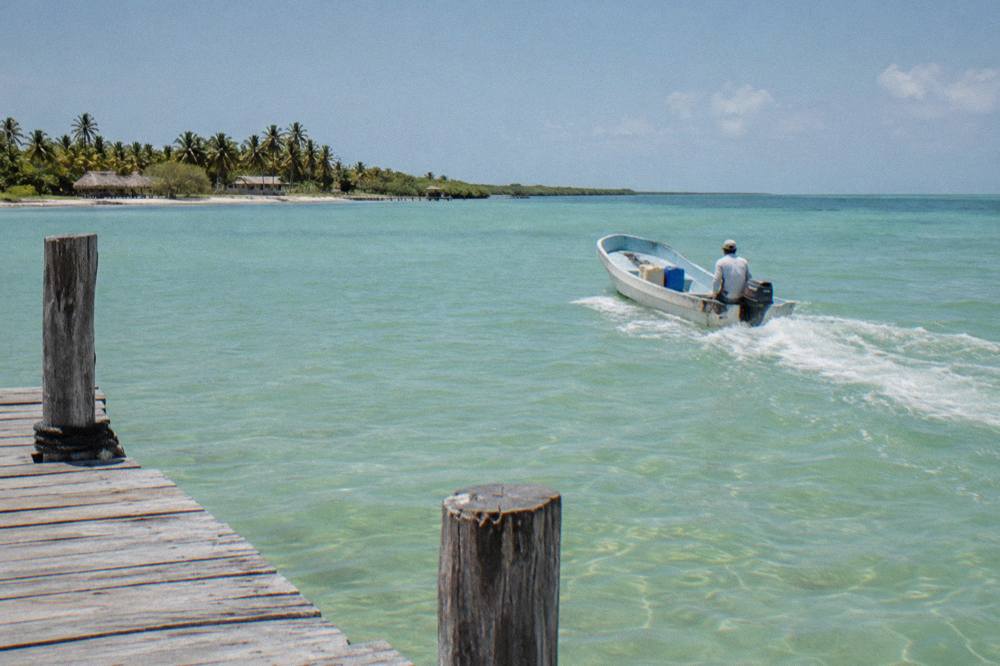
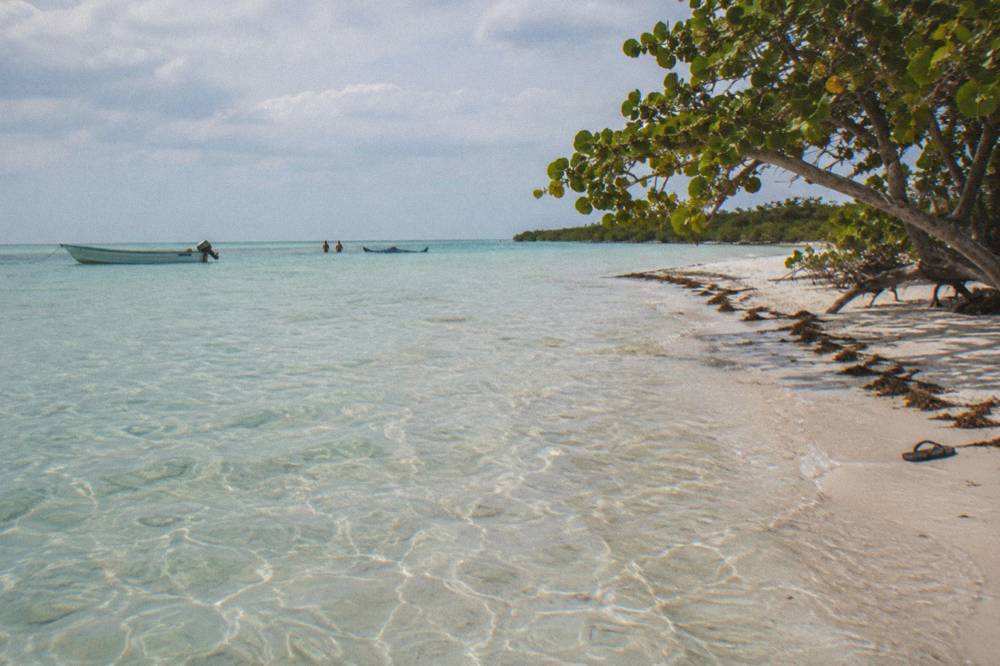
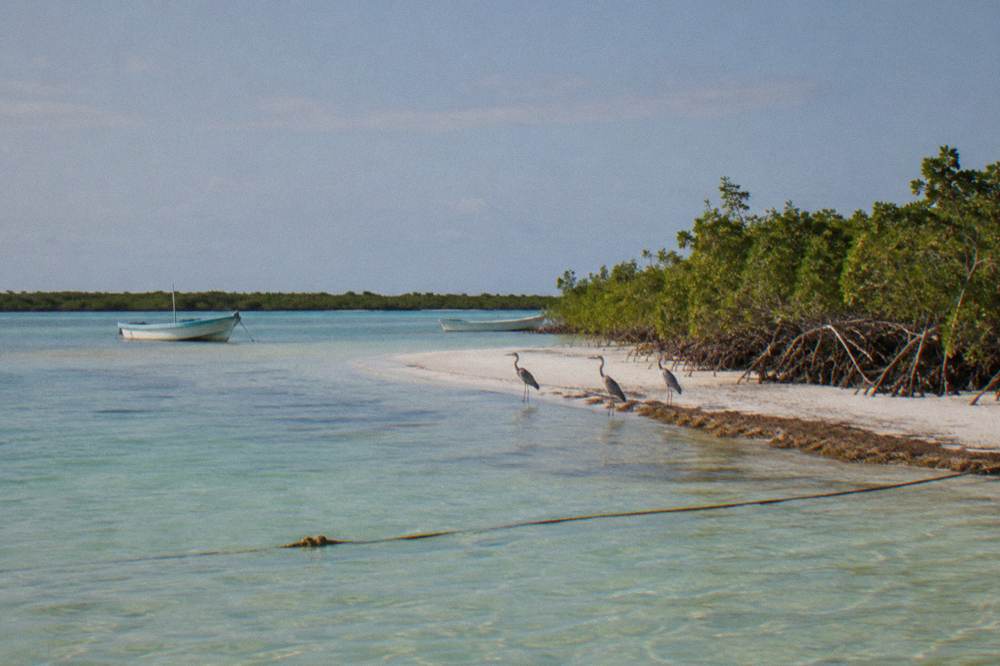
Holbox does receive sargassum, but far less than the Caribbean-facing coast, and the arrivals tend to be smaller and shorter-lived. Mid-October 2026 reports described the island's main swimming spots, Holbox Centro, Punta Mosquito and Punta Cocos, as clean or low, with Holbox relatively spared in a heavy sargassum year on the state colour scale while beaches to the south dealt with heavy landings. The island's angle toward the Gulf, not any cleanup machine, is what makes the difference.
The floating weed arrives in Quintana Roo carried by currents that sweep westward through the Caribbean and pile it onto shores that face that flow. Islands and towns on the Riviera Maya face it head on. Holbox, tucked behind the Yucatan's northern tip inside the Yum Balam reserve, sits at an angle the main stream mostly misses. When wind shifts onshore for a few days, rafts can still drift in, and visitors do occasionally see a line of weed along the sand. What local reporting describes is that those episodes are typically cleared or dispersed faster, because the quantities involved are smaller to begin with.
That matters for how you read photos, too. A brown-water picture taken on one windy afternoon in June says nothing about the same beach in July, and nothing at all about the water three kilometres offshore. The state monitors conditions with a colour-coded map, updated periodically through the season, and that map, rather than social media, is the reference worth checking. Our best time to visit Holbox by weather month guide covers the wind and rain patterns behind these short-term swings.
| Shoreline | Which way it faces | Typical sargassum exposure |
|---|---|---|
| Holbox (Centro, Punta Mosquito, Punta Cocos) | Gulf of Mexico, north | Mostly blue or green on the state map per local reports |
| Isla Mujeres and Cancun hotel zone | Caribbean, east and north | Moderate, varies strongly by wind direction |
| Playa del Carmen and Tulum | Caribbean, east | Heaviest and most persistent landings in the state |
| Chiquila mainland port | Lagoon side, sheltered | Minimal; the ferry crossing stays calm |
The state environment agency publishes a colour-coded map, roughly blue for clean, green for low, yellow for moderate and red for high, and Holbox read predominantly blue or green through mid-October 2026. Local reports on the state's mid-October updates described Holbox and the nearby northern points, including Punta Mosquito, Punta Cocos and Chiquila, as free of sargassum or low. That reading came in a year when the Atlantic produced heavy volumes overall.
The colour map is the most practical tool a visitor has, because it compresses satellite tracking and ground observation into one glance. It is updated periodically, often weekly or when conditions shift, so treat it as a snapshot rather than a forecast. Wind can change a beach's colour in a day, and a green reading this Saturday tells you little about the following Friday. What it does tell you, over months of readings, is the pattern: Holbox spends most of the season at the clean end of the scale while the Caribbean coast cycles through yellow and red.
The pattern held through 2026 even though the Atlantic sargassum belt was large that year. Reports tracking the belt described heavy biomass across the tropical Atlantic with peak volumes typically arriving between May and August, and Holbox remained relatively spared compared with the Caribbean coast. That is the island's standing reputation among people who track this coast: the seaweed year can be bad everywhere and Holbox still ends the season on the mild end. Clear water is only half the story, since actually spotting a shark depends on timing, so the guide to how rare whale shark sightings really are in Holbox explains why the season window matters more than luck.

For a swim booking, the practical takeaway is that seaweed anxiety should not be the reason you skip Holbox. The Holbox whale shark tour combos we cover elsewhere all run from the same sheltered northern waters, and operators there deal with sargassum as an occasional nuisance rather than a season-defining problem.
By local reports, 2026 was a heavy sargassum year for the Atlantic as a whole, and Holbox came through it relatively spared. Through the summer the island's beaches cycled between clean and low on the colour map, and by mid-October 2026 reports described Holbox and the surrounding northern points as free of sargassum or low. No episode closed tours or cut the whale shark season short. With whale shark boats heading out before sunrise, it also helps to know what Holbox's nightlife is actually like and how late the village music really runs.
The 2026 whale shark season itself closed on schedule on 17 September per the official notice, with nothing in local reporting tying the close to seaweed. Mid-season coverage described a normal rhythm: boats running daily from the island, the peak demand landing in July and August, and the familiar September taper as families go home and demand falls. A late-July news report described 15 to 20 boats going out daily from Holbox at about half capacity, quoting the head of the island's tourism cooperatives. That is a demand picture, not a water-quality one, but the two get tangled in travellers' minds and it helps to separate them.
No public dataset gives a beach-by-beach, week-by-week sargassum history for Holbox specifically. What exists is the state colour map, satellite tracking of the whole belt, and dated local reporting, and all three pointed the same way in 2026. If a blog promises you "Holbox never has seaweed", that is a marketing sentence, not an observation. The defensible claim is smaller and still good news: the island consistently sits at the clean end of the state scale.
| Period in 2026 | What local reports described | Whale shark season status |
|---|---|---|
| May to June | Atlantic belt heavy overall; Holbox mostly clean or low | Opened 15 May, numbers building |
| July to August | Holbox beaches cycling clean to low; boats out daily | Peak months |
| September | Season taper on demand, not water quality | Closed 17 September per the notice |
| Mid-October | Holbox and northern points free of sargassum or low on the map | Closed; next season typically from mid-May |
7 hours
★ 4.6 · 57 reviews · From $190
Whale shark swims ended for 2026 on 17 September. The 2027 season dates have not been announced, so open calendars may stay blank for now.
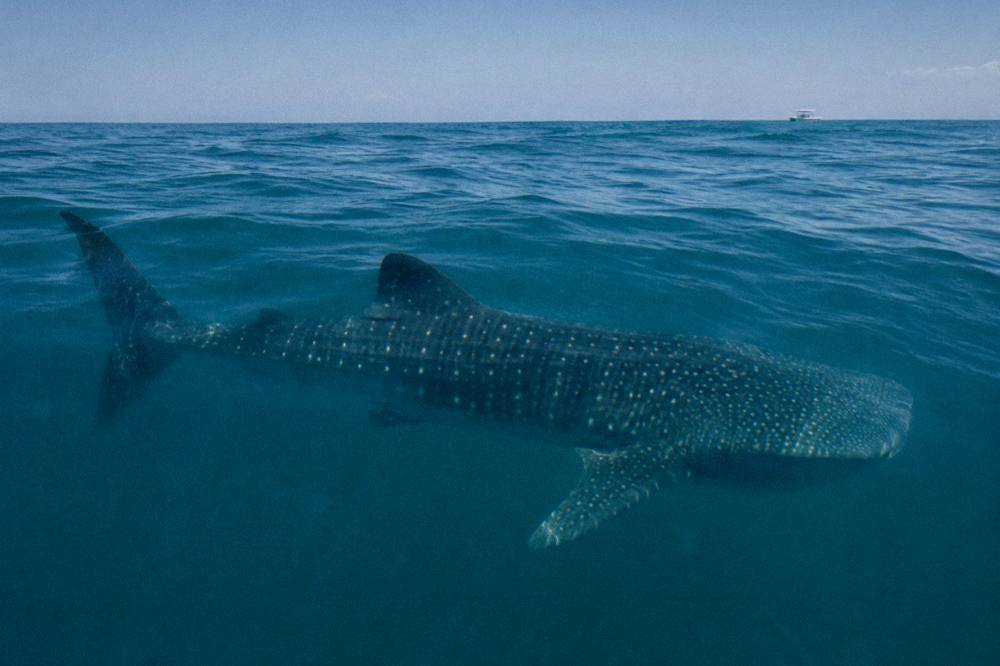
Check availability →The swim zone lies well offshore, reached by boat, and the ride length depends on where the sharks are feeding that day, and whale sharks gather there precisely because the water holds the plankton they filter. Free-floating sargassum is a beach problem; the open-water patches boats pass on the way out are scattered, surface-only, and do not stop a swim. Operators describe the offshore zone as its own environment.
This is the point most worth understanding, because it flips the intuition. Brown water near shore reads as "bad conditions" to a visitor, while the whale sharks are feeding in water that is greenish and plankton-rich by design. That is the whole ecological arrangement: warm water, food, aggregating filter feeders. A swim day is judged on wind, swell and whether sharks are feeding within reachable range, not on the colour of the water over the sand in front of your hotel. Visibility varies with conditions and no operator can promise a figure for any given day.
Boats sometimes do cross thin surface lines of weed on the run out, and a captain may route around a mat. That is a navigation detail, not a cancellation trigger. What actually grounds trips is weather, wind above comfortable limits, and every tour carries free cancellation if the operator calls a day off.
Among the Holbox departures, the All-Inclusive Search and Swim listing from VIP Holbox Experience runs 7 hours from $209 per person, rates 4.9 from 267 reviews, and lists a real-time satellite tracker among its safety inclusions. Check availability alongside the full all-inclusive Holbox swim listing.
No. Season dates are set federally by the annual SEMARNAT notice under NOM-171, not by water colour, and the 2026 window ran 15 May to 17 September regardless of what the sargassum map did week to week. For next season, expect the same structure: an official opening typically in mid-May, with most operators running roughly early June to mid-September. The 2027 notice has not been published.
The rulebook behind those dates is worth a skim if you like knowing how the encounter is managed. The federal standard sets a 30-minute maximum per boat around one shark, requires other boats to wait 50 metres away, and fixes swimmer distances of 2 metres from the head and 3 metres from the tail, all published in the official text of the norm. Our swim with whale sharks in Mexico rules guide walks through the full list in plain language. None of it references sargassum, because the two things are unrelated: one regulates how people behave around an animal, the other describes where wind has pushed a plant.
So the decision sequence for a worried booker is simple. Pick your month inside the season window, book a listing with free cancellation, and then watch the actual weather and map in the final week. Seaweed on the beach in town might change your afternoon plans; it does not change whether the boat sails.
The two useful sources are the Quintana Roo state environment agency's colour-coded map, which grades beaches from blue to red, and a live seaweed tracking map such as sargassumcancun.com, which shows satellite-derived coverage of the region. Local news outlets republish the state map updates every week or two during the season. Check both in the last week before travel, when the reading is meaningful.
A reading ten weeks out is weather-forecast territory: directionally interesting, practically useless. The colour map is built for decisions on the scale of days. If you are booking a summer trip with a wide date window, July and August carry the warmest water of the season, 28.9 and 29.4 degrees Celsius respectively as monthly satellite averages, and are the peak whale shark months as well, which is why they sell out first. Our month by month whale shark season guide pairs those temperatures with the season calendar.
| Source | What it shows | When to check it |
|---|---|---|
| State colour map (SEMA) | Beach-by-beach grade, blue to red | Week of travel and week before |
| Live seaweed tracking maps | Satellite view of floating mats in the region | A few days before and during |
| Local Quintana Roo news | Republished map updates and ground reports | Periodically through the season |
| Your tour operator | Whether your specific boat day is running | 24 to 48 hours before departure |
One habit worth adopting: screenshot the map the day you check it. Conditions change, and having the reading you based a decision on lets you discuss conditions with an operator if the picture shifts. Every Holbox whale shark swim tour comes with free cancellation, so a genuine change of plans does not have to cost the ticket.
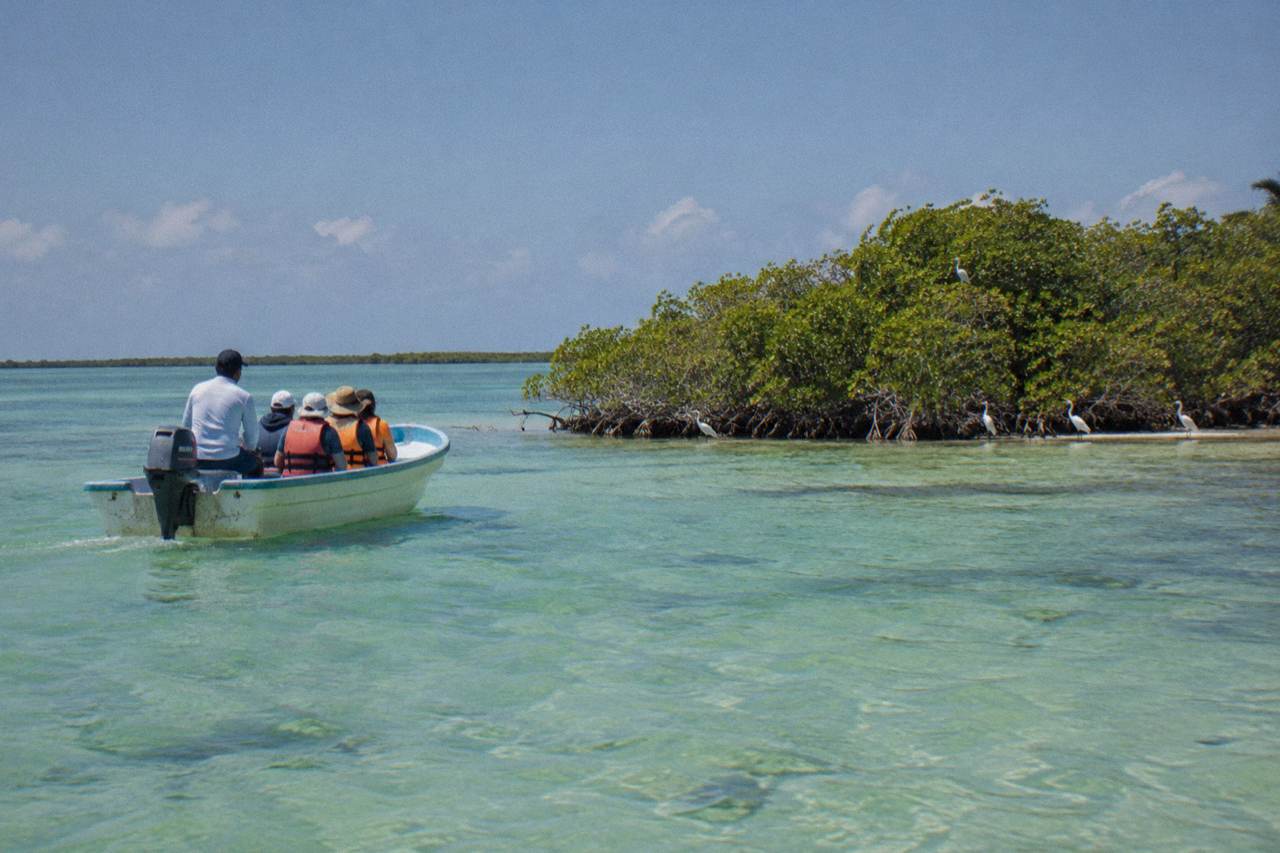
A sargassum landing on a Holbox beach is usually a short episode, and the island gives you easy alternatives: the lagoon side, a boat trip to the islands and Yalahau, or simply a different stretch of sand the current is treating better. The Three Islands boat tour, from $39 per person with hotel pickup listed and a 4.5 rating from 217 reviews, gets you out onto the water regardless.
Because Holbox is small and walkable, a weed line on one beach rarely means weed everywhere. Punta Mosquito and Punta Cocos often read differently from the town beach, and the ferry-side shore inside the lagoon is sheltered from almost anything the open water does. Golf carts, roughly 45 to 75 USD per 24 hours per guide estimates, make the whole island a ten-minute problem to solve.
The classic fallback is the three-island circuit: Bird Island, Passion Island and the Yalahau cenote, three and a half hours on the water with a bilingual guide, life vests and hotel transfer within Holbox listed as included. The listing notes drop-off back at your hotel is not included, and the Yalahau entrance fee is paid separately, with the amount stated on the listing. It is a sightseeing and swimming day, not a whale shark swim, which is exactly why it works as a swap when weather or weed changes the plan.
Book inside the official season window with a free-cancellation listing, watch the colour map in your final week rather than months ahead, and choose Holbox over Caribbean-facing bases if clear near-shore water is the priority. The island's record, including the heavy Atlantic year of 2026, is consistently at the clean end of the state scale, and the offshore swim is unaffected by beach conditions. That is as close to a safe bet as this coast offers.
Concretely, for a summer 2027 trip: aim for July or August if you want the peak months and warmest water, book a Holbox departure so you sleep on the island rather than commuting from Cancun, and hold a backup day in your itinerary in case wind rather than weed moves your boat day. The shared Holbox swims run from $178 to $210 per person, the 6-hour Snorkeling Adventure from VIP Holbox Experience at from $178 per person with a 4.6 rating from 243 reviews being the value anchor, and the private swim from $1,246 per group for groups wanting their own boat.
The wider island context helps too. Our Holbox Mexico travel guide covers the car-free streets, the ferry from Chiquila and the cash-first economy, and the Holbox bioluminescence guide covers the glowing-night kayak trips that pair well with a summer stay, commonly described as strongest between July and September around the new moon, never guaranteed. Sargassum, for all the dread it generates in travel forums, is the least of Holbox's variables.
Not in the way the Caribbean-facing coast does. Holbox sits on the Gulf side of the Yucatan and reads mostly blue or green on the state colour map while Tulum and Playa del Carmen absorb the heavy arrivals. Local reports through 2026, a heavy Atlantic sargassum year, described the island as relatively spared.
Cancellations are driven by wind and sea state, not by seaweed. The swim zone is offshore, reached after a boat ride of one to two hours depending on where sharks are feeding, and boats simply route around any surface weed. Every Holbox swim listing shows free cancellation if an operator calls off a day.
Use the Quintana Roo state environment agency's colour-coded map and a live satellite tracking map such as sargassumcancun.com, both in the final week before travel. Local news outlets republish the state map updates through the season.
There is no published month-by-month seaweed dataset for Holbox specifically. The pattern in local reporting is that the island stays at the clean end of the state scale year-round relative to the Caribbean coast, with short onshore-wind episodes possible any month. Check the live map near your dates.
No. Season dates are set by the federal notice under NOM-171, and the 2026 season ran 15 May to 17 September regardless of seaweed. Next season is expected to open typically in mid-May, with most operators running roughly early June to mid-September; the 2027 notice has not been published.
Before you go, the pick for this guide:
Three Islands, Pickup Included
★ 4.5 217 reviews · From $39
Check availability →