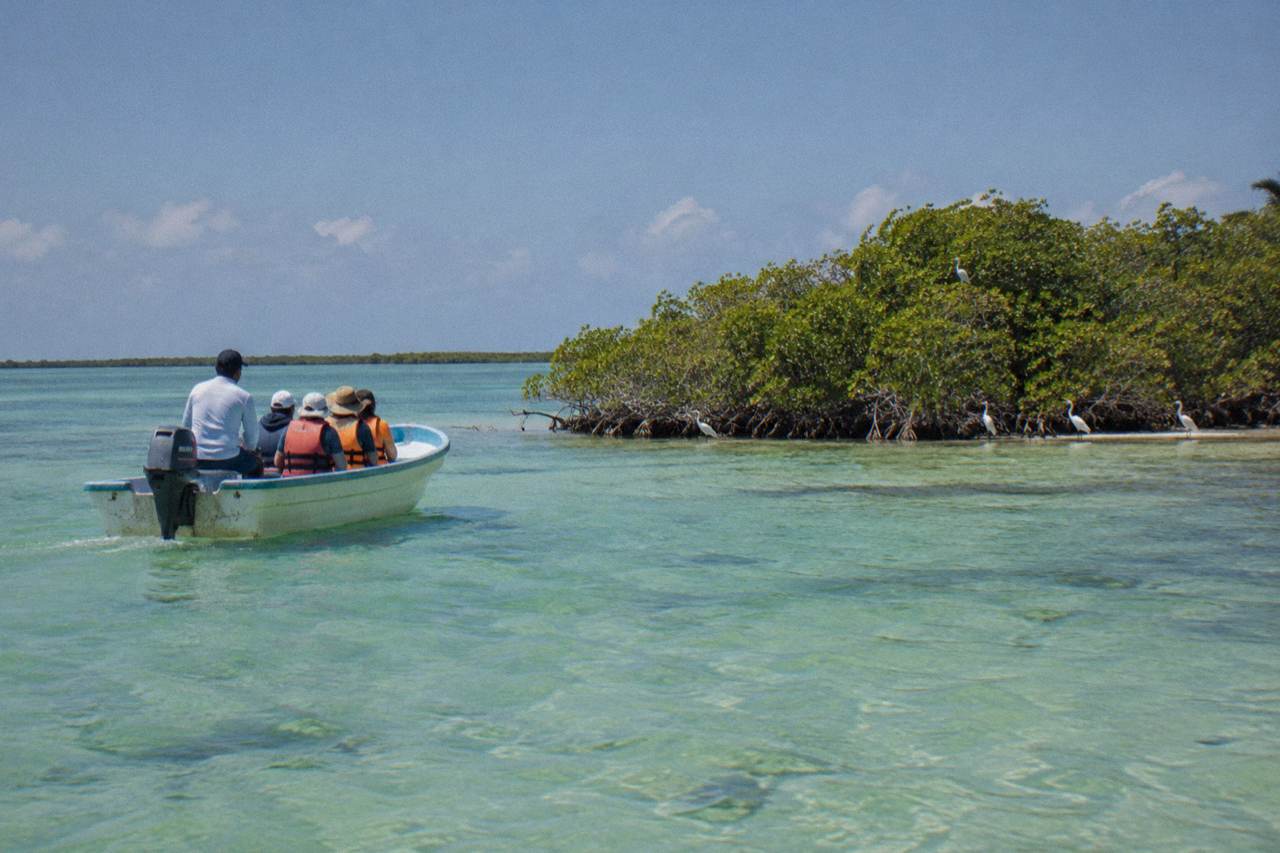
Three Islands, Pickup Included
Holbox Island Kayak, Boat And Bioluminescence Tours · 3 hours 30 minutes
★ 4.5 · 217 reviews · From $39
Check availability →Holbox sits on the Gulf coast of the Yucatan peninsula inside the Yum Balam protected area, reachable only by a 25-minute ferry from Chiquila, with no cars, scarce ATMs and a whale shark swim as its headline summer activity.
Short answer
Holbox is a car-free island about 25 minutes by ferry from Chiquila, roughly 2 to 2.5 hours by road from Cancun airport. Most visitors stay two to three nights. In summer the whale shark swim is the tour most people book, from $178 to $210 per person from the island, and island boat tours run from $38 to $92 per person year-round.
Holbox is a narrow sandbar island on the Gulf of Mexico side of the Yucatan peninsula, part of the Yum Balam Flora and Fauna Protection Area in Quintana Roo, and reachable only by boat. There are no scheduled flights, no cars and no bridge: you park on the mainland at Chiquila, cross about 25 minutes by ferry, and move around on foot, bicycle or golf cart. Between mid-May and mid-September the island is also one of Mexico's whale shark swim departure points, which is the single tour most summer visitors build their trip around. This guide covers the basics a first-time visitor needs: where Holbox is, how to get there, how long to stay, what things cost and what to book.
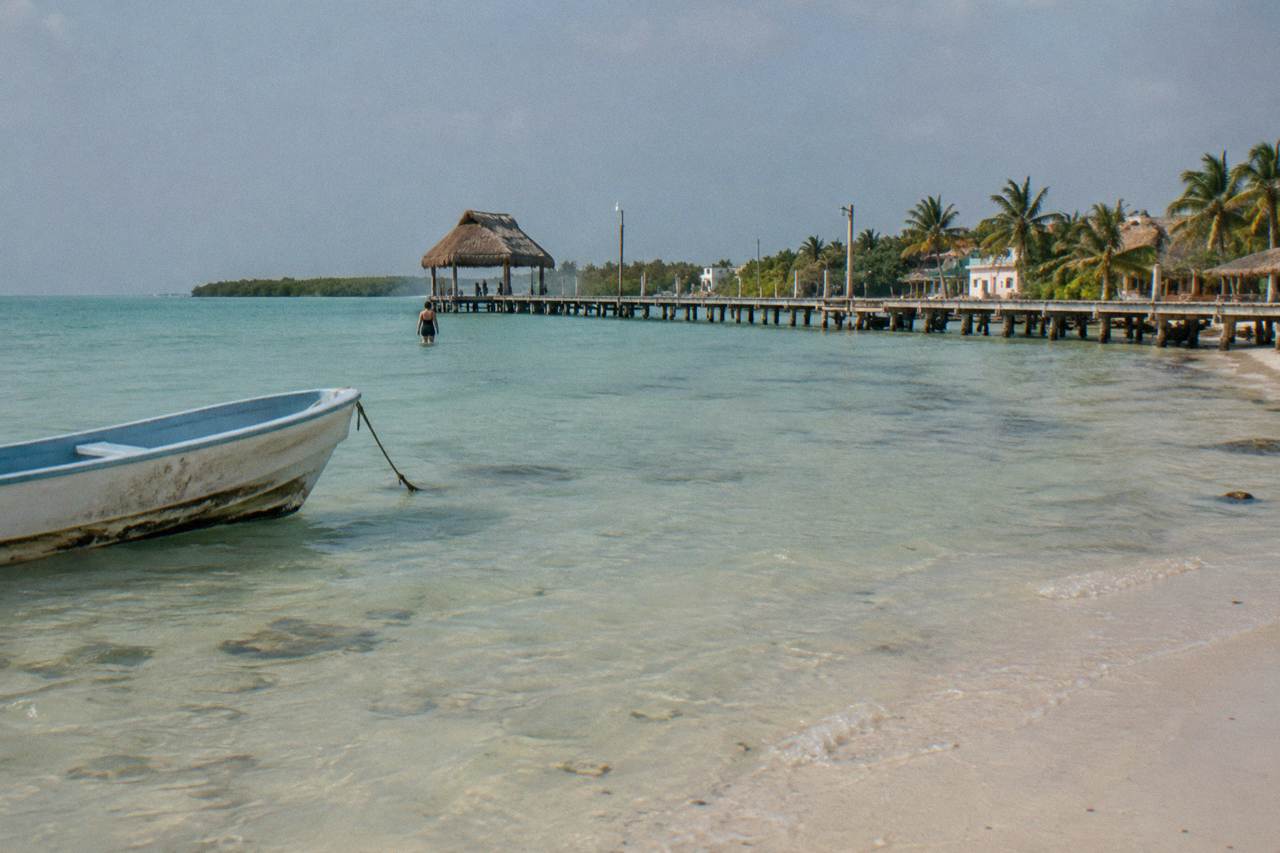
Holbox sits on the northern coast of Mexico's Yucatan peninsula, inside the Yum Balam Flora and Fauna Protection Area, facing the Gulf of Mexico rather than the open Caribbean, and just across the Yalahau Lagoon from the mainland port of Chiquila, roughly 1.75 to 2.5 hours by road from Cancun airport. The island bans private and rental vehicles entirely, so visitors park at Chiquila and get around by golf cart, bicycle or on foot.
The reserve that wraps around the island is the reason for much of its character. Yum Balam protects a wide sweep of lagoon, mangrove and shallow sea, a protected landscape that keeps building density low and draws flamingos, herons and other birds to the sandbars and islands nearby. The same protection is why the ferry is the only access: no bridge exists, and none has been announced, and the small Holbox airstrip handles private charters only, with no scheduled commercial service. Transfer guides describe flights from Cancun to Holbox as private charters and air taxis only, with no scheduled commercial service, but almost nobody arrives that way.
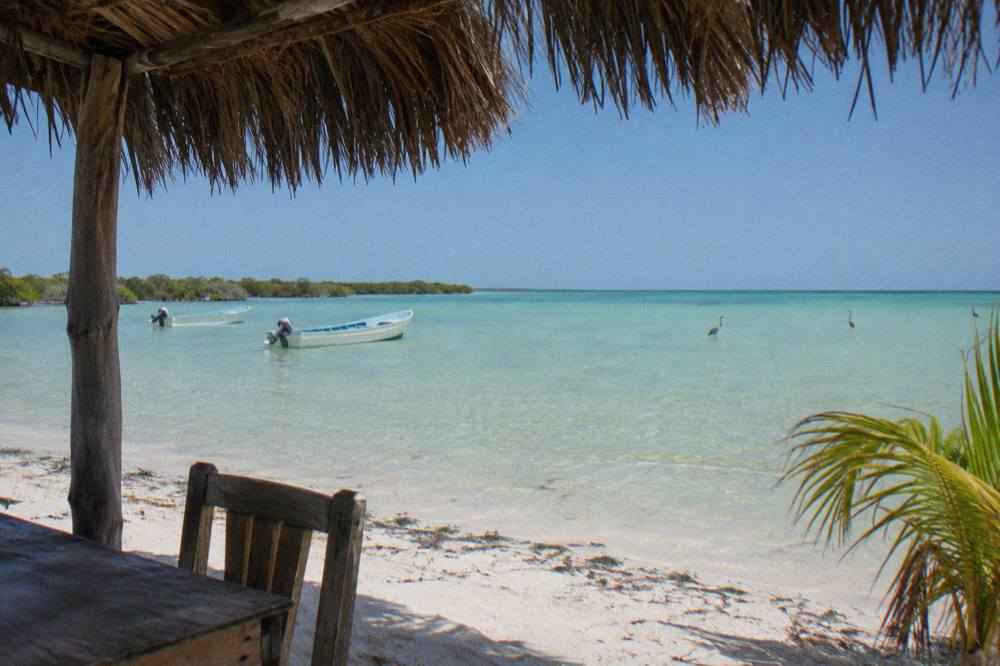
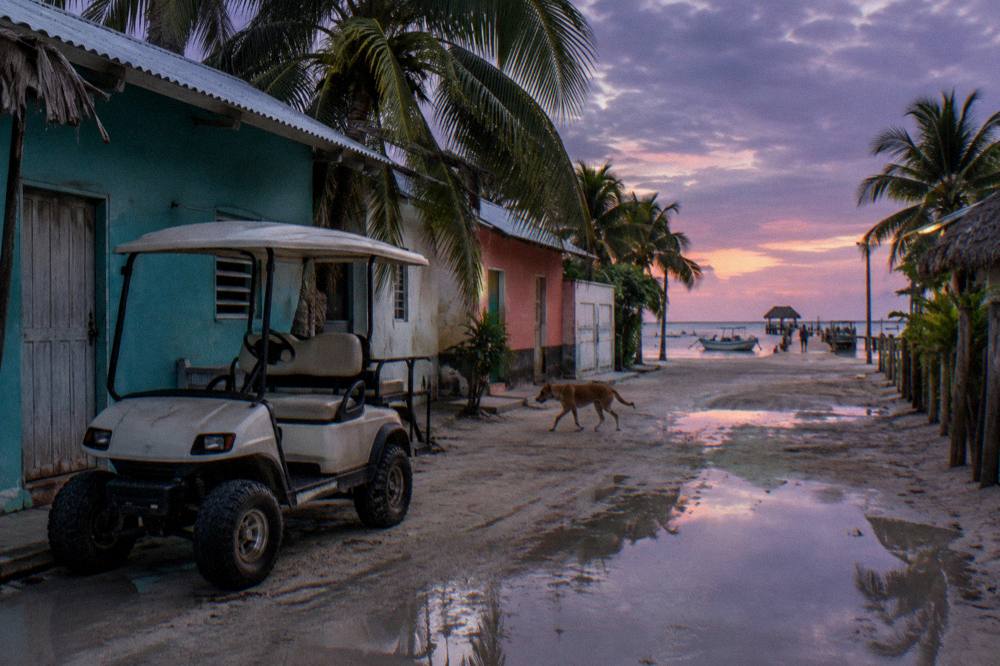
The car-free rule shapes daily life more than any single attraction. Streets are sand, deliveries happen by golf cart and boat, and the soundscape is bicycles and birds rather than traffic. Golf cart rental runs about 45 to 75 USD per 24 hours for a standard four-seater by one guide estimate, though many visitors who stay two or three nights never rent one at all, since the town, the main beach and the restaurants are all walkable. That slower rhythm is exactly why so many visitors end up extending their trips, and our explanation of why Holbox is called a black hole shows how to plan a longer stay around the island's strange pull.
For planning purposes, treat Holbox as two different islands depending on the month. From late spring to early September it is a whale shark base with full tour schedules and busy small hotels. From autumn through spring it slows into a quiet beach destination where the island boat tours, kayaking and bioluminescence paddles carry the itinerary. Our things to do in Holbox guide covers the full year-round list.
The standard route is Cancun airport to Chiquila by road, about 1.75 to 2.5 hours, then the ferry across the Yalahau Lagoon, about 25 minutes. Ferries run roughly every 30 minutes from 6:00 a.m. to 9:30 p.m. from Chiquila; a 2026 ferry guide lists the adult one-way fare at 330 pesos, with children paying less. Bring cash, since card payments can carry a surcharge and lose signal.
Two ferry companies, Holbox Express and 9 Hermanos, share the route with alternating departures, which is what produces the near half-hourly frequency. The crossing itself is short and usually calm across the lagoon. Parking at Chiquila costs about 100 pesos a day in guarded lots near the terminal, paid upfront, and the lots fill on peak weekends. The mainland road to Chiquila was rehabilitated in early 2026, which local news reported as an improvement to access.
| Leg | Typical time | Typical cost | Notes |
|---|---|---|---|
| Cancun airport to Chiquila, private transfer | 1.75 to 2.5 hours | roughly 220 to 240 USD per vehicle | Door to ferry terminal |
| Cancun airport to Chiquila, shared shuttle | about 2.5 hours | roughly 20 to 60 USD per person | Fixed daily departures |
| Cancun to Chiquila by ADO bus | about 4 hours total | fare varies by season | Via Cancun bus terminal |
| Chiquila parking (guarded lot) | per day | about 100 pesos | Pay upfront, keep receipt |
| Chiquila to Holbox ferry | about 25 minutes | 330 pesos adult one way | Roughly every 30 minutes, 6:00 a.m. to 9:30 p.m. |
| Holbox golf cart rental | per 24 hours | roughly 45 to 75 USD | Standard four-seater, guide estimate |
ATMs are the weak link in the whole journey. Chiquila has no reliable machine, and Holbox has only a couple that frequently run empty in high season and charge fees when they work. Withdraw pesos in Cancun before you travel. The full route, including what to do if you arrive late and miss the last ferry, is laid out in how to get to Holbox from Cancun.
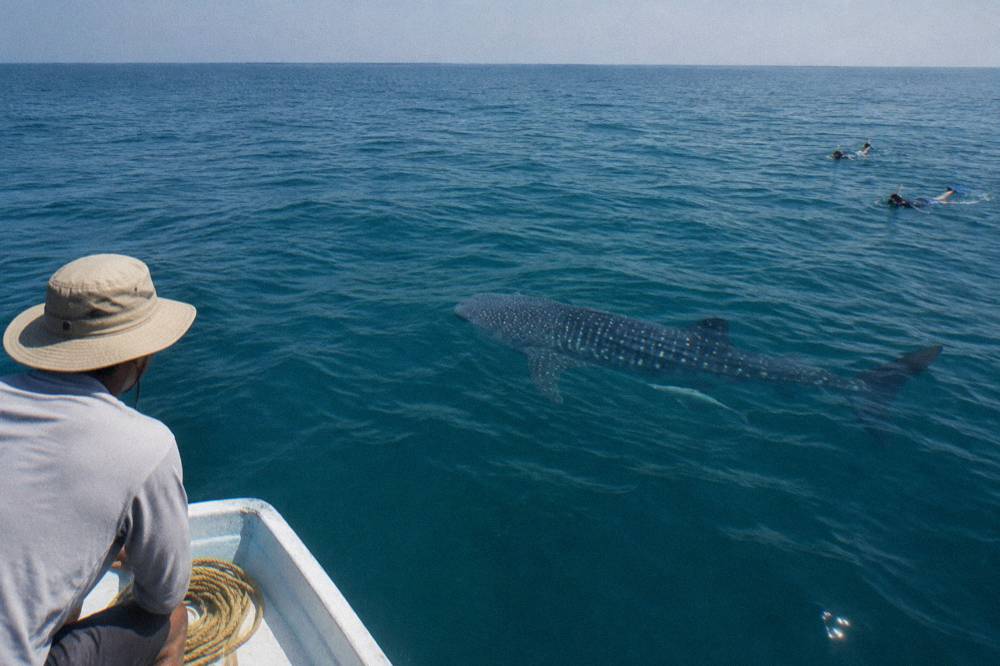
Between mid-May and mid-September the whale shark swim is the tour that defines a Holbox summer, and it is what most visitors book ahead of arrival. The official 2026 season ran 15 May to 17 September under the SEMARNAT notice, and most operators run roughly 1 June to mid-September. Holbox departures cost from $178 to $210 per person shared, plus a private listing from $1,246 per group.
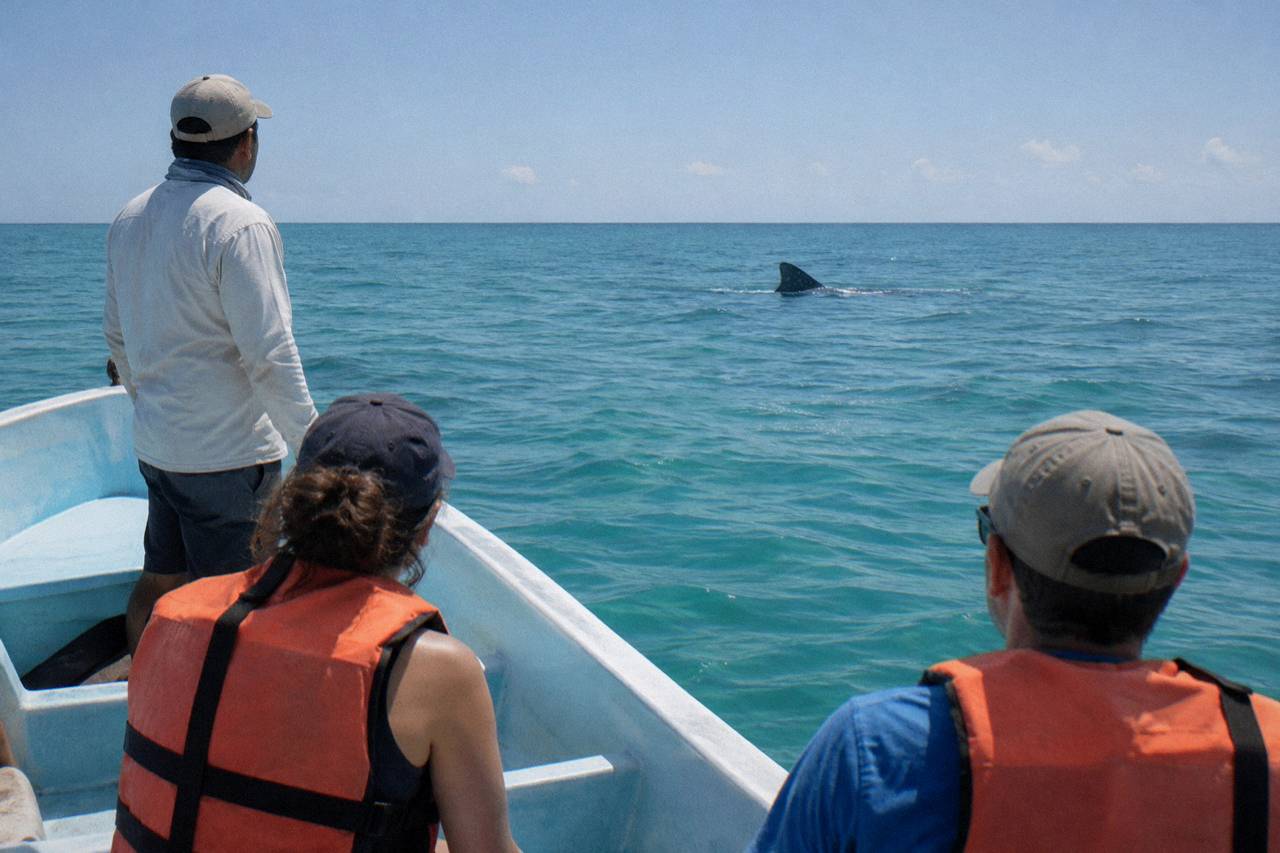
The boats leave from the island itself, typically early morning, and head out to the feeding aggregation offshore where swimmers enter the water in small guided groups beside the filter-feeding sharks. The rules are federal: boats stay a set distance away, a specialized guide stays with a small group of swimmers, touching is prohibited and only biodegradable sunscreen is allowed before entering the water. The full rule set is in our swimming with whale sharks in Mexico rules guide.
One well-reviewed listing from the island is the all-inclusive 7-hour departure from $209 per person, rated 4.9 from 267 reviews, with breakfast, ceviche, snorkel gear, a satellite tracker on board and guide languages including French. Check availability on the operator's live listing, since July and August dates fill first.
The season's rhythm matters for planning. July and August are the peak months, when local news reported the season at its height and mid-season coverage counted 15 to 20 boats going out daily at about half capacity. By early September a news report had demand down nearly 80 percent, with local tour prices falling from about 2,800 pesos to 2,000 to 2,300 pesos, and the season closed 17 September. Next season is expected to open around mid-May, but the official 2027 notice has not been published; prior notices appeared around May.
A common plan is two to three nights, which gives one full island day plus arrival and departure buffers around the ferry schedule. Two nights suit visitors whose only goal is the beach and one boat tour; three nights are safer if the whale shark swim is the reason for the trip, since a windy morning can push a tour to the following day and you want slack in the itinerary to absorb that.
The ferry schedule is what makes one night unattractive. The last boat from Chiquila leaves around 9:30 p.m., and boats back from Holbox stop in the evening., so a rushed visit spends a large share of its clock on transfers. Add the two-hours-plus drive from Cancun and a day trip from Cancun to Holbox is generally not practical: one way runs three to four and a half hours door to dock.
Travelers combining Holbox with a Cancun or Riviera Maya stay should reverse the logic and spend the nights on Holbox. Day-trip packages from Cancun do exist, from $97 to $174 per person with lunch and hotel pickup included, but they compress the island into about two hours of free time. Staying over buys you the parts day trippers miss: the empty morning beach, a bioluminescence paddle on a dark night, and a sunrise kayak through the mangroves.
| Stay length | What it fits | Watch out for |
|---|---|---|
| One night | Beach, one short boat tour | Ferry timing eats most of day one |
| Two nights | Beach plus one full-day tour | Tight if weather delays a whale shark swim |
| Three nights (common plan) | Whale shark swim, island boat tour, bioluminescence, slack day | Best fit for a summer visit |
| Four or more nights | Everything at island pace, Cabo Catoche, paddleboarding | Only worth it if you like slow beach time |
The year-round core is the island boat circuit: Bird Island, Passion Island and the Yalahau cenote spring, from $38 to $92 per person depending on the operator and route. Add kayaking in the mangroves at sunrise, bioluminescence paddles on dark nights from about $47 to $49 per person, and private fishing from $362 per group for up to six. None of these are whale shark swims; they run in every season.
The classic three-island tour is the volume seller outside summer. One Holbox operator runs it with hotel pickup on the island from $39 per person for three and a half hours, rated 4.5 from 217 reviews, though the Yalahau cenote entrance is paid separately on the day and the listing states the amount. A flexible-timing version from $38 per person, rated 4.3 from 88 reviews, covers the same waters without pickup.
Three Islands, Pickup Included
Holbox Island Kayak, Boat And Bioluminescence Tours · 3 hours 30 minutes
★ 4.5 · 217 reviews · From $39
Check availability →Bioluminescence is the island's second famous experience. The glow comes from plankton in the shallow bays, commonly described as visible May to October and strongest on dark nights near the new moon, and it is never guaranteed: calm water and minimal recent rain matter. Kayak tours run about two hours from $47 to $49 per person depending on the operator, with hotel pickup listed on both main options, and one adds a stargazing stop. The detail is in our Holbox bioluminescence guide.
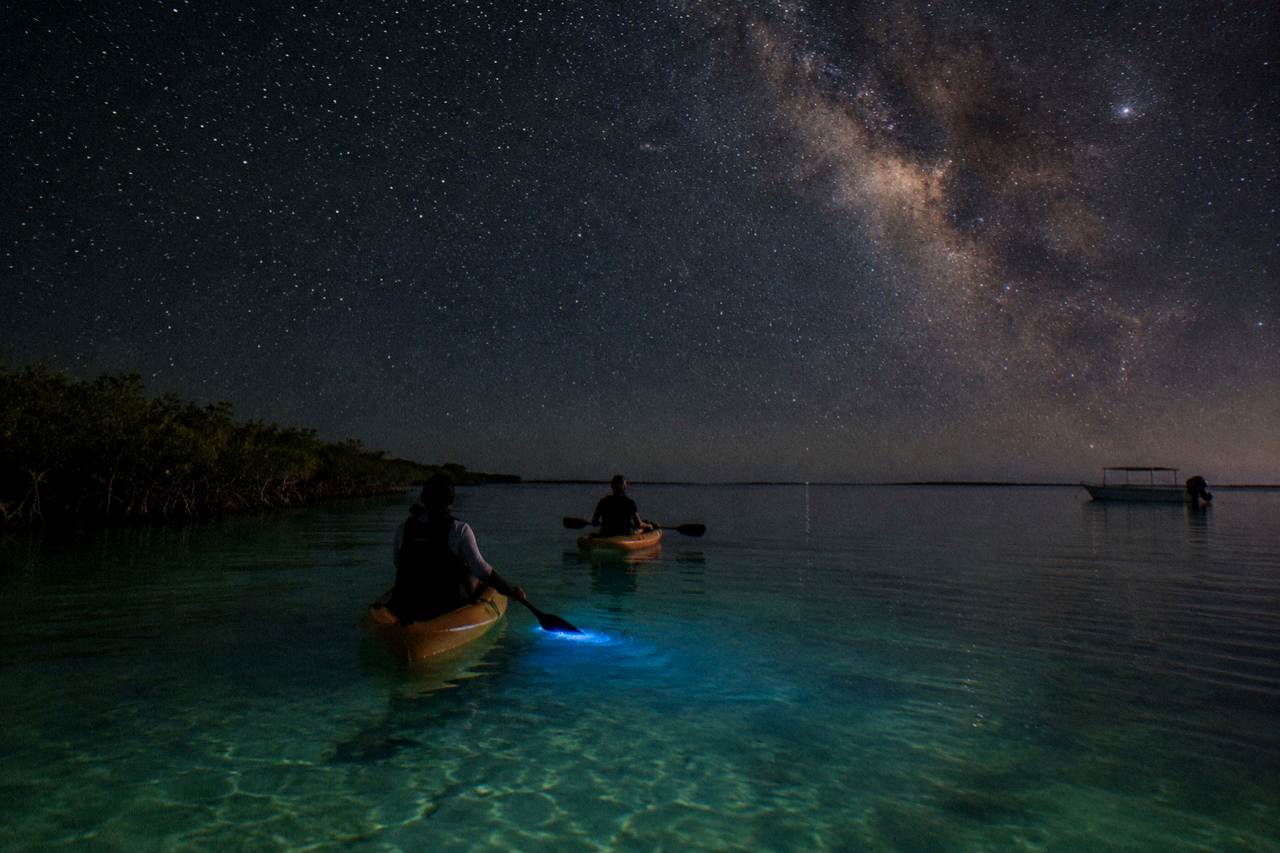
Bioluminescence Plus Stargazing
Holbox Island Kayak, Boat And Bioluminescence Tours · 2 hours
★ 4.6 · 360 reviews · From $49
Check availability →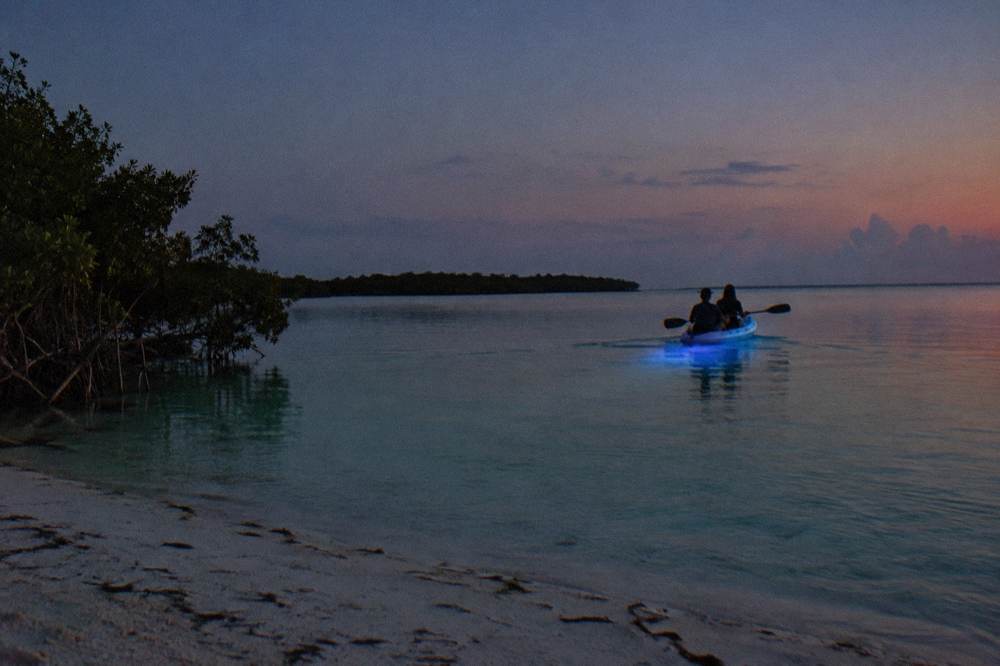
For visitors based in Cancun or Playa del Carmen who want the island without the overnight, the day-trip listings from $97 to $174 per person bundle transport, boat tour, cenote admission and lunch into 11 to 15 hours. The cheapest of them, from $97 per person and rated 4.6, includes hotel pickup and five beverages on the boat, with environmental and entrance fees paid separately.
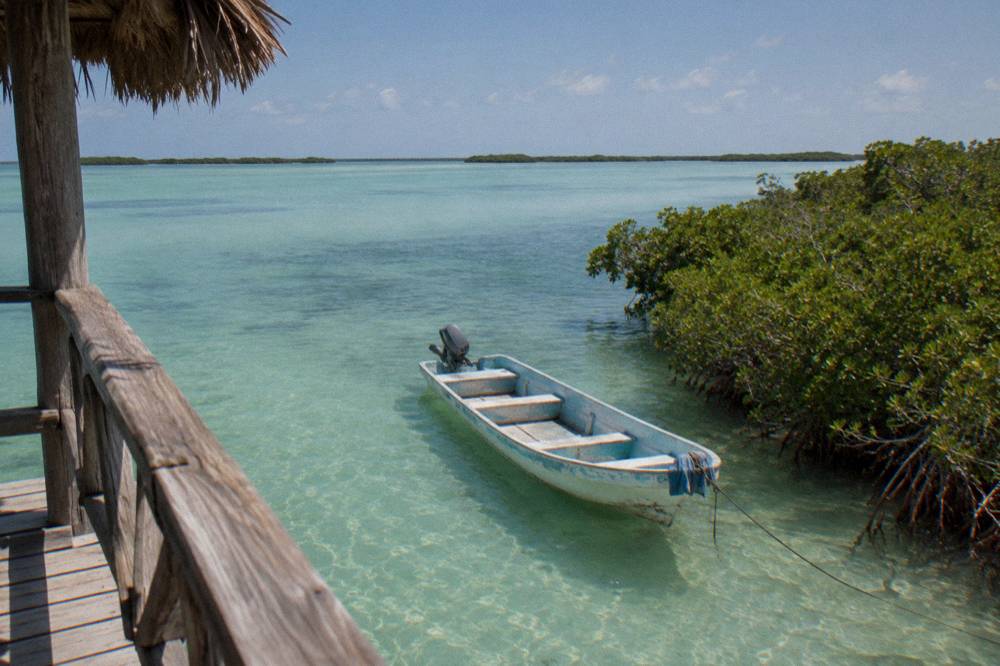
For the whale shark swim, the window is mid-May to mid-September, with July and August the peak months; outside that window Holbox is a quiet beach island best in the drier December-to-April stretch. Sea temperature runs from about 24.6 degrees C in January to 29.4 in August. Hurricane season runs 1 June to 30 November with the highest risk in September.
The two peak draws barely overlap, which is worth knowing before you book flights. Whale shark swimmers want June through August, accepting humid, showery summer weather in exchange for the season. Beach-first visitors want the dry months, accepting that the whale shark boats are ashore and the island runs at a slower pace. September is the awkward month: the season ends mid-month, hurricane risk peaks, and local news reported demand collapsing well before the official close.
| Month | Season status | Sea temperature (average) | What to expect |
|---|---|---|---|
| January | Closed | 24.6 C | Dry, quiet, cool evenings |
| February | Closed | 24.8 C | Dry season, low crowds |
| March | Closed | 25.5 C | Dry, busier at spring break |
| April | Closed | 26.5 C | Dry, warming |
| May | Opens mid-May | 27.6 C | First departures, numbers building |
| June | Most operators running | 28.2 C | Building, brief afternoon showers |
| July | Peak | 28.9 C | Peak whale shark weeks, humid |
| August | Peak | 29.4 C | Strongest month, book ahead |
| September | Ends 17 September | 29.3 C | Fading numbers, highest storm risk |
| October | Closed | 28.5 C | Quieter, storm tail, bioluminescence |
| November | Closed | 26.6 C | Quiet, drier air returning |
| December | Closed | 25.4 C | Dry season begins, festive crowds |
Sargassum is the wildcard every Caribbean visit now carries, and Holbox gets off lightly. The island faces the Gulf rather than the open Caribbean, and local reports had Holbox reading mostly blue or green on the state colour map in mid-October 2026, in a year that was heavy for sargassum across the Atlantic overall. That is a pattern, not a promise of clear water; conditions shift with wind and current. The monthly detail, including the rain picture, is in best time to visit Holbox weather by month.
Yes, effectively. Holbox has only a couple of ATMs, they frequently run out of pesos in high season and they charge fees when they work, while many small businesses, beach vendors, ferry kiosks and tips are cash-only or add a card surcharge. Withdraw pesos in Cancun or at the airport before you travel, and carry enough for ferries, parking, cart rental, meals and tour-day fees.
The practical list of cash needs is longer than most visitors expect. On travel day alone you may pay the Chiquila parking lot, the ferry, a taxi or golf cart on arrival, and dinner. On tour days, several whale shark and boat listings collect entrance, dock or conservation fees separately in cash on the day, with the amount stated on each listing. A July 2026 news report quoting a cooperative representative put Yum Balam access at about 230 pesos a visitor, but that figure came from a tourism representative rather than an official tariff page, so treat it as an estimate and carry a buffer.
Cards do work at some hotels and larger restaurants, and the ferry windows take them with a surcharge of about 50 pesos when the signal holds, per one 2026 ferry account. The safe habit is simple: arrive with the pesos you need, and treat any working machine on the island as a bonus rather than a plan.
Holbox is a quiet, tight-knit island, and the precautions that matter are the small ones: keep an eye on belongings on the beach, and settle prices with vendors and cart taxis before you buy or ride. On the water, the real risks around a whale shark swim are boats, crowds and seasickness, not the animal itself, which is a filter feeder. No condition is ever guaranteed, and the same caution applies to the sea as anywhere.
The standard beach-island habits cover most of it: do not leave phones and bags unattended on the sand, agree cart and taxi prices before riding, and keep valuables in the hotel safe. On tour days, follow the guide's instructions in the water, take seasickness tablets if you are prone, and respect the federal swim rules, which prohibit touching, flash photography and swimming in front of a shark, and set the distances guides keep. The rules exist because they work: a federal standard, NOM-171, governs every licensed departure, and only authorized boats up to 11 metres with an identification pennant may operate.
Weather is the safety variable worth planning around. Hurricane season runs 1 June to 30 November with September the highest-risk month, and heavy rain flooded Holbox streets in early October 2026, a local report noted, affecting mobility on the island. Build a flexible day or two into any summer itinerary and check conditions rather than assuming calm.
Planning a Holbox trip comes down to three decisions: pick your season around the whale shark window or the dry months, book two to three nights so the ferry schedule never rushes you, and reserve the summer swim early. Holbox Island Whale Shark Tours compares every departure on the island, plus the Cancun and Isla Mujeres alternatives, in one place.
Holbox is a car-free island on the Gulf of Mexico coast of the Yucatan peninsula, inside the Yum Balam Flora and Fauna Protection Area in Quintana Roo, across the Yalahau Lagoon from the mainland port of Chiquila.
The official 2026 season ran 15 May to 17 September, and most operators run roughly 1 June to mid-September, peaking in July and August. The 2027 notice has not been published; frame swims as next season, typically from mid-May.
Local reports describe a quiet island where petty theft of unattended items and overcharging are the main concerns. On the water, follow the licensed operators and federal swim rules; the animal itself is a filter feeder.
Before you go, the pick for this guide:
All-Inclusive, Three Languages
★ 4.9 267 reviews · From $209
Check availability →