7 hours
★ 4.3 · 86 reviews · From $184
Whale shark swims ended for 2026 on 17 September. The 2027 season dates have not been announced, so open calendars may stay blank for now.
Check availability →Whale shark swimming in Holbox is legal, permitted and tightly rule-bound, but the ethics depend on the operator you choose and the rules they actually follow on the water. Here is what the regulations say, what a responsible operator does, and the red flags worth walking away from.
Short answer
Yes, when booked with a licensed operator that follows the rules. Mexico caps whale shark activity under NOM-171: one boat per shark for 30 minutes maximum, no touching, biodegradable sunscreen only. Holbox had 48 of 146 permits in 2026. The ethical question is operator choice, not the activity itself.
Swimming beside the largest fish in the sea is a genuine bucket-list experience, and it is also one that a thoughtful traveller should question. Is it fair to the animal? Does the money help or harm? The answer is that whale shark swimming in Mexico is neither automatically ethical nor automatically exploitative: it is a licensed, rule-bound activity in which the operator you choose does most of the ethical work. The 2026 season in Holbox closed on 17 September, so every swim described here is next season, typically from mid-May, and booking decisions made now are decisions about which operator earns your money. If you are still weighing whether the island itself merits the trip, our guide to whether Holbox is worth visiting covers who loves it, who does not, and what the swim adds to a stay.
This article lays out the actual federal rules that govern every whale shark swim out of Holbox, Isla Mujeres, Cancun and Chiquila, the permit system that caps the number of boats, what a responsible operator looks like on the day, and the red flags that should make you walk away. It draws on the SEMARNAT notice that sets the season, the federal standard NOM-171-SEMARNAT-2018, and local reporting from the 2026 season.
On balance, yes, provided the tour follows Mexican federal law and the whale shark is never treated as a prop. Whale sharks are filter feeders, the activity is licensed and capped, and the rules in place, one boat per shark, 30 minute maximum, five metre approach distance, are designed around the animal's welfare. The ethics live or die with the operator's compliance, not with the swim itself. For the practical side of getting in the water, our guide to whale shark swim safety explains why problems on these tours almost always trace back to people and boats, not the shark itself.
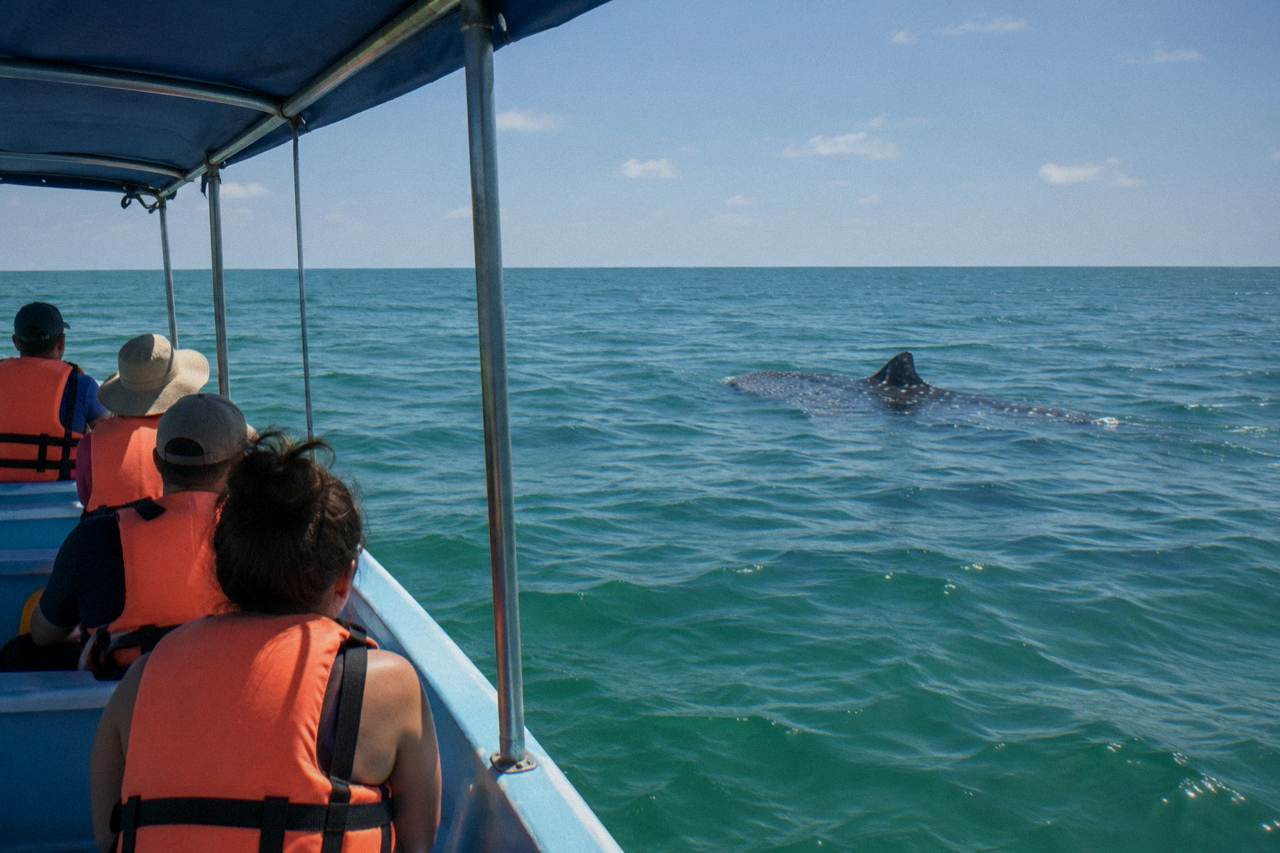
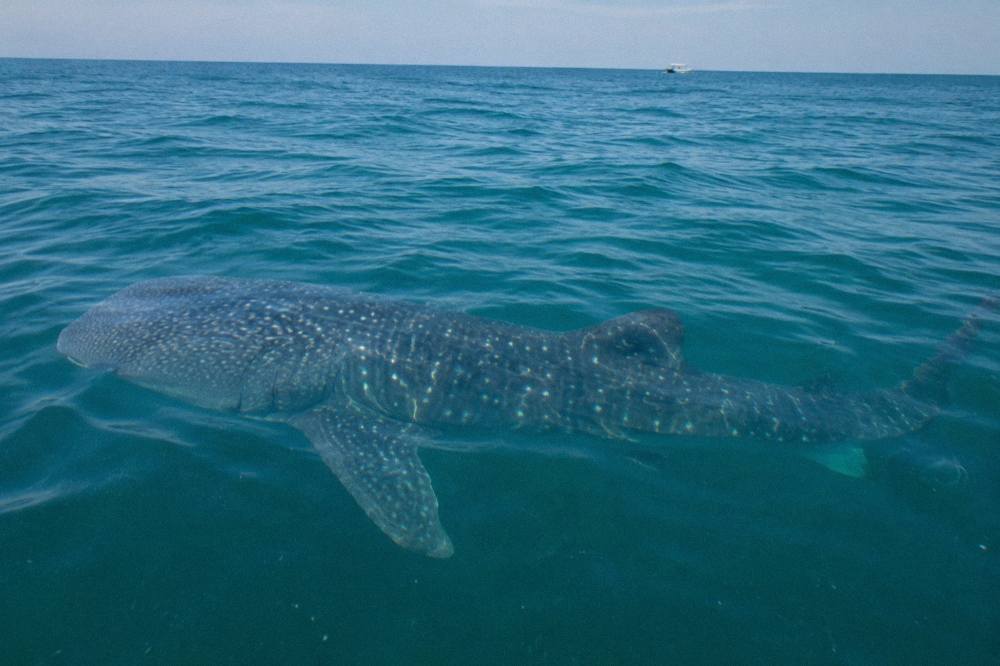
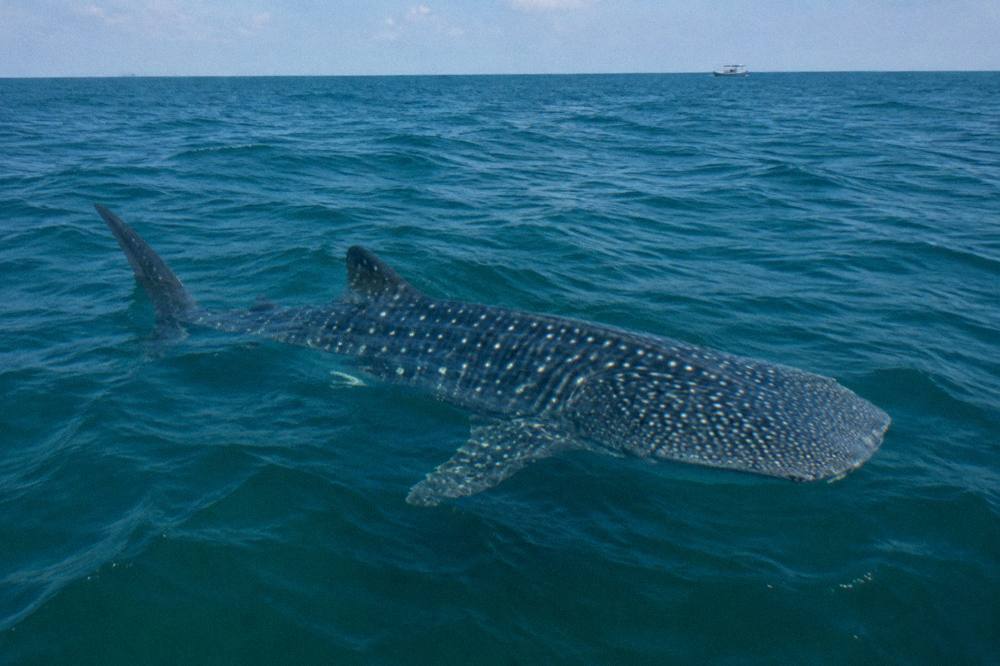
The core welfare case is straightforward. Whale sharks gather off the Yucatan each summer to feed on plankton in offshore waters north of the Yucatan, and swimming beside them is observation, not interaction in any physical sense. The law forbids touching, riding, chasing or blocking the animal's path, and a compliant tour is a few minutes in the water at a respectful distance from a feeding fish that mostly ignores you. A whale shark's mouth is built for plankton; the reported risks to people on these tours are boats, crowds and seasickness, not the animal.
The counter-case is real too. Aggregation sites draw many boats in peak weeks, and reviews across operators describe busy days with circling vessels and short rotations even from the quieter Holbox base. Plenty of boats can share the aggregation zone on a busy day, so interactions are rotated and waiting vessels must hold 100 m back from the sharks, and that work is worth reading if you want the full picture. The point is not that the activity is harmless; it is that the harm is managed by regulation and operator discipline, and your job as a buyer is to pick the operators that take both seriously. Ethics aside, if you are also wondering about your own safety in the water, whether a whale shark has ever attacked a swimmer is probably your next question, and the answer is more reassuring than you might expect.
Money matters as well. Whale shark permits in Holbox belong to local tourism cooperatives, and the activity is one of the island's main summer earners. Choosing a licensed local operator rather than the cheapest reseller you can find keeps that revenue with the community that holds the permits and the incentive to protect the animals. The Holbox listings here were weighed against exactly this lens, and the differences between them are smaller than the differences between licensed and unlicensed boats.
Every whale shark swim in Yum Balam, Holbox, Isla Mujeres and Cancun is governed by NOM-171-SEMARNAT-2018: one boat at a time around a shark for 30 minutes maximum, other boats waiting 50 metres away, no closer than 5 metres, no touching, no flash, biodegradable sunscreen only, and boats up to 11 metres. The season dates are set annually by a SEMARNAT notice.
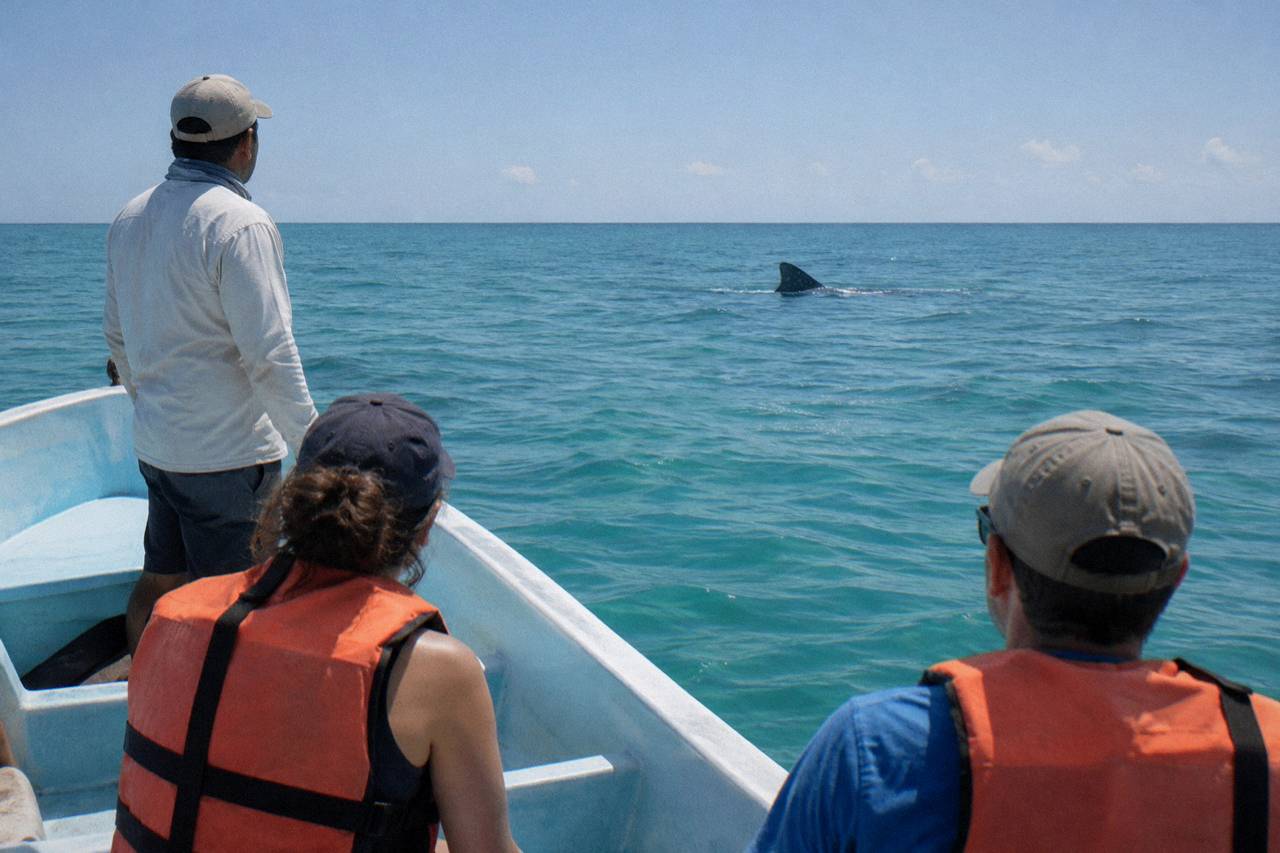
The standard is federal, published in the Diario Oficial de la Federación, and it applies nationwide. Its headline rules: only one boat may remain around a given whale shark, for a maximum of 30 minutes, while other vessels wait at least 50 metres away. Boats may not come closer than 5 metres to the shark, and near an aggregation zone they slow to 3 knots. Swimmers, entering the water quietly with no jumping, stay 2 metres to the side of the head and 3 metres from the tail, guided by a specialised guide who keeps the group together. Swimming in front of the shark is not allowed. Photos are fine, but no selfie sticks, no flash and no artificial light. Touching, riding, harassing or blocking the animal's path is prohibited outright. Everyone wears a life vest or wetsuit with mask, fins and snorkel, and only biodegradable sunscreen before entering the water.
On swimmers per guide, the norm defers to each protected area's management programme, and operators differ; a specialised guide stays with a small group of swimmers, and the exact limit is set by the programme rather than by a single national number. Be wary of any marketing that treats the ratio as a competitive stat.
The season itself is set by an annual SEMARNAT notice: the 2026 window ran 15 May to 17 September, covering Yum Balam, the Whale Shark Biosphere Reserve and the Caribe Mexicano reserve. The notice also states that the number of authorised boats per zone is announced by CONANP, the national protected areas commission, and each authorised boat carries an identification pennant. For planning purposes, most operators run roughly from the start of June to mid-September, which is a practical window rather than the official one; the notice for the following season has not been published yet, and prior notices appeared around May.
| Rule | What NOM-171 says | What it means on the water |
|---|---|---|
| Boats per shark | One boat at a time, maximum 30 minutes | Your group rotates in briefly; other boats wait |
| Waiting distance | Other boats at least 50 metres away | A compliant day has boats queueing, not crowding |
| Approach distance | Boat no closer than 5 metres to the shark | The animal sets the line, not the captain |
| Swimmer distances | 2 metres to the side of the head, 3 metres from the tail | Guide positions you alongside, never in front |
| Touching | Prohibited, as are riding, harassing and blocking the path | Any contact is a violation, full stop |
| Photos | Allowed; no flash, no artificial light, no selfie stick | Natural light only, no arms shoved at the shark |
| Sunscreen | Biodegradable only before entering the water | Bring reef-safe, or wear a rash guard instead |
| Boat size | Up to 11 metres with an identification pennant | Small lanchas are the norm from Holbox |

If you are weighing which booking to make, each listing names its operator and meeting point with the rule-relevant details stated plainly.
Both run from Holbox with a guide, snorkel gear and food included, and all three carry free cancellation on the listing. For the ethics-minded buyer, the details that matter most are the stated group maximum and the operator's own conduct language, both of which sit on each listing page.
A responsible Holbox operator is licensed, runs a small boat, briefs you on the NOM-171 code of conduct before the water, keeps a guide beside the swimmers, and never promises a sighting. On the listings, look for a stated group maximum, transparent inclusions, free cancellation and a guide-supervised swim described in the operator's own words.
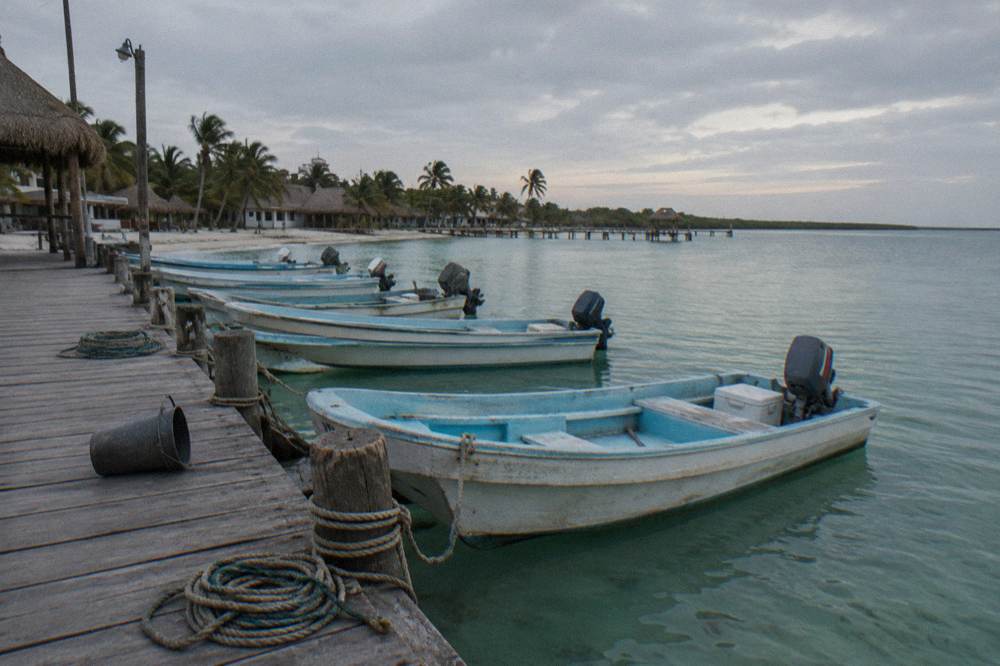
Start with the licence. Authorised boats carry an identification pennant and work under a cooperative's permit; a legitimate listing names the operator, and a legitimate operator will tell you which cooperative they sail under if you ask. The meeting points on the Holbox listings are public and concrete, a yellow Mayan house office on Calle Palomino, the whale shark dock by the Holbox letters, a marina on Avenida Caleta, and an operator who hides behind a vague "we'll pick you up somewhere" description is not giving you the transparency this activity deserves.
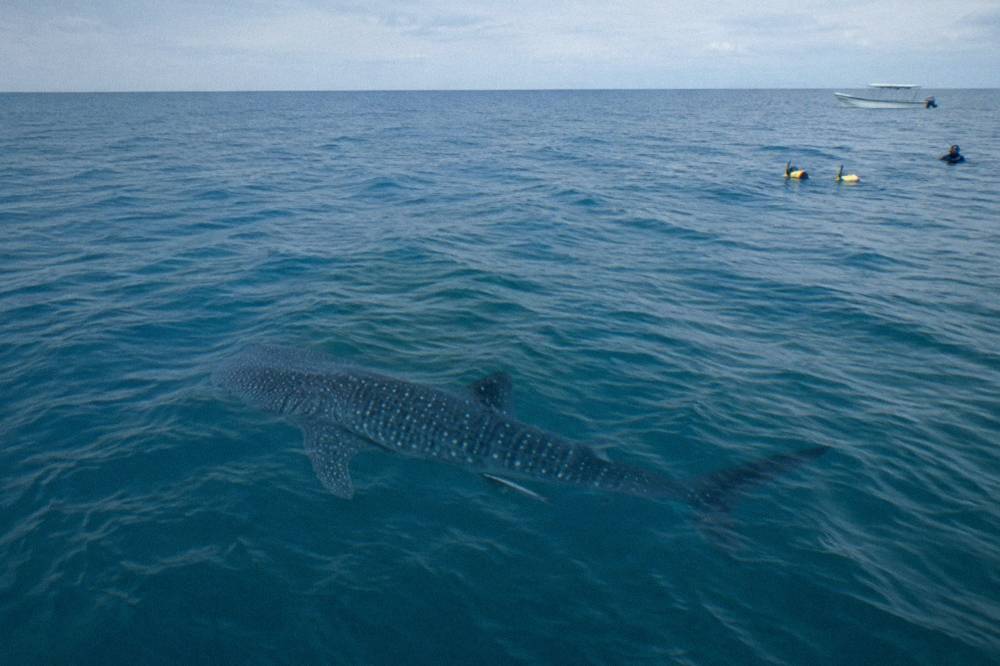
Next, group size and supervision. The Holbox swim listings state booking maximums of 8 or 10 travelers per boat, and smaller boats are part of why Holbox is described as the quieter, more expedition-style base compared with the larger vessels leaving Cancun and Isla Mujeres. What you want to see in the listing is a guide in the water with the swimmers, not swimmers sent over the side unsupervised. The featured all-inclusive swim from VIP Holbox Experience states a real-time satellite tracker for security, a guide and snorkel gear in its inclusions, and it is rated 4.9 from 267 reviews; a different operator's eco-focused listing, the Whale Shark Swim and Snorkeling Eco Tour with Lunch from Xtreme Holbox, lists hotel pickup in Holbox, a certified bilingual guide, life jackets and two water entries per couple, always with guide supervision, from $190 per person. That last clause is exactly the kind of specific, rule-shaped promise an ethics-minded buyer should look for.
Food, fees and cancellation tell you the rest. A listing that prints its inclusions line by line, breakfast, ceviche, water, gear, government fees where included, is a listing that has nothing to hide about what happens on the day. The all-inclusive departure runs from $209 per person for 7 hours with breakfast, ceviche, guacamole and gear listed; where a listing instead charges a government or park fee separately on the day, it states the amount on the listing, and good operators say so up front rather than springing it at the dock. Free cancellation, which every Holbox swim listing here carries, also matters ethically in a weather-dependent activity: it means you are not trapped into pressuring a captain to sail in marginal conditions to avoid losing your money.
7 hours
★ 4.3 · 86 reviews · From $184
Whale shark swims ended for 2026 on 17 September. The 2027 season dates have not been announced, so open calendars may stay blank for now.
Check availability →Walk away if the boat shows no identification pennant, if crew invite touching or riding, if more than one boat crowds a shark, if swimmers enter in front of the animal, or if the tour guarantees a sighting. Chasing, flash photography and oversized groups are violations of NOM-171, and a listing that promises any of them is telling you how it behaves at sea.
The clearest red flag is the guarantee. No operator can guarantee a whale shark sighting, because sharks, weather and plankton do not take bookings. What a good listing promises is the search, the day on the water, and usually a fallback or refund policy stated in its own terms; the rest of the Holbox listings describe the swim as the purpose of the trip, never as a certainty. A listing or street vendor promising "100 percent sharks" is either lying or planning to break the rules to deliver, and you do not want to find out which. More of these guides are collected on Holbox Island Whale Shark Tours.
The second tier of red flags is behavioural. Touching the animal, even a quick pat, is prohibited and any crew member who encourages it is committing a federal violation in front of you. Boats crowding a single shark, rather than waiting their turn 50 metres back, are the visible face of overcapacity at peak. Swimmers placed in front of the shark's path, flash photography and selfie sticks near the animals are both banned. And a guide who lets swimmers straggle away from the group, rather than holding them together alongside the shark, is failing the one job the rules give them.
| Red flag | What you see | Why it matters |
|---|---|---|
| No identification pennant | Unmarked boat, vague paperwork | Unlicensed boats are unaccountable |
| Guaranteed sighting | "You will definitely swim with one" | Good operators sell the search |
| Touching encouraged | Crew invite contact for photos | Prohibited outright under NOM-171 |
| Crowding the shark | Multiple boats around one animal | Rule is one boat, others 50 m back |
| Swimmers in front of the shark | Entry ahead of its path | Explicitly not allowed |
| Flash or selfie sticks | Crew filming with lights | Both banned alongside the animal |
| No in-water guide | Swimmers sent over the side alone | The guide's presence is the safeguard |
| Cash-only, no receipt | No listing, no cancellation terms | No accountability if things go wrong |
A subtler signal is how the operator talks about the animal. Listings that describe respectful distances, quiet entry and rotation, the way the Holbox eco tour listing does with its guide-supervised entries, are listing the rules as selling points. Listings that sell only adrenaline, proximity and GoPro shots are telling you which parts of the day they consider optional. If you want the full picture on how the rules came to exist, the Holbox Island Whale Shark Tours homepage comparison groups the departures by what they include, and our guide to Mexico's whale shark swimming rules walks through the same federal text in more depth.
The answer is both, with the balance held up by the permit system. Whale shark permits across the region belong to 14 tourism cooperatives, and the activity is a pillar of Holbox's summer economy, which gives the community a direct stake in the animals returning each May. The pressure side, crowded peak weeks and compliance strain, is real and documented.
The 2026 numbers describe an industry that is capped rather than runaway. CONANP issued 146 permits for the season, 48 of them in Holbox, and mid-season reporting described 15 to 20 boats going out daily from the island, roughly half the permitted fleet. Revenue flows to the cooperatives that hold those permits, and qualitatively, that is the strongest ethical argument for the activity: the people most able to protect the aggregation are the people earning from it. When demand fell nearly 80 percent by early September of the 2026 season, the cooperatives felt it directly, which is also why licensed operators guard the resource rather than strip it.
The harm case is concentrated at the peak. July and August bring the peak demand and the most boats, and guest reviews across operators, including positive ones, describe busy water with circling vessels and short rotations. Compliance research at Mexican aggregation sites, including work on the very zone Holbox boats fish, has examined these challenges, and it is fair to say the system works best when each individual operator chooses to work within it. That is the practical link back to your booking: the rule-following operator you choose is the mechanism by which tourism stays on the help side of the ledger.
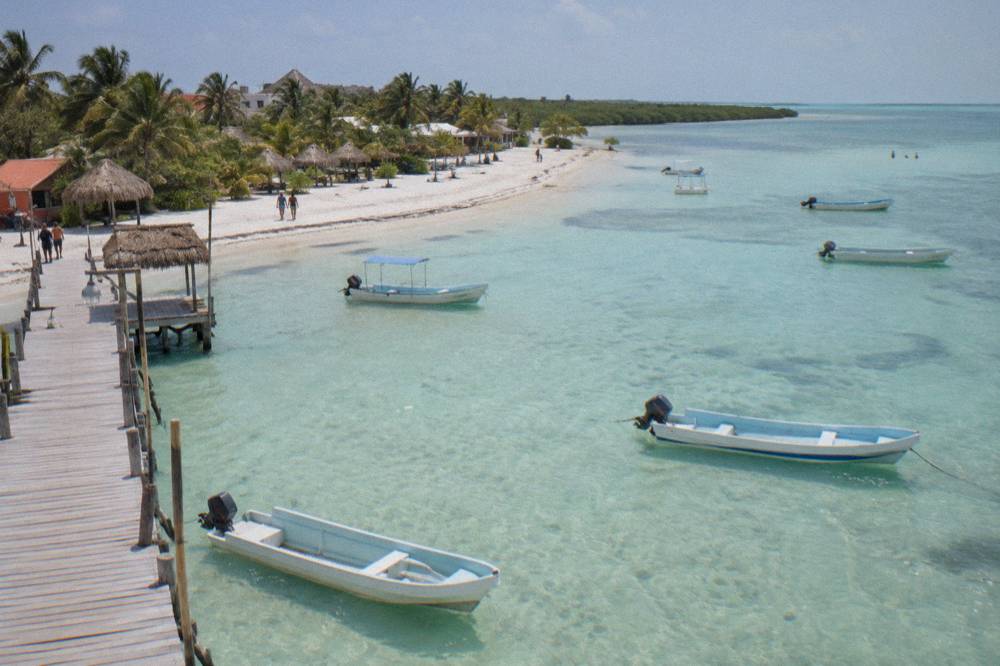
Timing and expectations shape the ethics too. A traveller who books early June, when numbers are still building and boats are fewer, spreads the load; a traveller who insists on the last week of the season, when operators are discounting walk-up bookings, adds pressure at the wrong moment. Neither choice is wrong, but the ethical tour is one where the operator will still say no to a bad-weather departure, and the cancellation terms on the listing tell you whether they can afford to. For the fuller timing picture, our month-by-month Holbox whale shark season guide pairs the season status with sea temperatures so you can see when the window actually opens.
The same federal rules govern every departure point, so ethics at Isla Mujeres and Cancun comes down to licence, boat size and conduct, exactly as in Holbox. Cancun and Isla Mujeres tours run the same or larger stated maximums (10 to 20) where operators print them, and hotel pickup, fees and meals vary tour by tour rather than by port.
The regulation does not soften because the harbour is bigger. One boat per shark, 30 minutes, 5 metres, no touching: all of it applies identically to a boat leaving Punta Sam in Cancun and a lancha leaving the Holbox whale shark dock. Isla Mujeres held 92 of the 146 permits in 2026, more than Holbox, and the practical difference a swimmer notices is traffic on the water rather than rules on paper. Some of the most-reviewed whale shark tours in the region depart from there, including the Swim and Snorkel Adventure from Isla Fun Tours, rated 4.9 from 1,193 reviews from $155 per person, and the Ocean Tours Mexico departure from Cancun with hotel transfer, rated 4.8 from 1,291 reviews from $199 per person; both state a maximum of 10 travelers and both charge an environmental or government fee on the day, with the amount on the listing.
Fees deserve a plain word here, because they are where buyer confusion turns into operator shortcuts. Several Isla Mujeres and Cancun listings collect a dock fee, port fee or protected-area entrance in cash at check-in, and the listing states the amount; that is a legitimate structure, not a scam, though you should read the exclusions line before you book so the number does not surprise you. From the Holbox side, the Yum Balam access situation drew local discussion in 2026: a July news report quotes about 230 pesos a visitor, from a cooperative representative, not an official tariff page. Treat day-of fees as a planning line item, and treat an operator who cannot tell you what they charge as a booking risk.
| Departure point | Permits in 2026 | What to check on the listing | Fee structure to expect |
|---|---|---|---|
| Holbox | 48 of 146 | Stated maximum of 8 to 10 travelers, guide in water | Fees often bundled; some listings exclude the taxi to the dock |
| Chiquila | 6 of 146 | Cooperative affiliation, boat pennant | Small local fleet; confirm inclusions in writing |
| Isla Mujeres | 92 of 146 | Maximum printed, meeting dock named | Environmental tax and dock use often paid on the day, amount on the listing |
| Cancun | within the Isla Mujeres zone | Transfer details, duration range 7 to 12 hours | Government fees sometimes separate, amount on the listing |
A private boat does not change the rules, but it can reduce pressure at the margins: your group controls the pace, the guide ratio is at its best, and there is no temptation to race another boat's passengers to the shark. The counterweight is cost, from $1,246 per group, and the fact that one private boat still occupies the same 30 minute slot a shared boat would.
The private option, the Swim with Whale Sharks on a Private Tour from VIP Holbox Experience, is priced per group rather than per person, runs 7 hours, and is rated 4.5 from 27 reviews. Its listing describes a private boat with GPS, a bilingual guide, snorkel gear, breakfast and ceviche. Ethically, the framing is that privacy buys control, not virtue. The NOM-171 limits are identical: 30 minutes with the shark, 5 metres, quiet entry. What improves is everything around the margin of the rules, the briefing quality, the pace of rotations, the absence of a crowd of strangers competing for the guide's attention, and the ability to skip a second snorkel stop if the group would rather give the water a rest.
For families and cautious swimmers, that margin is worth real money. A private guide can hold the whole group together as the rules require, and nervous swimmers are never rushed through their rotation to keep a queue of paying strangers moving. The shared Holbox departures are not unethical by contrast; the 7-Hour Group Adventure from Holbox Whale Shark Tours even lists government fees among its inclusions, from $184 per person with a 4.3 rating from 86 reviews. But if your ethical concern is crowding specifically, private is the strongest version of the answer money can buy. Our guide to choosing a Holbox whale shark tour weighs the shared-versus-private trade in more detail.
Whichever format you choose, the ethical checklist ends the same way: licensed operator, pennant visible, rules briefed, guide in the water, no promises about sightings, and cancellation terms you can actually use. The following season typically opens from mid-May, and the listings below are the Holbox departures that state those details most plainly.
It can be. The activity is licensed, capped by permit and governed by NOM-171, which limits boats, time and distance around each animal. The ethics depend on whether your operator follows those rules: pick a licensed, well-reviewed operator with a guide in the water and no sighting guarantees, and the swim is a regulated wildlife observation rather than an exploitation.
No. Touching, riding, harming, chasing or blocking a whale shark's path is prohibited under the federal standard, and swimming in front of the shark is not allowed either. Swimmers keep 2 metres to the side of the head and 3 metres from the tail, with a guide beside the group. Any crew member who invites contact is breaking the law.
One at a time, for a maximum of 30 minutes. Other vessels must wait at least 50 metres away until the first boat withdraws. Boats may not come closer than 5 metres to the shark, and each authorised boat carries an identification pennant and is limited to 11 metres in length.
Regulated tours are designed not to, and the permit system, 48 of the 146 permits in 2026 were held in Holbox by local cooperatives, gives the community a stake in the animals' return. The pressure point is peak season, when many boats work the same aggregation zone; compliance research has examined this strain. Choosing rule-following operators is how tourism stays on the sustainable side.
Only biodegradable sunscreen, applied before entering the water, under the federal rules. Many swimmers wear a rash guard instead and skip sunscreen for the swim itself. Non-biodegradable products are prohibited on the swim, so check the label before you pack.
The rules are identical either way, so private is not inherently more ethical. It does give your group a better guide-to-swimmer margin, a calmer pace and no queue pressure during rotations, which matters for nervous swimmers and families. The private listing from Holbox runs from $1,246 per group; shared Holbox swims run from $178 to $210 per person.
Before you go, the pick for this guide:
All-Inclusive, Three Languages
★ 4.9 267 reviews · From $209
Check availability →